
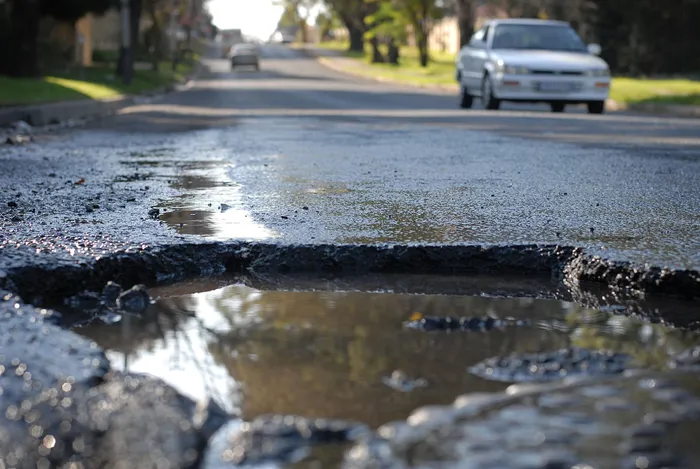
Decades of underinvestment, weak policy continuity, and leadership turnover have left Johannesburg struggling to reverse deepening social and infrastructure decline.
Image: Independent | Neil Baynes
Johannesburg stands at a crossroads: a city that was once South Africa’s economic powerhouse is dealing with a polycrisis that has left residents questioning whether the city of gold has lost its shine.
A rapid research paper by the Gauteng City-Region Observatory (GCRO) paints a stark picture of the city’s current demographic, economic, social, spatial and infrastructure conditions.
The report, prepared at the request of the Presidency ahead of intergovernmental engagements earlier in 2025, finds that a convergence of crises is driving “a sustained decline in performance, service delivery, public trust and quality of life” in Africa’s biggest urban economy.
Johannesburg, home to more than five million people, remains the country’s most significant urban economy, but growth has stagnated.
Real gross value added – the average economic output – per person is no higher than two decades ago.
Unemployment exceeds the national average with even higher rates when discouraged workers are counted, and economic activity has become increasingly uneven across the metro.
For ordinary residents, the report’s dry data reflects daily frustrations with basic services. Satisfaction with water and electricity supply has dropped sharply as interruptions unrelated to scheduled loadshedding have surged in recent years.
“While access to piped water and adequate sanitation remains high, satisfaction with these services has declined sharply due to increasing interruptions and reliability problems,” the report stated.
The reality on the ground is that many Joburg households are all too familiar with burst water pipes and periods without running water, often for hours or days, as ageing infrastructure struggles to keep up with demand.
Frequent leaks and bursts have become so commonplace that residents routinely plan their days around uncertain water supplies.
Similarly, power outages have become a regular part of life in many parts of the city, with frequent unplanned interruptions compounding the effects of loadshedding.
The GCRO survey found electricity interruptions unrelated to loadshedding have risen dramatically since 2017/18, highlighting how widespread the problem has become.
The report also flags persistent poverty, spatial inequality, governance instability and fiscal stress as mutually reinforcing pressures undermining life in Johannesburg.
One can conclude that decades of underinvestment, weak policy continuity, and leadership turnover have left the city struggling to reverse deepening social and infrastructure decline.
For ordinary residents, the challenges are not abstract. They’re reflected in the daily grind of navigating deteriorating infrastructure – brown taps, power outages, and cracked roads – even in areas long regarded as stable.
“Johannesburg’s challenges are systemic and mutually reinforcing,” states the report. “Reversing this trajectory will require decisive, coordinated interventions that stabilise governance, restore financial sustainability, prioritise infrastructure maintenance and investment, and rebuild the social and economic foundations of South Africa’s most important city.”
IOL BUSINESS