

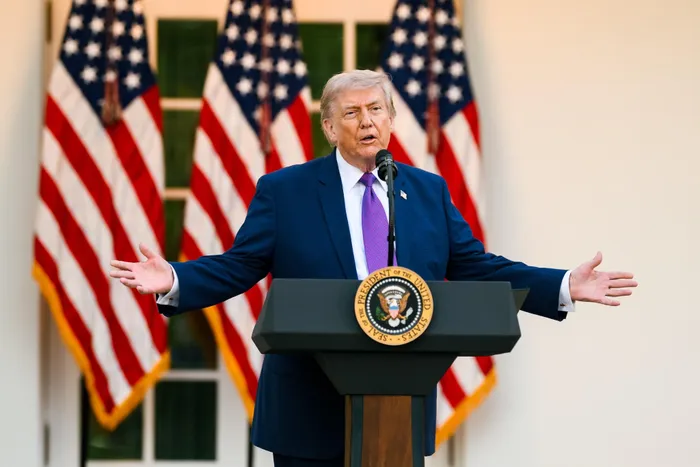
President Donald Trump's threat Sunday comes as negotiations have stalled and sporadic attacks in the region have continued, despite the United States and Iran agreeing to a truce in April.
Image: Facebook/The White House
Stock markets mostly retreated and oil prices gained Monday after US President Donald Trump issued a new warning to Tehran, saying it must move quickly towards a peace deal or "there won't be anything left of them".
Trump's threat Sunday comes as negotiations have stalled and sporadic attacks in the region have continued, despite the United States and Iran agreeing to a truce in April.
The conflict has led to an effective blockade of the Strait of Hormuz, through which around 20% of global oil exports pass in peacetime.
The strait "remains meaningfully closed -- now approaching eleven weeks -- after the Trump-Xi summit in Beijing concluded without a breakthrough on reopening the waterway", MUFG's Michael Wan said Monday.
Tokyo shares closed 1% lower and Shanghai lost 0.1 percent, while Hong Kong ended down 1.1 percent.
China's consumer spending in April grew at the slowest pace in more than three years, data showed, a stark sign of the challenges Beijing faces to reignite domestic activity.
Traders have their eye on a meeting of Group of Seven finance ministers and central bank chiefs that kicks off in Paris, with bond selloffs in the spotlight, analysts said.
Then all eyes will be on quarterly results from US chip titan Nvidia, set for Wednesday, which will be scrutinised as investors question whether huge spending on AI data centres is justified by potential returns.
In midday deals Monday, Europe's stock markets mostly fell but London managed to edge up 0.1 percent, helped by rising share prices of energy companies.
Government bond yields have risen worldwide in recent trading sessions as more investors start to question if inflation will begin eroding economic growth while pressuring deficits.
"Global government yields rose sharply heading into the start of this week, as three forces collided: surging oil prices, fading hopes for a Strait of Hormuz resolution, and mounting fiscal concerns especially in the UK and US," Wan said.
But last week's talks on trade between China and the United States have offered "a degree of relief for Asian markets", he added.
The Seoul stock market, which has renewed with record highs in recent days thanks to the artificial intelligence spending boom, ended the day 0.3% higher.
In Tokyo, shares in memory chip maker Kioxia soared 16% following stellar quarterly results on Friday.
Kioxia, the world's third-largest producer of NAND flash memory chips, which are used as storage in AI data centres, has seen its stock surge nearly 300% over the past year.
The company has forecast an eye-watering 1.3 trillion yen ($8.2 billion) in operating profit for April-June, saying it is "riding the large wave of AI demand, which has led to record high revenue and profits".
AFP