

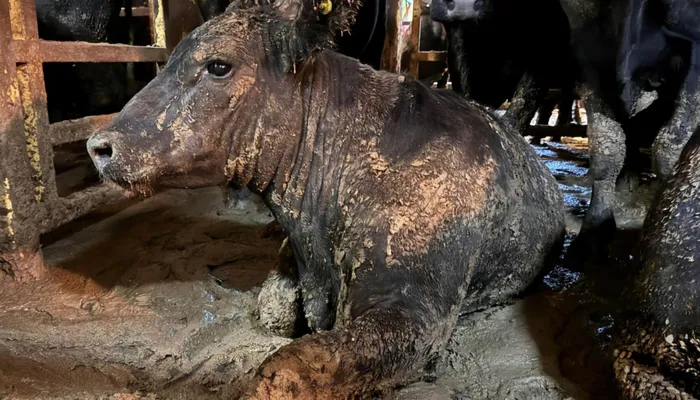
Export animals often endure inhumane conditions, with many forced to lie in their own urine and faeces.
Image: Supplied
Live animal exports are once again under the spotlight following a hard-hitting Parliamentary Portfolio Committee on Agriculture that took place on November 18.
During the two-hour session requested by Stop Live Exports South Africa (SLESA), the charitable organisation set out to persuade Members of Parliament (MPs) to reject the Department of Agriculture’s attempt to formalise the live animal export trade.
However, these arguments were met with widespread opposition, as SLESA co-founder Michelle Taberer explained:
“There was high engagement during the session, and some very tough questions from the MPs - disappointingly, only around the economics of the matter, considering that the Ministry has an equal responsibility to ensure animal welfare. But it seems as if the MPs view animal suffering as an ‘accepted consequence’ of commerce.”
Taberer said the organisation was deeply concerned about the welfare, ethical, economic and environmental impacts of exporting live South African animals by sea for slaughter.
“Many countries have tried to regulate welfare standards at sea, as the Minister is attempting now, but they have all failed, as once a ship leaves the harbour, there is little or no enforcement of the regulations that have been set,” she said.
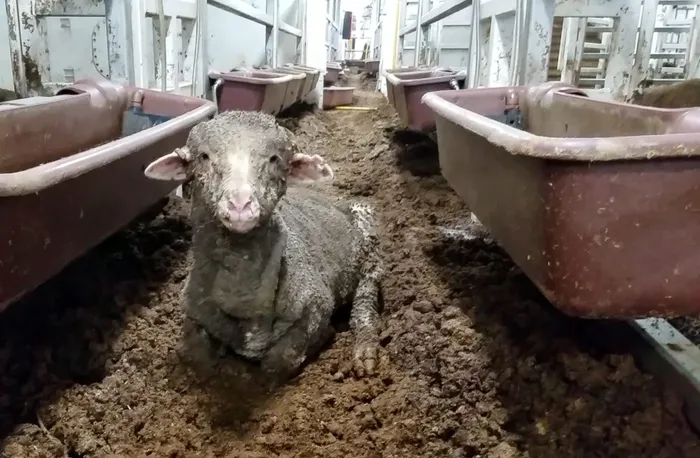
An export sheep covered in faeces.
Image: Animals Australia
South Africa’s live animal exports primarily consist of cattle exports to Mauritius and sheep to the Middle East. Countries such as Australia, New Zealand, India, Germany and Brazil have already banned live animal exports.
The SLESA’s other representative, Tony Gerrans, explained that export animals were subjected to prolonged periods of suffering, neglect and confinement in unhygienic and cruel conditions.
“The welfare concerns arise from the animals being confined for long periods of time in filthy and overcrowded conditions. The unnatural environment at sea, including the vessel’s movement and noise, stresses the animals, while injuries, poor diet and alarming sanitary conditions lead to infection and disease. There is also a marked lack of adequate veterinary care on these transport vessels,” he added.
The SLESA said the minister’s attempts to formalise this practice in law were contrary to Section 2 of the Animals Protection Act of South Africa, which prohibits overloading, neglecting or confining animals in a way that causes suffering, keeping animals in dirty or parasitic conditions or exposing animals to excessive heat or noxious fumes.
A grave inconsistency is that South African law prohibits animals from remaining in transportation for longer than 18 hours at a time, however, live export trips can take three weeks.
“By promoting live animal export, the Minister acts contrary to the intent and duty of the Act, as it is known that animals are exposed to all these conditions on live export vessels,” Gerrans said.
In another testimony, Australian veterinarian Dr Lynn Simpson, who has accompanied 57 live export shipments during her career, said in her experience there was no way that animals can be exported in such large numbers without inflicting unnecessary suffering.
Furthermore, a five-year study found that heat stress was documented in 60% of Independent Observer reports for live sheep export voyages from Australia. Reports also indicated that livestock ships were twice as likely to sink, compared to cargo vessels.
These animals also have to endure horrific conditions during their voyages. In early 2024, a live export ship carrying 19,000 cattle from Brazil to Iraq docked in Cape Town harbour, causing widespread public outrage. This was not only due to the stench in the air, but also because the animals were found to be living in "abhorrent" conditions, with many forced to lie in their own urine and faeces.
"This incident serves as a stark reminder that the live export of animals by sea is a gruesome and outdated practice that inflicts unnecessary suffering on sentient beings," the NSPCA said at the time.
"This method of trade causes pain, suffering and distress to many animals, including high mortality rates occurring during the voyage."
As for the supposed economic benefits of live exports, the NSPCA has previously reported that the gains are concentrated among a few large commercial exporters, meaning small farmers and rural communities do not ultimately benefit. Local processing and abattoir jobs are also lost in the process.
IOL Business