

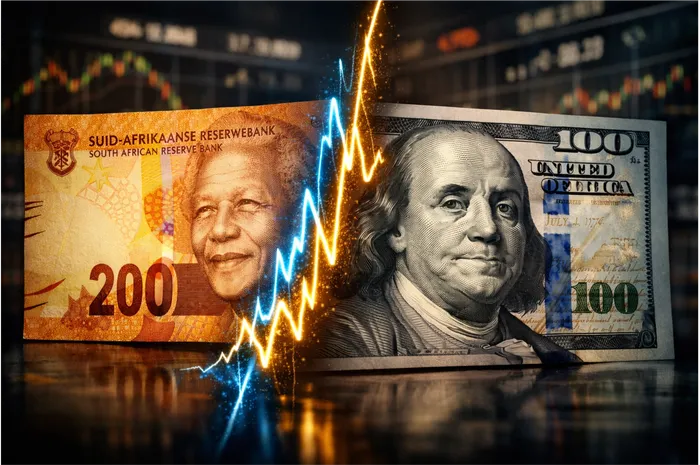
Escalating tensions between the US and Iran have lifted demand for safe-haven assets and pushed up the dollar.
Image: Manus
The rand has weakened to R17.20 against the dollar, its lowest level since November 2025, as escalating tensions between the US and Iran rattle markets and push investors into safe-haven assets.
The move reflects a broader risk-off shift, with the stronger dollar weighing on emerging market currencies, including South Africa’s.
Trading Economics said the pressure on the rand has been compounded by falling gold prices, removing a traditional source of support for the currency.
“The price of gold has slipped over 20% since the start of the year, hitting a four-month low, as escalating conflict stoked inflation concerns and expectations of higher global interest rates,” said Wichard Cilliers, head of market risk at TreasuryONE.
At the same time, oil prices remain elevated at around $100 per barrel, raising concerns about inflation in energy-importing South Africa, it said.
This comes ahead of the South African Reserve Bank’s Monetary Policy Committee meeting this week, where rates are widely expected to be held but with a more hawkish tone as inflation risks rise.
The conflict has complicated the central bank’s balancing act between supporting growth and keeping inflation within its target range, Trading Economics said.
Annabel Bishop said the rand has weakened by about 4.4% on a trade-weighted basis since the start of the conflict, driven in part by dollar strength and foreign outflows. “The rand is expected to strengthen when the war draws to a close, as risk sentiment improves.”
Bishop added that foreign investors have sold roughly R32 billion in South African bonds in March to date, contributing to pressure on the currency.
The sell-off has also been reflected in equity markets, with the JSE declining sharply from levels seen earlier this year as global sentiment turned risk-averse during March, Bishop said.
Before the escalation in the Middle East, South Africa had seen improving investor sentiment, supported by its removal from the Financial Action Task Force grey list, an upgrade in its credit rating outlook from S&P, and progress on economic reforms, Bishop said.
“Additionally, risk is perceived to have reduced in government finances, while there has been progress on reforms under Operation Vulindlela supporting the rise in economic growth over the medium-term outlook,” Bishop added.
Those gains have since been overshadowed by global developments, with markets reacting to the risk of prolonged conflict and its impact on energy supply and inflation.
Escalating tensions between the US and Iran have lifted demand for safe-haven assets and pushed up the dollar, while increasing inflation risks through higher oil prices, Cilliers said.
Cilliers added that central banks are likely to take a more hawkish stance as inflation concerns rise.
IOL BUSINESS