

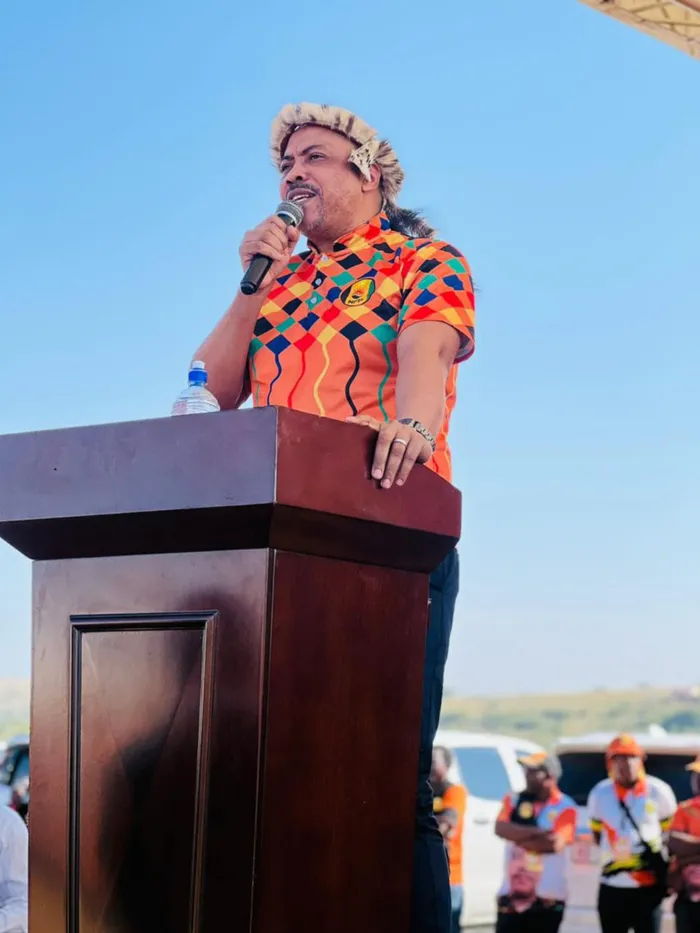
Political analysts propose cabinet positions to the National Freedom Party as a strategy to maintain the stability of KwaZulu-Natal's Government of Provincial Unity. In Picture: NFP leader Ivan Barnes.
Image: Supplied
Political commentators say the only way the KwaZulu-Natal Government of Provincial Unity (GPU) can be saved is by sweetening the deal for the National Freedom Party’s President, Ivan Barnes.
Political analyst Professor Sipho Seepe stated that, at this juncture, both the African National Congress (ANC) and the Inkatha Freedom Party (IFP) can only offer two cabinet positions to the NFP.
“The only way the ANC can save the GPU is by giving the NFP two cabinet positions. The ANC can either negotiate with the IFP to relinquish one of its positions to make way for the NFP, or the ANC can do it directly,” Seepe said.
He mentioned that this could be the only thing that would convince the NFP to remain part of the GPU.
Both the NFP and the ANC met over the weekend, where the ANC listened to the NFP's concerns that led to the party's withdrawal from the GPU.
According to a source with intimate knowledge of the situation, the meeting focused on the opportunities available for Barnes in political office.
After its recent withdrawal from the GPU, all the GPU parties reached out to the NFP's leadership and requested separate meetings.
ANC provincial spokesperson Fanele Sibisi refused to confirm whether the meeting took place, stating he would only know when the party's provincial working committee meets on Monday.
Attempts to contact NFP President Barnes were unsuccessful, as he did not respond to texts and calls made to him.
The NFP delegation also reportedly met with the Umkhonto weSizwe Party later on Saturday; however, the MKP's provincial deputy secretary, Shirley Willemse, refused to divulge the nature of discussions and the outcome, and stated that the meeting involved senior national leadership of the party.
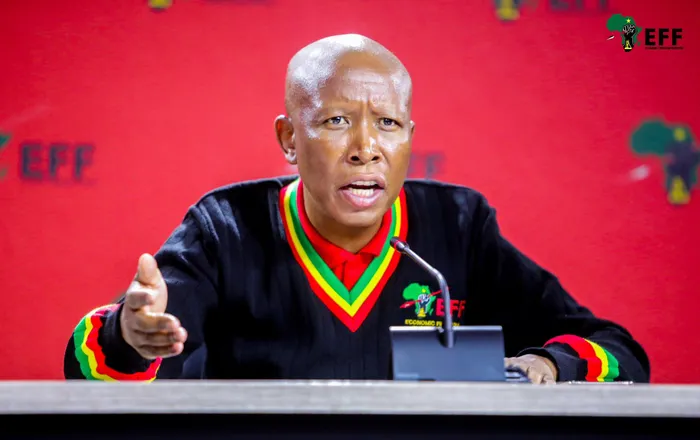
The EFF's leader Julius Malema is in full support of the MK Party governing KwaZulu-Natal
Image: EFF / X
Meanwhile, the Economic Freedom Fighters (EFF) leader, Julius Malema, reiterated his support for the Umkhonto weSizwe Party (MKP) to take a leadership role in the KwaZulu-Natal (KZN) provincial government.
Malema made the assertion during a recent EFF podcast episode, where discussions about the GPU took centre stage.
Malema's endorsement comes in the wake of the IFP’s firm opposition to any collaboration with the MKP.
The IFP, citing concerns over governance and stability in the province, has labelled the MKP as a destabilising force incapable of fostering progress.
"To allow the MKP to collaborate with us would be tantamount to inviting chaos in KZN," said the IFP spokesperson Mkhuleko Hlengwa.
Despite the objections, Malema remained adamant about the potential for the MKP to govern effectively, praising the party for securing the highest number of votes in the region.
"For the sake of the progress of the people of KZN, we’re going to help the MKP in governing KZN," he affirmed.
"We cannot allow KZN to degenerate, and unlike the MKP, there is law in government; things must be done in a particular way."
This sentiment hinted at a desire for structured governance built on constitutional law, and distancing the EFF from perceived extremities in the political spectrum.
Taking a further stand against the IFP and other established parties, Malema articulated his refusal to ally with what he described as extreme right-wing entities.
"We are ideologically apart and extremely distant from each other," he stated, referencing historic struggles against oppression.
"To still bring them into power is an affront to the memory of Chris Hani and our struggle," he said in emphasising the importance of honouring the legacies of anti-apartheid heroes.
Malema did not shy away from criticising those who advocate governance by parties he sees as complicit in the country’s historical injustices.
"These people propose that for good governance, we must partner with those who previously collapsed our economy," he said, reflecting on past political leadership of South Africa and his frustration towards the narratives suggesting that past oppressors can reliably guide the nation.
DAILY NEWS