


Ayabonga Cawe has released his new book, "‘New’ Settler or ‘Old’ Tenant?", a work that examines the long history of land and labour systems in South Africa.
Image: Supplied
Ayabonga Cawe’s new book, “‘New’ Settler or ‘Old’ Tenant?”, examines the origins of South African inequality through the lens of land and agrarian history in the former Ciskei region over nearly two centuries.
The study traces how racial hierarchies in land, labour and product markets were built and maintained from the 1830s to the present.
The book adopts a longue durée approach, drawing on archival records, census data, legal sources, news reports and other primary materials.
Cawe uses this extensive evidence to explain contemporary disputes over land and resources, highlighting how historical structures continue to shape social and economic realities.
“At its core, this book seeks to prompt reflection on the extent to which the first three decades of agrarian reconstruction following settler colonialism and apartheid have produced continuity and change in the lives of ordinary people.
More crucially, it challenges us to consider what we, as agents rather than hostages of history, can do about it,” Cawe said.
The narrative follows rural Eastern Cape communities, from the lands between the Fish and Keiskamma rivers northwards to Kat River Valley, Sada (Whittlesea), and the Glen Grey area.
It traces the origin stories of enduring rural conflicts and the heavy legacy these struggles impose on the present.
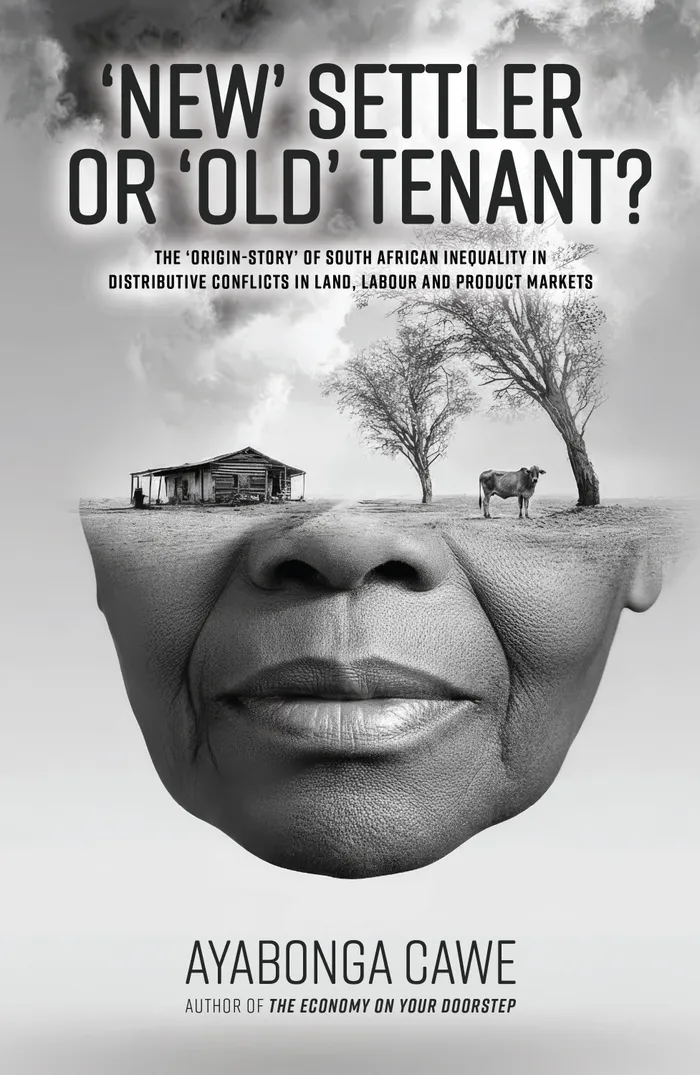
Ayabonga Cawe’s "‘New’ Settler or ‘Old’ Tenant?" examines two centuries of land and labour history in the former Ciskei region to uncover the roots of South African inequality.
Image: Supplied
Cawe details the agrarian reforms of the 1830s, aimed at securing labour after the end of slavery, the unsuccessful attempts to establish a black commercial agrarian class as a buffer community, and the mass resettlement of families onto marginal lands.
At the centre of this story are labour tenants, so-called "squatters" and relocated families, whose lives reflect over a century of struggle over land and livelihoods.
In the democratic era, these communities, once marginalised and displaced, now hold land and citizenship. Yet their futures remain uncertain. The book asks readers to consider how historical patterns of land and labour inequality persist and how they might be addressed today.
It emphasises that these struggles are not just past events but living histories that continue to shape the lives of ordinary South Africans.
Through careful research and a focus on lived experience, this book offers a detailed account of how history shaped the land and labour systems that define South Africa today.
It challenges readers to confront the long shadow of inequality and consider the role of agency in shaping future outcomes.