

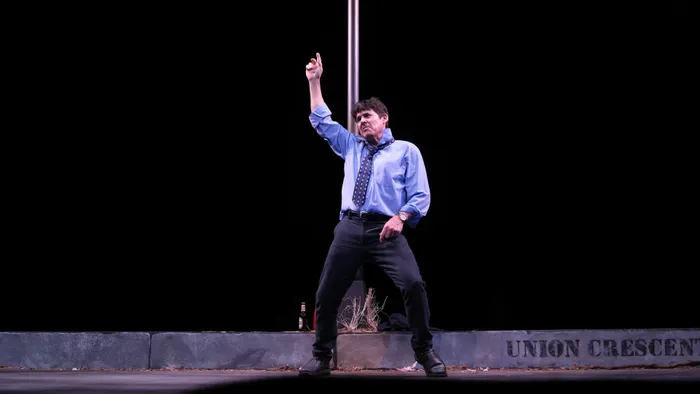
Ashley Dowds at the helm of Paul Slabolepszy’s iconic play, 'The Return of Elvis du Pisanie'.
Image: Keaton Ditchfield
Ashley Dowds is certainly one of the actors I always anticipate interviewing.
It's been a year since our last chat, which was about him taking on the lead role in Paul Slabolepszy’s iconic play, “The Return of Elvis du Pisanie”.
Slabolepszy first performed the classic in July 1992, and it went on to win numerous awards.
It centres on forty-nine-year-old East Rand salesman, Eddie du Pisanie, who is retrenched and decides life is no longer worth living. Alone and desperate in his car, he switches on the radio. The Elvis Presley song he hears transports him back 30 years and, more significantly, recalls a childhood event that changed his life forever.
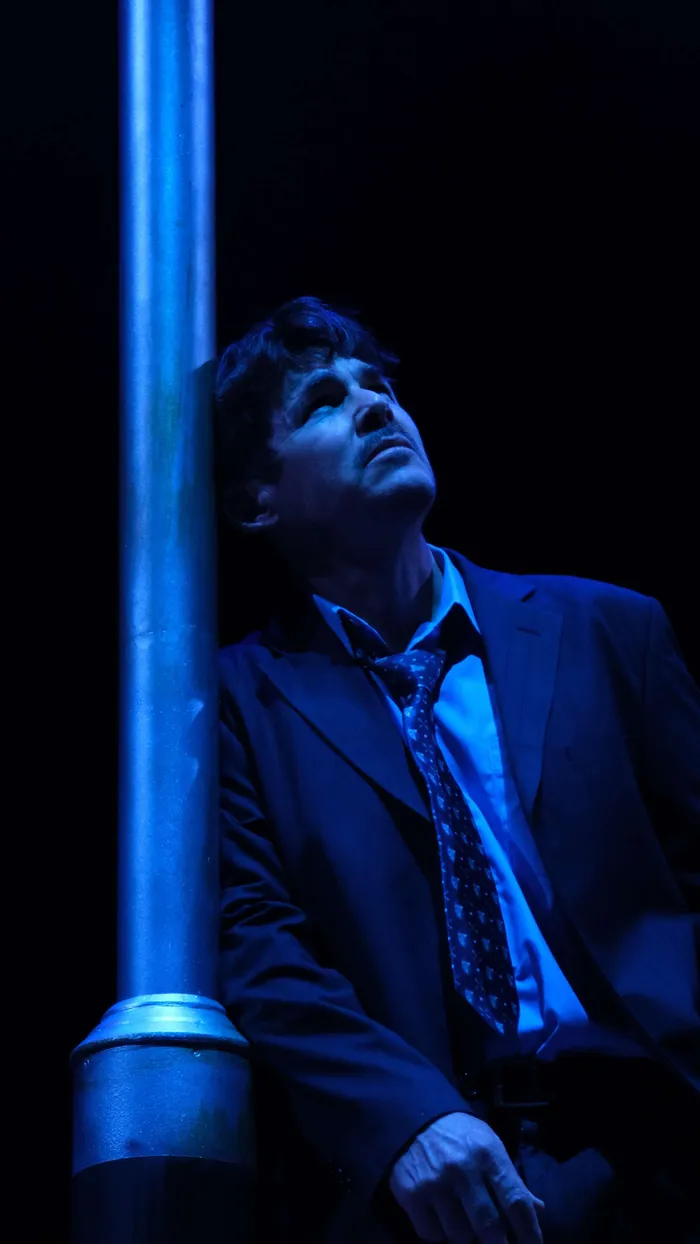
Ashley Dowds at the helm of Paul Slabolepszy’s iconic play, 'The Return of Elvis du Pisanie'.
Image: Keaton Ditchfield
The show has been staged several times of late. Dowds sheds light on how the character has evolved since he stepped into the role.
“The thing is… HIS map is a kaleidoscope! So many other deceptively small moments affect his psyche (as they do for all of us - but Eddie’s world is distilled, so they’re all so close to the skin.) I mean, of course, there’s an arc to his story that is quite clear, but I’ve realised how significant the cause and effect of the details are.
“Getting a handle on Eddie's father, Stefanus, for instance, has been really important. He’d been involved in the Second World War and had never confronted the PTSD consequences. The particular moments Eddie remembers about him have so much influence on the final scene.”
He continued: “Every time I run through the story in my head, or on stage, something shifts and reveals itself. In the first week or so, you’re holding so tightly, hoping everything falls into place. Then you begin to allow some breathing room for the characters in their time and place, so their authenticity can be present.
“Sometimes it's the text that shifts so fast you need to find the ‘hook’ that’ll get you into the next moment. At one point early on, Eddie sits on the street curb talking about near-death experiences and then suddenly conjures a memory of his uncle Albert.
“It’s bizarre, until you realise that he is actually seeing his life flash past him, and a little village in Modderfontein begins to emerge from this.”
Paul Slabolepszy's unique and visceral South African storytelling is widely recognised. Having been directed by the playwright himself, Dowds was asked to share the most surprising discovery made during rehearsals regarding the rhythm of Slabolepszy's dialogue or the “ghost” of Elvis that permeates the script.
“The ‘ghost’, whatever that might mean for you, is the reason for Eddie's presence at this particular street lamp on this very night in the same place he'd stood 30 years ago… The story opens with what could be ghost stories - the sightings of Elvis that people have spoken about around the world.
“I was performing the show in the small town of McGregor. The owner of the venue, Steve, is a musician, and to him, the 'ghost of Elvis’, he said, was uncanny. Marc Cohn's song, ’Walking in Memphis’, talks of ‘the ghost of Elvis on Union Avenue’ - Union Avenue leads to Elvis’s home, Graceland.
“Paul felt the ghostly chill when I called him up and told him about the coincidence: Our stage set is a street in Witbank called Union Crescent! It leads to a kind of ‘Graceland’ in some sense.”
“Referring to the spirit of the story and all of its characters, they were shaped by Paul as writer and performer, and they have a legacy. Their language is delivered in a way that Paul has seen them inside their world. So it's a tough act to follow.
“But what is always fascinating is how each performer finds ‘the phrasing’. My image of Pietie Boschoff, the old guy who spray-paints cars in his backyard, is going to be very different from Paul’s; the same with Joseph, the old Cape fisherman living in the coal-mining town, who is building a boat for the big storm he prays for ‘to carry them away to their beloved ocean’.
"You reach the pathos of these guys via slightly different embodiments. Different ways of seeing the world.”
Theatregoers can expect a production that offers a rollercoaster of emotions, moving from sad and funny moments to truly inspiring ones.
Where: Theatre on the Square.
When: Runs until April 30, 7.30pm. Weekend times differ.