

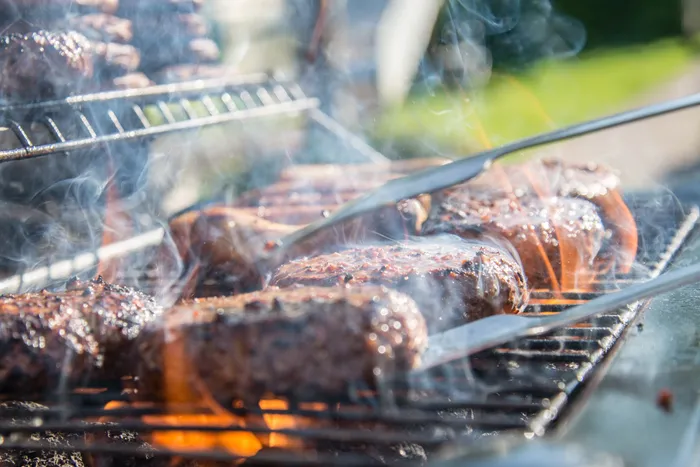
Having a braai is unofficially compulsory on September 24.
Image: Pexels
South Africa is not just the cradle of humankind, but also the birthplace of the braai. Archaeological evidence from the Swartkrans cave suggests that our early hominid ancestors were cooking over a fire more than one million years ago.
It’s no surprise then that South Africans have perfected braaing, which is why we often turn up our noses at the ‘Barbie Queues’ that our overseas counterparts have, which are often, quite sadly, cooked over gas.
South Africa’s Heritage Day is also unofficially known as Braai Day, when the lighting of a fire and clinking of tongs over one’s favorite braai combination is unofficially compulsory.
But as with many other culturally significant practices, attending and participating in a braai comes with a few unspoken rules.
First and foremost, the person hosting the braai is the Braai Master. This person remains in charge of the fire and cooking at all times. Giving any cooking or braaiing advice to the Braai Master is an absolute no-no and a Code 1 offense in breach of the National Braai Code. Unless that person thinks that the steaks should be cooked to ‘well done’. In that case, you are perfectly within reason to grab the tongs with a sense of urgency and take over Braai Master duties.
Even if it is one of those ‘bring and braais’ where everyone is instructed to cook their own meat, you should never turn another person’s meat unless they’ve specifically instructed you to look after it, while they go to the bathroom or pour another drink.
While the Braai Code states that you shall not interfere with the Braai Master, a little help is always appreciated.
According to Louise Groenewald, Group Recipe Expert on the “Braai - Slaai - Potjie - Lawaai” Facebook page, it is a good idea to look well after the braaier’s needs and make sure their glass is full. One should also laugh loudly and convincingly at their jokes, Groenewald adds.
It is a further good gesture to ask if you can help with setting and clearing the table.
Of course, a braai is a social event, and it’s never a good idea to arrive hungry and try to rush the process.
“Remember: ‘We're going to braai’ doesn't necessarily mean ‘eat’. It's a process. It takes time. Time to socialise. Precious time with friends and family. Enjoy every moment,” Groenewald explains.
As the folks over at the SA Spaza Shop so eloquently explain, the braai is as much about the atmosphere as it is about the food.
“It’s customary for guests to gather around the braai, chat with the cook, and enjoy a drink or two. The communal aspect of a braai is its soul, and participation is part of the fun.”
Given the current economic climate, most braai events these days will be a ‘bring and braai’, where the guests, at the very least, bring their own meat and drinks.
It’s important to specify with the host exactly what needs to be brought to the braai. In addition to the aforementioned, it is always a good gesture to at least offer to bring one side item, be it a salad, dessert, or snacks. And bringing a gift, such as a bottle of wine, is always appreciated.
At many bring and braai events, the guests will eat what they brought, but there are some occasions where people will bring and mix, and everybody gets to taste a bit of everything. If it’s the latter case, don’t be that annoying person who rocks up with a few frozen chicken drumsticks while your host is serving Wagyu steaks. Not only will it destroy the timeframe of the braai (remember, Chicken is cooked slowly over medium heat), but it’s just an unfair contribution.
Once you’re up to speed with all the rules, the most important thing is to just relax, have fun, and enjoy the company.
Renowned braai author and presenter Jan Braai is the driving force behind the National Braai Day initiative, and he describes it as a realistic opportunity to entrench a national day of celebration in our country.
“I believe that having a national day of celebration can play a significant role in nation-building and social cohesion, as the observance of our shared heritage can truly bind us together.
“In Africa, a fire is the traditional place of gathering. I urge you to get together with your friends and family around a fire on September 24 every year to celebrate our heritage, share stories, and pass on traditions,” Jan Braai added.
IOL