

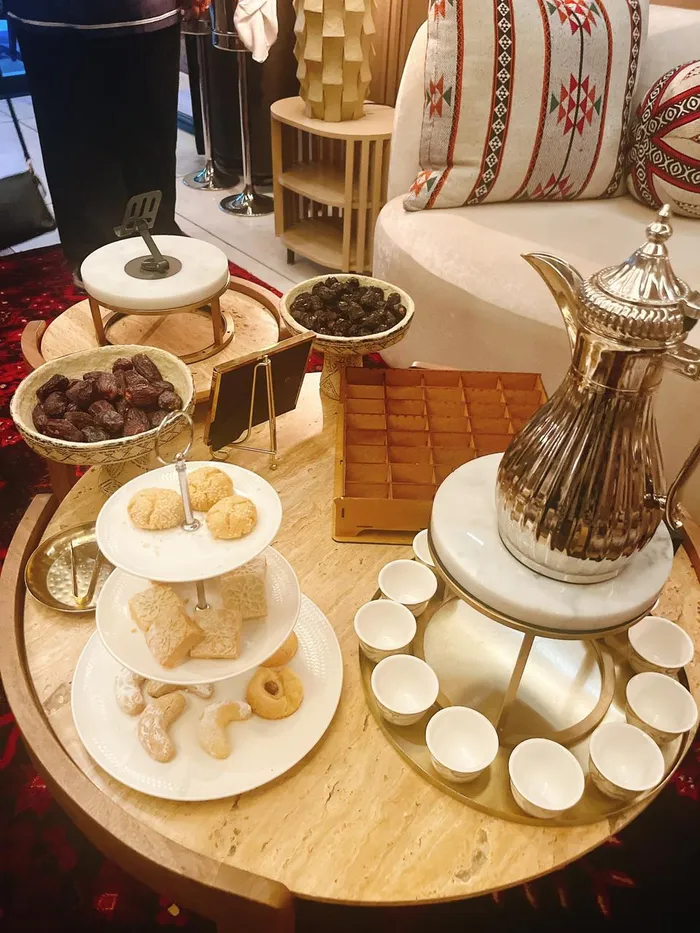
Guests are invited to enjoy a spread of dates, baked goods, and chocolate before the iftar experience at Whispers of Diriyah begins.
Image: Debashine Thangevelo
A recent visit to Whispers of Diriyah at Park Hyatt brought back a cherished memory: a large, communal iftar I experienced several years ago at a massive restaurant in Türkiye.
That initial experience has always remained special, as did this more recent one.
The establishment, recently named one of “TIME” 2026's Top 100 World’s Greatest Places, features an intimate, curated culinary experience located in Room 32.
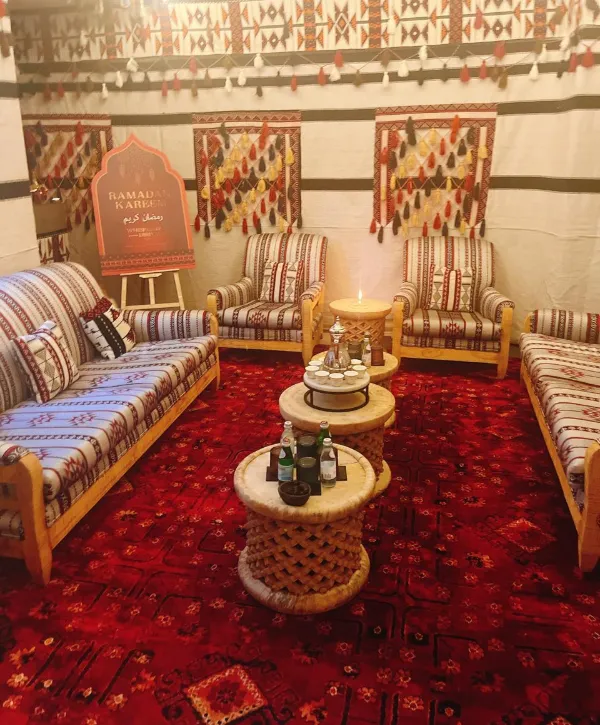
Park Hyatt's The Whispers of Diriyah restaurant offers an immersive Ramadaan experience that is both cultural and culinary.
Image: Debashine Thangevelo
Stepping into the restaurant, you are instantly transported to Saudi Arabia, enveloped by its warm and luxurious aesthetics. Traditional motifs, woven into the material clothing, adorn the walls. The ambience is immediately striking.
To enhance the atmosphere, our waiter was dressed in traditional attire: a thobe/thawb, a long, usually white robe, topped with a ghutra or shemagh - a square cotton scarf folded into a triangle and worn on the head. In this instance, the scarf was a red-and-white checked cloth.
Diners are required to wash their hands from a jug placed at the door before eating.
The lounge area offered a variety of items, including baked goods, dates, and a box of flavoured chocolate treats, which were available for us to enjoy.
We remained indoors, awaiting the first course, while the other diners stepped outside to enjoy their iftar beneath the stars.
The setup immediately appealed to me as I enjoy sharing small plates.
Chef Isra arrived with the cold mezza, placing the dishes in front of us while explaining what each one was.
Our appetisers included a selection of warm pita breads and a spread of dips: the ever-popular hummus; mutabbal (mashed chickpeas, blended with tahini, lemon, and garlic); muhammara (a spicy spread of walnut and red pepper); and baba ghanoush (grilled eggplant with olive oil, lemon juice, and parsley).
We were also served a refreshing fattoush salad, which featured crisp mixed greens, radish, tomato, cucumber, and crispy bread, all tossed in a sumac and lemon vinaigrette.
Hummus and pita bread are a personal obsession of mine - an undeniable crowd-pleaser for any gathering. The muhammara, in particular, earned unanimous praise from everyone at the table.
As someone who usually avoids salad (we're clearly not cut from the same cloth, so to speak), I was compelled to try this one and even went back for a second helping.
The perfect balance of seasoning and acidity made this dish irresistible; I could have easily consumed the entire plate.
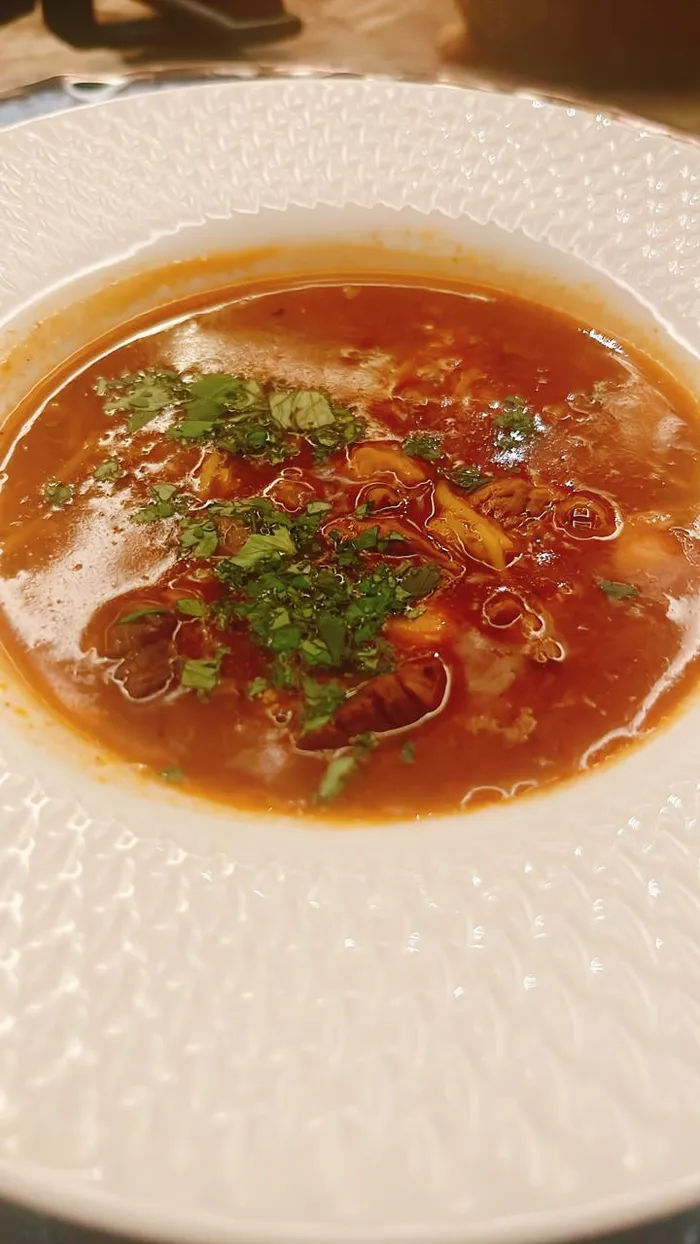
The delicious harira was part of the hot mezze iftar meal.
Image: Debashine Thangevelo
The second course began with a comforting harira soup, a Saudi wheat-based dish featuring slow-cooked, bite-sized pieces of meat.
Accompanying the soup was an assortment of samosas and vegetable spring rolls.
I must particularly praise the samosa, which was filled with rokak cheese. Being Indian and naturally inclined towards spicy flavours, I found that the spring rolls delivered a welcome, but not overwhelming, kick of heat.
The soup was flavourful and comforting. Following the chef's suggestion, I squeezed a piece of lemon into it, which added a wonderful tanginess.
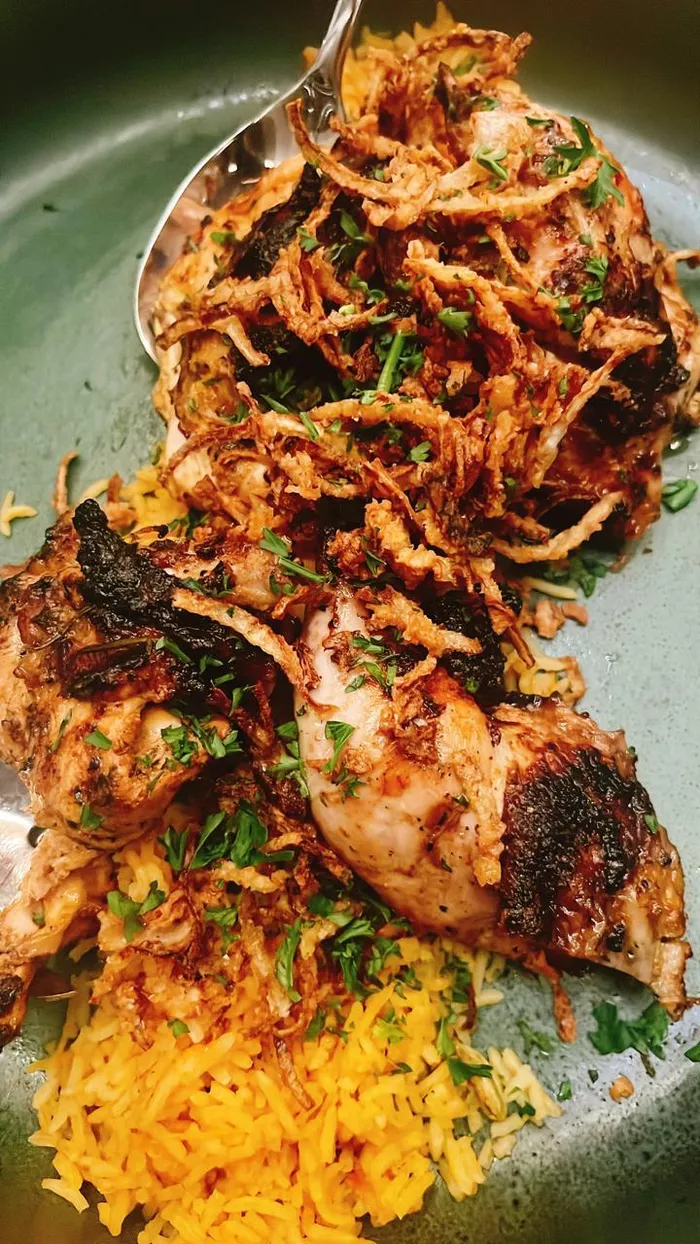
The chicken kabsa on a bed of fragrant spiced rice was the standout iftar dish.
Image: Debashine Thangevelo
The subsequent course featured four distinct dishes: chicken kabsa, lamb goursan, lamb hamiees, and jarish. As with the previous serving, the chef meticulously provided an explanation of each dish, detailing the expected flavour profile for us.
The undeniable star was the chicken kabsa. Each bite delivered an explosion of flavour, with the spiced chicken showcasing a beautiful char-grilled quality, perfectly complementing the fragrant rice it was served on.
The other winner was the lamb hamiees, which were these tender, moist pieces of sauteed lamb, in tomatoes and Arabic spices. The succulent lamb hamiees was the other standout dish. These tender, moist pieces of lamb were sautéed with tomatoes and aromatic Arabic spices. Although cooked to a dry consistency, the dish was utterly delicious.
The lamb goursan, which is a traditional Najdi stew of tender lamb, served over thin pieces of bread, was flavourful, with a sweet aftertaste. The traditional Najdi lamb goursan, a stew featuring tender lamb served on a bed of thin bread, offered a flavourful experience with a notably sweet finish.
The jarish, a dish of ground wheat slow-cooked with yoghurt and light spices, was a notable, albeit unsuccessful, component of the meal. The sourness of the dish was not to my liking, and it didn't harmonise with the other flavours present, feeling out of place.
I was told the menu is being continually refined, so this item might be re-positioned, perhaps as a starter option.
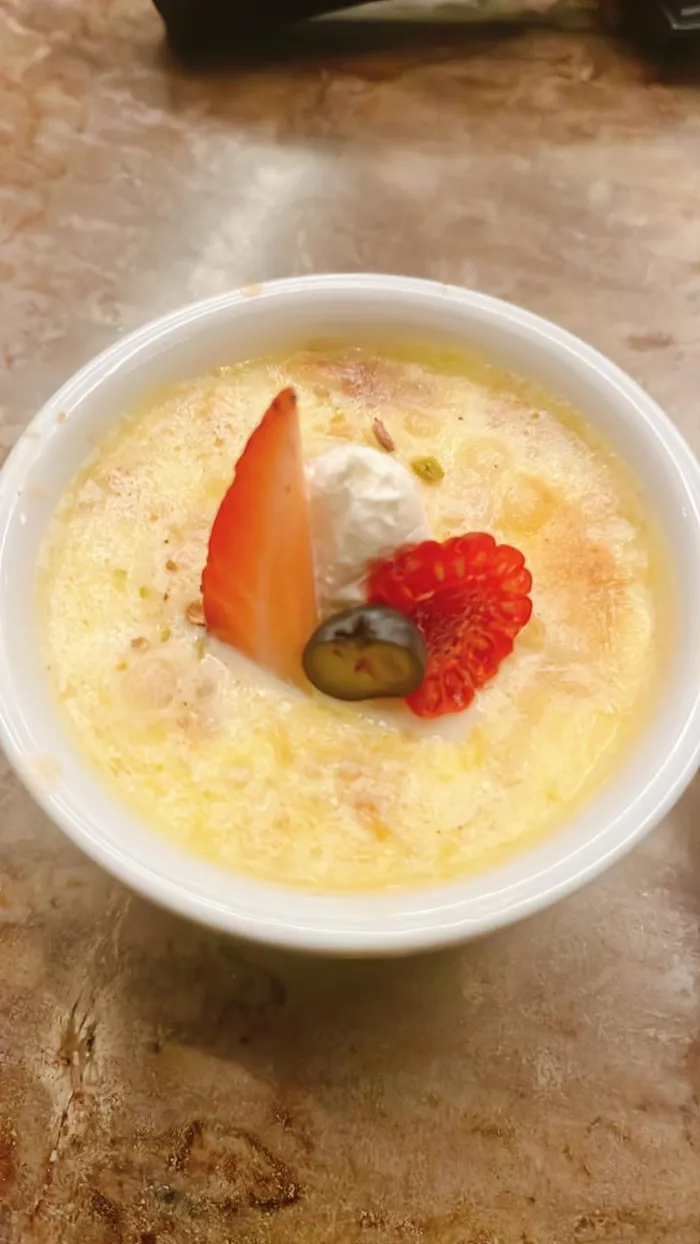
The warm bread pudding, called the ali um, was surprisingly light and perfectly satisfied the craving for something sweet.
Image: Debashine Thangevelo
The dessert options, thankfully, were lighter, refreshing, and satisfying. By this stage, I have to admit, we were already struggling to find room to satisfy our sweet tooth.
We started with the ali um, a warm bread pudding in milk, cream, raisins and elevated with thinly sliced almonds and raisins.
For our starter, we enjoyed the ali um, a warm bread pudding. This delightful dish was enriched with milk, cream, and elevated by the addition of raisins and thinly sliced almonds.
We also sampled a small tower of luqaimat, the Saudi-style sweet dumplings. These had a light dough texture with a sweet syrup drizzled over it.
The guilt of over-indulging was somewhat relieved by the inclusion of freshly sliced seasonal fruits.
Again, this immersive iftar experience was one for the books. And with Ramadaan still observed until around March 20, depending on when the moon is sighted, I would recommend this experience.
The young, visibly passionate Chef Isra delivered a phenomenal array of dishes, featuring sophisticated flavours that one would typically associate with a seasoned veteran.
Complementing the amazing food was the incredible staff.
The iftar menu is priced at R985 per person, with a family-style sharing menu available at R800 per person.
Disclaimer: Please note that although the writer was a guest of the restaurant, this did not affect the content of the review.
Debashine gives it 4 stars.
★★★★☆ (Very Good)
* Food: Delicious, well-prepared with some standout dishes.
* Service: Attentive, friendly and professional.
* Ambience: Pleasant, well-designed and comfortable.
* Value: Worth the price; good quality for cost.