

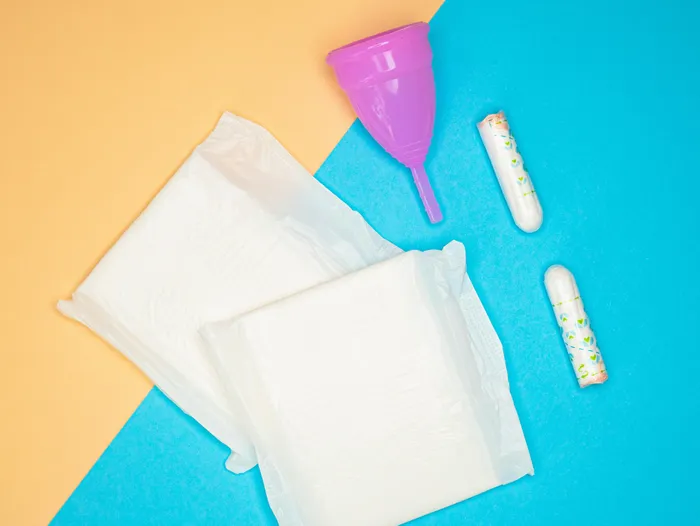
OEKO-TEX standard 100 explained: the certification that is changing how women shop for period products.
Image: Reproductive Health Supplies Coalition/Unsplash
I found myself staring at the sanitary products, wondering whether to take my usual trusted brand, and then I spent another hour reading the labels.
This is the predicament many women in South Africa are in after the research from the University of the Free State (UFS) revealed that menstrual products used by millions of South Africans may contain hormone-disrupting chemicals, even when marketed as ‘free from harmful chemicals’.
Menstrual products have become a part of women’s monthly grocery shopping, and over the years, our preferences have changed.
From the brand you were first introduced to as a teen when you got your period, you might have switched from pads to tampons or vice versa, or tried different brands, figuring out what works best for you.
But now there is something else to consider: whether the product is certified under the OEKO-TEX Standard 100.
“Look for the OEKO-TEX Standard 100 verification – an international standard – or use a reusable sanitary towel,” said Prof Visser, Head of the Department of Chemistry at the UFS.
Dr Carmen James, an integrative medical doctor and health coach, explained to IOL Lifestyle that the OEKO-TEX Standard 100 is an independent certification showing that a textile product has been tested for harmful substances and meets safety limits for human use.
“It assesses fabrics, dyes, and components for chemicals such as heavy metals, certain phthalates, and other restricted substances.
“It does not mean a product is organic or chemical-free, but it does indicate that harmful substances are below established safety thresholds, making it a useful marker when choosing products that come into close skin contact.”
Dr James shared alternative safe products that women can consider, such as menstrual discs or cups.
“Safer alternatives include menstrual cups made from medical-grade silicone, period underwear with certified non-toxic fabrics and reusable cloth pads made from organic cotton or bamboo.
Dr James added that organic cotton tampons or pads that are fragrance-free and chlorine-free may also be an option, but advises that some brands labelled “organic” have been found to contain potentially harmful chemicals.
“The goal is to reduce unnecessary chemical exposure while choosing products that suit a woman’s comfort, lifestyle, and flow.”
Reading labels can be confusing, understanding what the different terms mean can be a task, and now having to decipher if there are any hidden toxic ingredients.
Dr James advises that we look for clear material disclosure, such as 100% organic cotton or medical-grade silicone, fragrance-free and chlorine-free claims, PFAS-free where possible, and transparent ingredient or material lists
“Be cautious of vague marketing terms like 'natural' or 'eco-friendly' without certification or clear information. Prioritise brands that provide transparency and third-party verification.”
IOL
OEKO-TEX standard 100 explained: the certification changing how women shop for period products.
Image: Reproductive Health Supplies Coalition/Unsplash
OEKO-TEX standard 100 explained: the certification changing how women shop for period products.
Image: Reproductive Health Supplies Coalition/Unsplash