

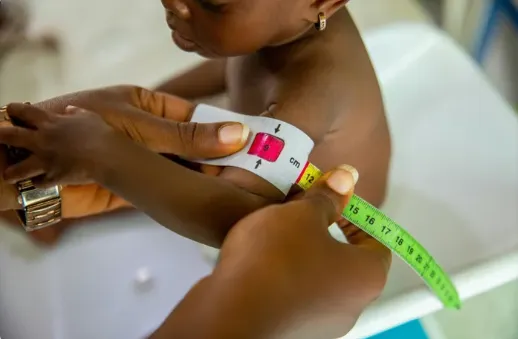
Following the SONA 2026, the commitment to end stunting by 2030 is now on record and needs urgent intervention.
Image: Image: Lagos Food Bank Initiative / pexels
South Africa’s commitment to phase out childhood stunting by 2030 is facing persistent structural and implementation challenges, according to new research released by Stellenbosch University.
The findings follow President Cyril Ramaphosa’s State of the Nation Address, where he reaffirmed the government’s focus on the first 1,000 days of life and targeted nutrition support for pregnant women with stunted infants.
Despite this commitment, researchers from Stellenbosch University say progress has been limited.
“South Africa has one of the highest rates of stunting among upper-middle-income countries globally, with little change in the last three decades despite the government’s efforts to tackle poverty and expand access to social grants,” the report states.
In South Africa, more than a quarter of children under five experience stunted growth, largely due to chronic malnutrition that often begins before birth.
Professor Ronelle Burger of Stellenbosch University said the economic argument for action is clear.
Burger added: “Without addressing stunting first, beginning in utero and when children are very young, we dilute the impact of the money spent downstream on early childhood development centres, schools, and clinics because we reach children too late.”
The findings are published in a special issue of Development Southern Africa, bringing together 10 peer-reviewed papers on causes, interventions, and governance failures linked to stunting.
“South Africa’s nationally representative surveys have produced stunting estimates ranging from around 20% to over 30% for the same period,” the report notes, adding that “it makes it difficult to know whether the problem is getting better or worse.”
On governance, the research is equally direct.
“Responsibility for reducing stunting is spread across government departments of health, social development and education, meaning no single department is clearly accountable,” it states.
Liezel Engelbrecht, Nutrition Lead for the Hold My Hand Accelerator, said coordination remains a major gap.
On Ramaphosa's stated goals, she said "this requires political commitment, which we are now seeing, but it also needs a clear national plan with targets. This is especially important considering that the National Food and Nutrition Security Plan has lapsed".
Researchers are calling for a dedicated government stunting strategy with clear accountability, district-level targets, and regular public reporting.
They also recommend the establishment of a Food and Nutrition Security Council to oversee implementation.
Although regulations on infant formula marketing have been in place since 2012, researchers say enforcement remains weak and “industry self-regulation has not been sufficient”.
The findings were released with support from the DG Murray Trust.
IOL