

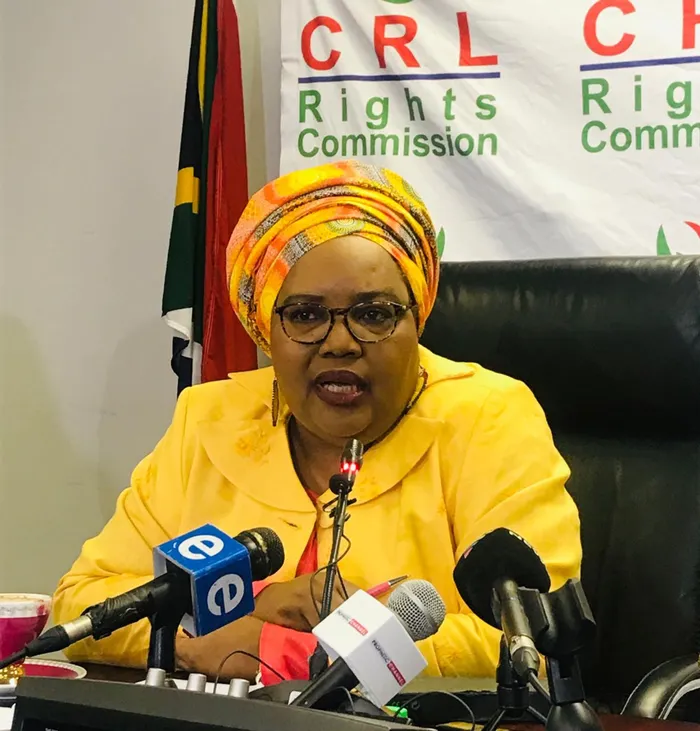
Chairperson of the CRL Rights Commission Thoko Mkhwanazi-Xaluva. The commission has defended the decision to establish a new oversight committee.
Image: Independent Newspapers Archives
As criticism mounts from church leaders and faith-based organisations, the CRL Rights Commission has defended its decision to establish a Section 22 Committee, a new body meant to consult on governance and accountability in religious institutions.
The Commission insists the initiative is being misunderstood and that it is not a step toward regulating faith.
Commission spokesperson Mpiyakhe Mkholo said the committee was created under Section 22 of the CRL Act, which allows the Commission to appoint advisory structures.
He explained that it follows a long process that began with a 2015–16 national investigation into the commercialisation of religion and the abuse of belief systems.
“That report was presented to Parliament, and in 2018, religious leaders were invited to express their views about its findings,” Mkholo said.
“The Portfolio Committee then made recommendations, including the need for a national consultative conference and a mechanism to promote self-regulation within the religious sector.”
Mkholo said the newly appointed commissioners revisited those resolutions earlier this year and decided to act on Parliament’s recommendations. “It’s not unusual,” he said. “It’s within the mandate of the Commission to identify those people who can serve in the committee.”
The announcement has, however, faced stern criticism from organisations within the faith sector. Critics argue that even if the committee’s role is advisory, it opens the door to state interference in religion, a space protected by South Africa’s Constitution.
The South African Community of Faith-Based Fraternals and Federations (SACOFF) this week joined those voicing concern. In a statement issued by its president, Pastor Bert Pretorius, SACOFF said while it supports accountability and ethical leadership within churches, “legislated self-regulation would in practice amount to state control.”
“Existing laws are sufficient if properly enforced,” Pretorius said. “Rather than new legislation, SACOFF calls for stronger cooperation between law enforcement, civil society, and faith-based institutions to ensure that the current laws are enforced effectively and fairly.”
Pretorius said the organisation supports “genuine self-governance driven by internal peer-review mechanisms and ethical leadership, not government-imposed oversight structures.”
He warned that state involvement risked “eroding the independence of religious institutions and undermining the very freedoms enshrined in South Africa’s Constitution.”
Mkholo has rejected those concerns, saying the committee’s purpose is purely consultative and inclusive of faith leaders. “This committee is not regulating matters of religion,” he said. “It’s going to be consulting the very same religious leaders across the country in order to get their inputs and identify the challenges.”