

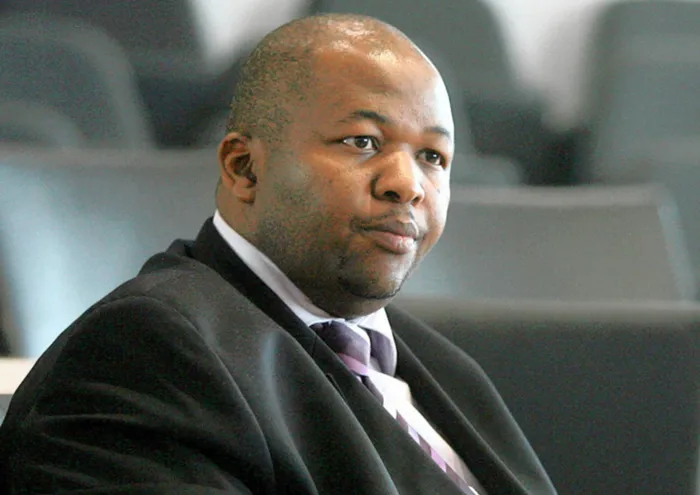
Eskom group chief executive Dan Marokane said the restructuring marks a turning point in how electricity will be produced, traded and delivered.
Image: Jennifer Bruce
South Africa’s electricity sector is entering a decisive phase of restructuring, with Eskom and the National Transmission Company South Africa (NTCSA) receiving ministerial approval to implement core elements of the Electricity Regulation Amendment Act (ERAA).
The move formally sets the country on a path toward a competitive, multi-player electricity market, a historic departure from Eskom’s decades-long vertically integrated model.
The Minister of Electricity and Energy, Dr Kgosientsho Ramokgopa, has approved Eskom’s refined unbundling strategy, confirming a new corporate structure that positions the utility to operate as a group of specialised subsidiaries.
These include GenerationCo, the National Electricity Distribution Company of South Africa (NEDCSA), the renewable-focused Eskom Green, and the already-separated National Transmission Company South Africa. A fully independent Transmission System Operator (TSO) will be created outside Eskom.
For Eskom Group Chief Executive Dan Marokane, the restructuring marks a turning point in how electricity will be produced, traded, and delivered. “Today’s announcement by the Minister represents a significant step forward in establishing a competitive electricity market in South Africa, supported by the rule of law while maintaining strong public oversight of the power system and its assets,” he said.
“This marks the next stage of the groundwork to enable more affordable and competitive pricing by driving competition, efficiency, and diversity of supply, ultimately stabilising South Africa’s electricity system.”
Marokane stressed that Eskom has chosen a structure that enables reforms without destabilising the system.
“We recognise the urgency of reform to benefit consumers, and among all the options for Eskom’s next stage of unbundling, we have chosen the framework that enables the fastest and most orderly transition,” he said.
The chosen model, he noted, “strengthens the level playing field for market participation and provides greater certainty for investors bringing much-needed capacity into the system”.
Demand forecasts underpin the urgency of these market changes.
According to Marokane, “growing the electricity marketplace requires expanding supply, with demand projected to increase by 1.5% in the short term and 2% in the long term. Given the variability of renewable energy, South Africa will need to grow generation capacity from 66GW in 2024 to 107GW by 2034.”
The NTCSA, which will retain ownership of the grid, also stands at the centre of the reform. The newly approved independent TSO will assume responsibility for system operations, market operations, grid access, and central purchasing, tasks currently housed within Eskom and NTCSA structures.
NTCSA CEO Monde Bala said the market shift will transform investor confidence.
“The TSO will be fully independent of the NTCSA and Eskom Holdings to provide transparent and unbiased access to the transmission network, under strong regulatory oversight from NERSA.”
Bala said that structural independence is essential to eliminating long-standing concerns from private developers.
“This is the best solution to provide confidence and trust to attract other players to invest in transmission infrastructure, by enabling fair access to the grid,” he said.
The ERAA requires the independent TSO to be established within five years. Eskom and NTCSA have already begun building the operational and governance structures required for separation.
Eskom expects the transition to a fully restructured market by 2030, with changes implemented in phases to protect system reliability. Engagement with regulators, labour, municipalities, and other stakeholders will continue throughout the process.