Business sector laments ‘dirty Durban’ and says city’s lack of cleanliness is ‘deeply embarrassing’
|Published
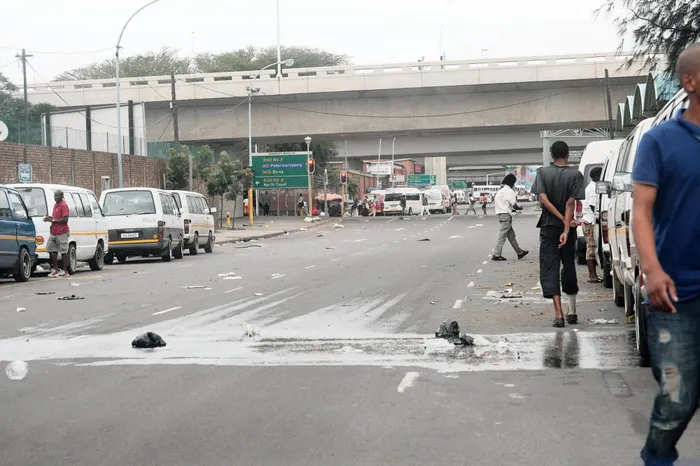
The business community in Durban has sharply criticised the poor state of cleanliness in the city, calling it “deeply embarrassing” and an impediment to the growth of the tourism industry. Litter on the streets of Durban. File Picture: NQOBILE MBONAMBI
DURBAN - THE business community in Durban has sharply criticised the poor state of cleanliness in the city, calling it “deeply embarrassing” and an impediment to the growth of the tourism industry.
Chief executive of the Durban Chamber of Commerce and Industry Palesa Phili said the city’s level of cleanliness was deeply embarrassing, saying it was one of the reasons the city recorded low tourist numbers.
The issue came into focus yesterday as the chief financial officer of the eThekwini Municipality, Sandile Mnguni, briefed the business community in an event that involved the chamber, on the city’s annual report. The annual report covered the period that ended June 2021, and looked at the challenges and what had been achieved by the province’s only metro. The report implied that cleanliness, including the rate of refuse removal, was one of the city’s positives in the past financial year.
During the presentation, Mnguni had stated that the city’s refuse collection and other services were standing at about 75%, prompting questions from the business community as to where he was drawing this figure from, as they said this was not reflected in the state of cleanliness of the city.
Participants in the virtual event took issue with the levels of cleanliness as well as water losses, after the city confirmed that almost half of the water it purchased was lost, and that these losses had cost it more than a billion rand in the past financial year.
Phili questioned the lack of infrastructure projects and the negative impact this was having on the implementation of catalyst projects. But she reserved her harshest criticism for the state of cleanliness of the city.
“I would like to know where you (the city) are getting the figure of collection rate of refuse, as this is not being seen by the businesses and the community.
“The state of cleanliness of our city is embarrassing. In the Point area there is general crime and grime, with people selling drugs in broad daylight,” she said.
Phili said the lack of cleanliness was contributing to the low tourist numbers, as revealed by the city, adding that in areas like Cape Town, where the city is clean, tourism was booming.
She also touched on the state of the city’s roads, saying they were in extremely poor condition, and adding that even those that had been fixed, were falling apart shortly thereafter.
The municipality, however, said there were various positives, including that it had a good investment grade with an AA+ rating, as well as a collection rate that is at 95%.
It listed other achievements, that included the kilometres of road that had been surfaced and the number of rural roads surfaced.
It also detailed plans for public transport, saying millions had been set aside for work to commence on the other Go!Durban Routes, and that over the next few years, it would spend about R450 million on the purchase of municipal buses.
The presentation showed that despite the challenges brought on by Covid-19, the city had been able to ensure that 83% of houses had access to basic water, 75% of households had access to a basic level of sanitation and that 92% of total water connections were metered.
The metro police came in for praise by the city and business community, especially when responding to issues of business forums that invaded sites.
On the negative side, the presentation touched on the issue of unemployment, revealing that there was a huge misalignment in job opportunities available in the city with the available skills. People were unskilled, while the jobs were for semi-skilled and skilled people.
Another participant, Gail Wilson, a businessperson who recently moved near the uShaka Marine area, congratulated the city for cleanliness in that area, saying workers started cleaning early in the morning and that the metro did a good job in ensuring that the area was safe.
“You can start walking from as early as 5 in the morning, but the concern is that the city (CBD) closes very early. By 8pm it is closed (as compared to the area close to the beach),” Wilson said.
Another participant, only identified as Mpilo, raised concerns about the water losses, saying the city was losing almost half of the water it purchases.
She said it was unfair to keep hiking tariffs without addressing those issues.
Mnguni admitted that the city was not clean and said they had committed to addressing the issue of water losses.
He also said the city would put aside millions to address roads and maintenance backlogs. He said the city leadership had resolved to prioritise the catalyst projects and to deploy resources in line with that resolution.