

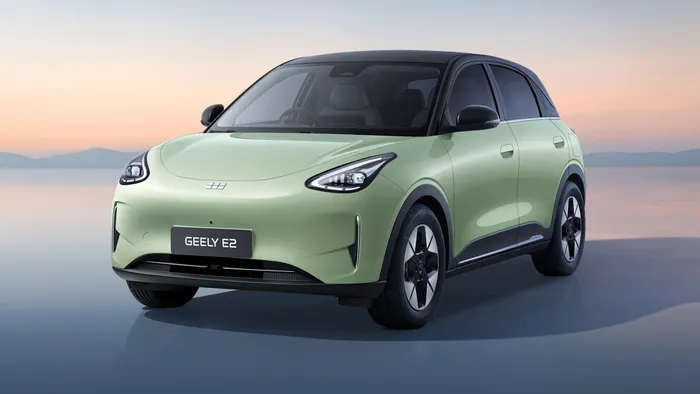
Small, Chinese-built vehicles, like the Geely E2, have made electric cars more accessible to South African buyers.
Image: Supplied
The internal combustion versus electric car debate usually revolves around driving sensation, economy and ecology, and when you have passionate petrolheads and EV ‘progressives’ in the same space, things often get heated.
But there’s another aspect to the ICE and EV conversation that is not often spoken about, and that is driving safety.
Eugene Herbert, CEO of MasterDrive, says that while there are many advantages to driving an EV, there are also distinct characteristics that can affect their safe operation on our roads.
“EVs cannot be driven in the same way as internal combustion engines (ICE). Differences in power delivery, braking systems, and vehicle dynamics mean techniques ideal for fuel vehicles can be challenging in EVs.”
He warned that the instantaneous throttle response of EVs can lead to danger in certain conditions.
“There is a higher risk of overcorrection in emergencies or loss of traction during quick overtakes. Treating your EV as ‘just another car’ significantly increases accident risk,” Herbert added.
Caution with the right pedal is also required in wet or slippery conditions, as the sudden power delivery can catch drivers off-guard, potentially causing a loss of traction.
“Smooth, measured throttle inputs are essential, particularly when pulling away from intersections, merging into traffic and around pedestrians,” Herbert said.
EV drivers also need to acclimate themselves to regenerative braking, which can lead to sudden deceleration akin to braking when letting go of the throttle. Most battery cars allow owners to adjust the level of regen braking, which converts kinetic energy back into battery charge, and they should be mindful when exploring the various settings.
The heavier weight of EVs, due to their battery packs, is also a factor in handling safety. While the low centre of gravity due to batteries being mounted in the chassis can improve handling and reduce the rollover risk, the extra weight can affect braking distance and tyre wear.
“Transitioning to an EV requires a mindset shift. Familiarise yourself with your vehicle in a safe, controlled environment before venturing into heavy traffic. Ideally, this should be with the guidance of a training programme, Herbert said. “Understanding these differences and adjusting driving accordingly helps ensure your electric driving experience is safe and that you get the full benefit of your EV.”
Another factor to take into consideration is the near-silence of EVs, which makes them virtually inaudible to pedestrians and cyclists. For this reason, drivers should be extra vigilant and anticipate that such road users may enter their paths at any time.
IOL Motoring