Timing of move on Oilgate report queried
|Published
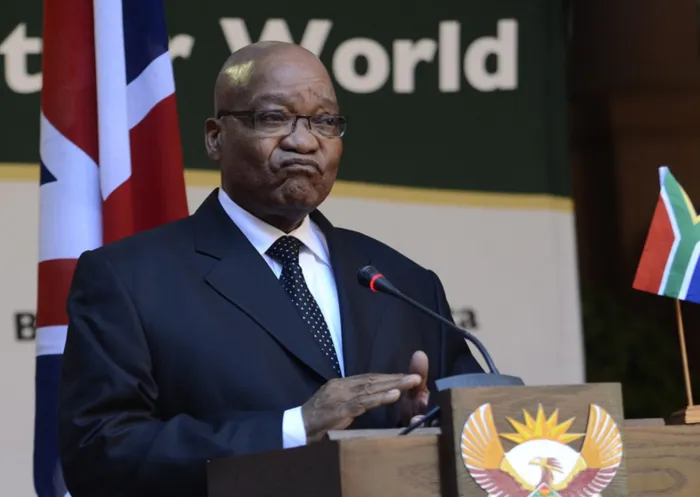
President Jacob Zuma. Picture: Etienne Creux President Jacob Zuma. Picture: Etienne Creux
The timing of President Jacob Zuma’s decision to release the report of the Donen Commission of Inquiry into the involvement of South Africans in the Iraq oil-for-food programme has been questioned, with some analysts and opposition parties speculating that he is using the report to target political opponents.
The Donen Commission’s report is believed to contain potentially damning evidence against top ANC members, including Deputy President Kgalema Motlanthe and Minister for Human Settlements Tokyo Sexwale.
Among those implicated in the scandal was the controversial businessman and ANC benefactor Sandi Majali, whose death in a Joburg hotel late last year has since raised questions.
People subpoenaed to testify before the 2006 inquiry included Motlanthe, now being seen as a possible contender for the ANC presidency and Sexwale, who recently testified in defence of Zuma’s possible nemesis, ANCYL president Julius Malema, at his disciplinary hearings.
Immediate reaction to Zuma’s decision to make public the report – kept under wraps since November 2006 – included speculation that it would suit him politically by helping neutralise opponents in the run-up to the party’s elective conference in Mangaung in December next year. Similar speculation followed Zuma’s decision last month to set up a fresh commission of inquiry into the arms deal scandal.
Both times, Zuma has been under pressure from leverage applied through the courts.
Motlanthe, former minerals and energy department director-general Sandile Nogxina and former Strategic Fuel Fund director Riaz Jawoodeen, all reportedly accompanied Majali to Iraq, while Sexwale was called as a witness as a director of a company that had traded under the oil-for-food programme.
The decision to release the Donen Report “on or before” December 7 followed an urgent Western Cape High Court application by the Cape Argus to compel Zuma to release the report in terms of the Promotion of Access to Information Act.
Political analyst Professor Adam Habib said last night he would have been sceptical about the decision if the matter had not been before a court.
“But that doesn’t mean there isn’t a battle going on.”
Set up in 2006 by then president Thabo Mbeki and chaired by Michael Donen, SC, the commission’s terms of reference were limited to investigating specific allegations in a UN report that South African companies were among those paying kickbacks or surcharges to Saddam Hussein’s regime.
Maharaj, who said he had read the report, said Donen had not found that anyone had broken South African law.
DA parliamentary leader Athol Trollip questioned the decision’s timing, saying “it is crucial that information is released into the public domain for the right reasons, and not as a means to fight internal political battles”. - Political Bureau