

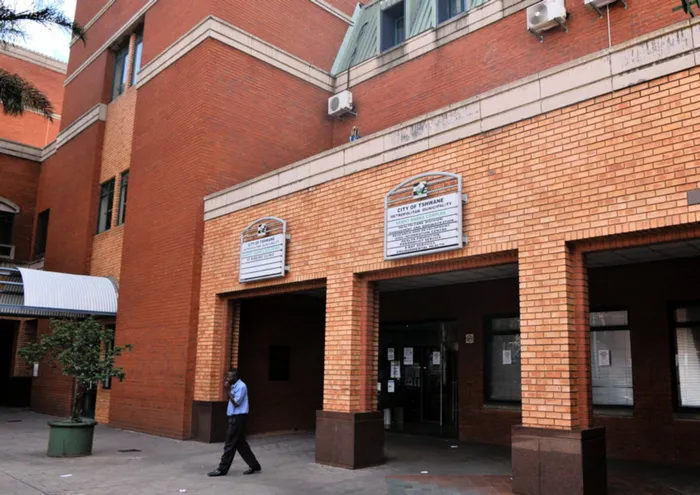
08/04/2012. Occupational hygiene reports on indoor air quality surveys undertaken at the F.F. Ribbeiro Clinic and some oofices of the Sammy Marks Building indicate poor indoor air quality after workers complained about being sick. Picture: Masi Losi 08/04/2012. Occupational hygiene reports on indoor air quality surveys undertaken at the F.F. Ribbeiro Clinic and some oofices of the Sammy Marks Building indicate poor indoor air quality after workers complained about being sick. Picture: Masi Losi
The City of Tshwane has been slammed by employees who have been diagnosed with chronic illnesses allegedly caused by poor ventilation in the municipal offices on Sammy Marks Square.
The Independent Municipal and Allied Trade Union (Imatu) is seeking the prosecution of the city manager for non-compliance with occupational health and safety legislation.
Members working in the building have lodged several complaints which stem from changes made to the building over the years without the ventilation system being altered, Imatu said.
Imatu’s Abraham van Wyk said the building’s ventilation system was constructed to service its original internal outlay.
“The ventilation system, unfortunately, was not adjusted and adapted to the changed layout and was not properly maintained. Some employees working in the building had to constantly breathe old air as fresh air supply to all the offices could not be supplied,” said Van Wyk.
He said upper respiratory infections, sinusitis, bronchitis and asthmatic attacks had caused employee absenteeism.
But the municipality said there was no truth in the statements.
Council spokeswoman Dikeledi Phiri said: “The only query by the airconditioning company whose services were enlisted as a result of issues raised was the fact that there was not sufficient airflow.
“There was nothing wrong with the quality of air in the Sammy Marks Building. We are also not aware of any cases of officials who became sick as a result of the airflow situation in the Sammy Marks Building.”
She said the council had quotations which indicated that R5 million was needed to redesign the building so there could be more airflow. This money still had to be budgeted for.
Phiri added that the airconditioning system’s air filters were washed every weekend.
However, Van Wyk said the Department of Labour had conducted an inspection in 2009 and the municipality had to appoint an approved inspection authority (AIA) to identify risks to employee health and take steps to eliminate them.
He said a certified AIA had issued two occupational hygiene reports on indoor air quality surveys at the FF Ribbeiro Clinic and some offices of the Sammy Marks Building.
Surveys were conducted in December 2009 and in January 2011. Van Wyk said the first report indicated that complaints regarding poor indoor air quality were legitimate. The second report stated that some of the indoor air quality parameters did not comply with statutory requirements and recommended standards.
Van Wyk said the AIA made several recommendations to improve air quality but the municipality did not adopt or implement them all.
Employees working in the Sammy Marks Building were still dissatisfied with the air quality and lodged a group grievance last August. They wanted the AIA to certify that the building was safe for occupation or to be relocated to a safe working environment.
“The aggrieved employees are of the opinion that the fungi in the air conditioning system in the Sammy Marks Building are the cause of numbers of employees reporting sick,” said Van Wyk.
He alleged that some employees had been hospitalised after contracting acute illnesses that would require permanent treatment.
Van Wyk said the union had asked the Department of Labour to hold a formal inquiry into the matter. The union said that if the department’s chief inspector decided not to order an inquiry, that decision would be taken on appeal to the Labour Court.
karabo.seanego@inl.co.za
Pretoria News