

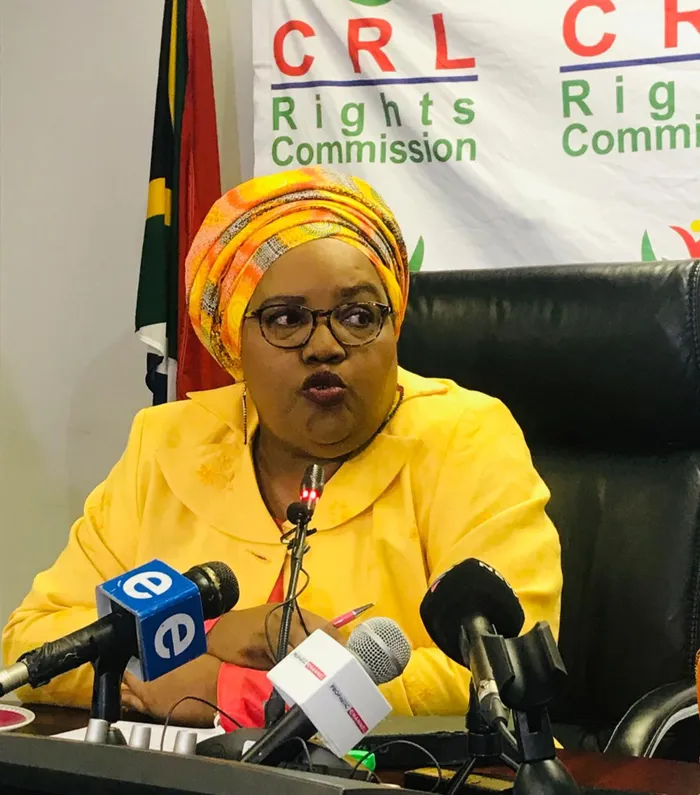
Chairperson of the CRL Rights Commission Thoko Mkhwanazi-Xaluva, who recently announced the appointment of Professor Musa Xulu as the chairperson of the Section 22 Committee aimed at curbing abuse and unethical conduct in religious organisations, has been slammed by a number of organisations in the sector who are opposed to "state control'.
Image: Jonisayi Maromo/IOL
Thousands of followers of the South African Christian Defenders, a “non-partisan” federation of churches, marched from Marabastad to the Union Buildings in Pretoria on Wednesday to protest against “renewed efforts” to introduce state regulation of religion.
Professor Theophilus Mukhuba, of the Unity Fellowship Church, addressed the crowds and called for President Cyril Ramaphosa to investigate the commission and help stop the attempts to undermine constitutional democracy, religious rights and the freedom of association.
Reading from their memorandum of demands handed over to a representative from the Presidency, Shonisani Mudau, Mukhuba said they were alarmed by the renewed efforts by the Commission for the Promotion and Protection of the Rights of Cultural, Religious and Linguistic Communities (CRL Rights Commission) to introduce state regulation of religion “through the so-called peer-review system”.
He said the idea of state regulation had been deliberated upon in Parliament and was rejected some years ago. He said the “renewed” process “undermines constitutional democracy and disregards parliamentary authority”.
He said religious freedom and related rights were guaranteed in the Constitution and slammed CRL Rights Commission Chairperson Thoko Mkhwanazi-Xaluva, calling for her removal and the commission’s disbandment.
"It is there in the Constitution bazalwane (fellow congregants). We have the right to self-govern ourselves," Mukhuba told the crowds.
He condemned what he described as the commission’s attempt to police religious communities.
"Their mandate has never been to police religious communities. That is the job of the police. Whoever commits a crime in the church is not any different from a criminal who commits a crime when he's a politician, a police, or a teacher or a man in the street,” he said.
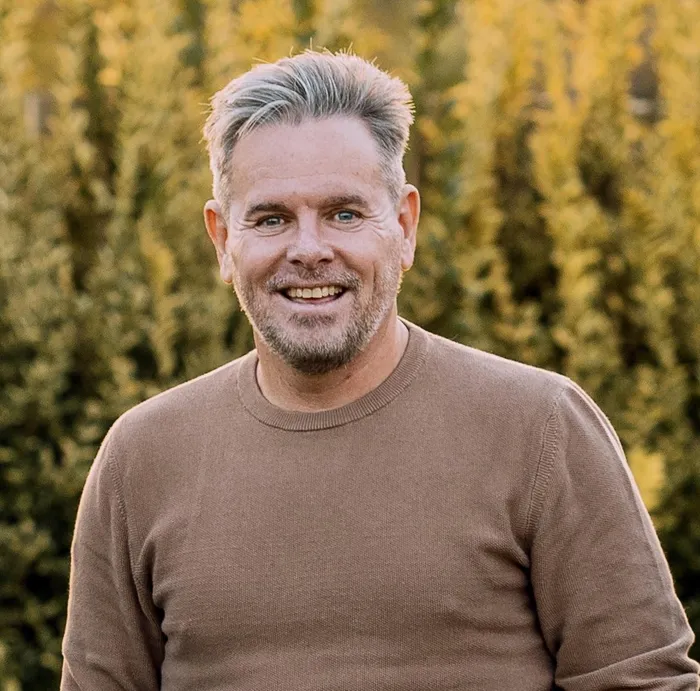
Bert Pretorius, senior pastor at 3C Church and President of the South African Community of Faith-based Fraternals and Federations (SACOFF), says their goal "is not to resist oversight, but to ensure that it is done in a way that strengthens — not silences —the voice of faith in our nation".
Image: SUPPLIED
Wednesday’s protest, dubbed the National Christian March, was part of a pushback from religious communities across the country unhappy about the recently announced plans for a new Section 22 committee to oversee the sector, curb the abuse of vulnerable followers, promote accountability and “restore order”.
Meanwhile, the South African Community of Faith-Based Fraternals and Federations (SACOFF) also added its voice in the debate via a statement issued on Tuesday. It warned against legislated “self-regulation”, which it said was tantamount to state control.
However, the Pretoria-based organisation representing several churches and faith-based bodies across the country said it welcomed “cooperation and engagement with the government and the CRL Rights Commission. It warned against state regulation and instead called for the empowerment of faith communities to better enable them to regulate themselves.
“While SACOFF welcomes cooperation and engagement, it warns that legislated ‘self regulation’ would, in practice, amount to state control. Such a move risks eroding the independence of religious institutions and undermining the very freedoms enshrined in South Africa’s Constitution, which includes the freedom to speak truth to power,” the organisation said in a statement.
SACOFF President, Pastor Bert Pretorius, reaffirmed that his organisation will continue to advocate for the preservation of religious liberty alongside accountability and transparency.
“Our goal is not to resist oversight, but to ensure that it is done in a way that strengthens — not silences —the voice of faith in our nation,” he said.
“We are committed to walking this journey of healing, responsibility, and freedom together.”
Reiterating its support and commitment to the ongoing dialogue on regulation, the organisation said: “SACOFF remains fully engaged in constructive dialogue with the CRL Rights Commission, government, and other key partners to advance mutual understanding and national unity. The organisation believes that sustained dialogue is the best path forward — one that preserves the integrity of faith communities while safeguarding every citizen’s right to believe, worship, and serve without interference.”
SACOFF said it recognises that the well-being and safety of congregants are essential to “genuine ministry”. The organisation said it will continue to champion an environment where faith communities are “transparent, responsible, and nurturing — where abuses are confronted decisively, victims are protected, and leaders uphold the highest moral and ethical standards”.
Pastor Pretorius highlighted the fact that South Africa’s existing legal framework already provides sufficient instruments to address misconduct when properly applied. Rather than new legislation, SACOFF calls for stronger cooperation between law enforcement, civil society, and faith-based institutions to ensure that the current laws are enforced effectively and fairly.
Calling for “genuine self-governance”, instead of “state oversight”, the organisation said “true accountability” comes from within the faith sector itself.
“The organisation supports genuine self-governance driven by internal peer-review mechanisms and ethical leadership, rather than government-imposed oversight structures. SACOFF believes that empowerment, not external control, is the path toward lasting transformation and public trust.”