

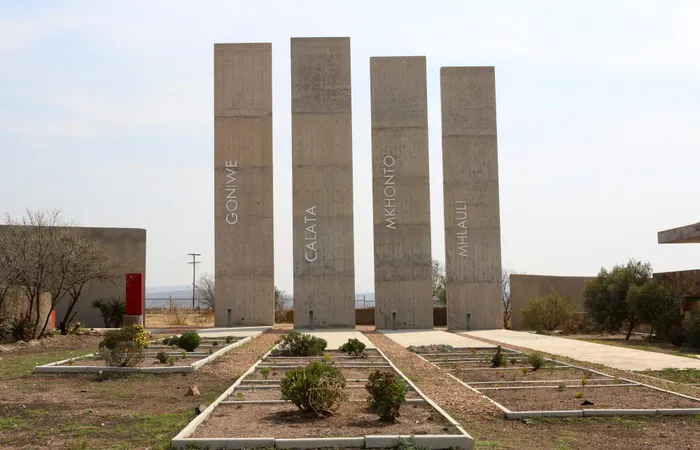
The Cradock Four Inquest is set to continue on Monday
Image: Bheki Radebe/Independent Newspapers
Former apartheid deputy education minister Sam de Beer is set to testify in the Gqeberha High Court on Monday in the third inquest into the killings of the Cradock Four.
Sicelo Mhlauli, Matthew Goniwe, Fort Calata, and Sparrow Mkonto were abducted after attending a United Democratic Front (UDF) meeting in Gqeberha in June 1985.
They were detained at a roadblock, tortured and later found burnt near Bluewater Bay.
Last week Wednesday, the inquest heard ex-Vlakplaas commander Eugene de Kock, widely known as “Prime Evil", was hospitalised for suspected heart failure.
De Kock, who had been scheduled to testify, previously gave evidence to the Truth and Reconciliation Commission (TRC).
Lawyers representing some of the former apartheid security bosses requested proceedings be delayed until he could appear.
Judge Thami Beshe, however, ruled the inquest should continue without De Kock, at least for now.
De Kock was sentenced to two life terms plus 212 years in prison for his role as the head of the apartheid-era police death squad, C10, which was responsible for numerous murders, kidnappings, and other crimes against anti-apartheid activists.
After serving approximately 20 years, he was granted parole in 2015.
The SA government justified his release on the grounds of nation-building and reconciliation.
De Beer, who served as deputy education minister at the time of the murders, is expected to spill the beans regarding the role of government departments at the time, particularly the education ministry.
The 81-year-old's testimony is supposed to help the inquiry understand what officials knew or could have known about the abductions and killings and whether any state structures were involved in facilitating or ignoring the attacks.
Between 1984 and 1989, he served as education and development aid deputy minister.
In 1991, he was appointed to the cabinet as education and training minister, a portfolio which included administration of the Bantu education system.
According to the FW de Klerk Foundation, when Goniwe was dismissed from his teaching position in Cradock in 1984, De Beer and his superior, Barend du Plessis, pursued his reinstatement.
They even considered appointing him as headmaster of a Cradock school, the foundation previously said.
However, their efforts faced strong resistance from security forces, and before they could succeed, Goniwe was abducted and murdered.
UDF leader Bantu Holomisa on Tuesday last week testified about the so-called “Signal".
"Signal" is a document allegedly directing the permanent removal of the Cradock Four.
Holomisa identified high-ranking security officials as being involved in orchestrating the murders.
Holomisa also addressed the role of then-President FW de Klerk.
And while he did not allege De Klerk personally ordered the killings, he said the late statesman bore ultimate responsibility for the apartheid state and its security forces.
Holomisa said the political environment created by the government and the failure to hold security officials accountable, contributed to the climate in which such killings could occur.
He said De Klerk, as head of state, should have ensured that acts of political violence were investigated and that perpetrators were brought to justice.
Senior Hawks investigator Colonel Mthetheleli Dweba also detailed the challenges of reconstructing the case.
In 2021, he was tasked with rebuilding the murder docket after many original documents had gone missing, he said.
Some suspects were deceased, while others, including Niel Barnard, head of the National Intelligence Service, and Barend du Plessis, minister of black education, allegedly refused to cooperate.
Dweba said he traced witnesses and officials decades after the killings.
Throughout previous hearings, it emerged apartheid officials were often uncooperative or evasive.
Dweba said he was oftentimes met with hostility, threats, or silence from several former security personnel.
Investigators, he said, also learnt that powerful forces within the criminal justice system may have shielded some high-ranking officials from scrutiny.
IOL News