

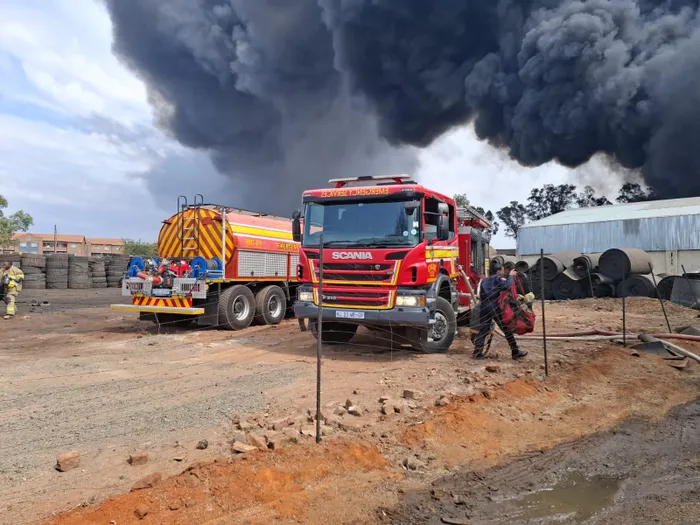
The City of Tshwane's councillors are demanding more resources for emergency services department amid rising disaster incidents.
Image: Supplied
The City of Tshwane's Emergency Service Department, which battled more than 100 disaster incidents last year, is beset by shortages of equipment and disaster management staff like firefighters.
This was a concern expressed by councillors during an ordinary council sitting on Thursday at Tshwane House, where they debated the 2024/25 disaster risk management annual report regarding the city’s activities, interventions and achievements for the financial year from July 1, 2024 to June 30, 2025.
Part of the report noted that the emergency services unit handled over 100 significant incidents such flooding, shack fires, thunderstorms, and sinkholes with approximately R92 million in damages recorded from disaster impacts.
The report, however, highlighted that resource constraints, infrastructure backlogs, and rapid urbanisation continue to affect the effectiveness of disaster risk management initiatives.
“Vulnerability in informal settlements remains high due to dense populations, poor infrastructure, and socio-economic conditions. And, climate change has intensified hazards such as flooding, heatwaves, and storms, requiring adaptive planning and sustained investment,” the report said.
DA’s Alfred Makhafola said the department continues to be overlooked when it comes to the allocation of financial resources as it is continuously allocated with insufficient funds.
“Lack of adequate financial resources make it difficult for this department to acquire essential tools and equipment that are crucial to increasing disaster management capacity,” he said.
He added that the department’s office facility is in need of refurbishment, which is crucial to improve the safety of emergency service personnel.
“We urge this administration to understand the importance of the effective emergency service department and increase its budget to help improve operational efficiency and address the health and safety issues that have been identified,” he said.
EFF’s Lucas Matlhabane said the city keeps facing floods that displace the poor, shack fires that claim lives in townships like Mamelodi and Hammanskraal, yet the response falls on under‑resourced public servants.
He said the report must be turned into real protection for Tshwane’s people, especially those in flood‑prone informal settlements, those stuck using paraffin because electricity roll‑outs stalled, and families who lose children in shack fires because fire engines can not get there fast enough.
“The EFF demands the insourcing of all emergency and disaster personnel to end the exploitation of contract workers who risk their lives while earning poverty wages,” he said.
The EFF also called for equitable resource allocation to ensure that emergency personnel respond on time in the event of disaster.
ActionSA’s Thabang Sebotsane said the report highlighted the historic risk facing the city’s emergency services department and the need to strengthen the capacity for the disaster risk management team.
“The report confirms what we have already known that the complexity of the emergency work has deepened with climate change and other factors. There are now more frequent floods, heatwaves and fires that continue to test the city’s resilience and yet our officers continue to serve under this trying condition often without sufficient tools or manpower,” he said.
rapula.moatshe@inl.co.za