

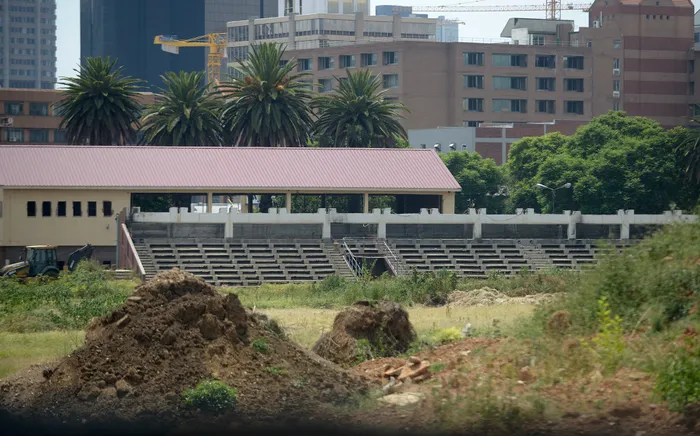
Tshwane council is seeking public input on the Caledonian Stadium's mixed-use redevelopment, a project previously plagued by financial mismanagement and stagnation.
Image: Thobile Mathonsi / Independent Newspapers
The long-stalled project to upgrade the Caledonian Stadium in Arcadia is set to be revived after the City of Tshwane council passed a report to undertake public participation regarding a proposed mixed-use redevelopment of the multimillion-rand facility.
The public participation process will pave the way for the city to conclude a lease agreement with a private developer to oversee the mixed development that combines sports, recreation, commercial, and residential elements to create a multi-purpose hub.
The project will be restarted after years of stagnation, marked by significant financial waste and a lack of municipal accountability, with millions of rand spent without yielding tangible results.
In 2017, former mayor Solly Msimanga announced plans to refurbish the stadium with a R67 million budget within three years, but the project failed to materialise.
At the time, Msimanga said the city had partnered with SuperSport United to make the Caledonian Stadium their home ground upon the project's completion.
This was despite the facility's long-standing history with Arcadia Shepherd, which had been using it for decades.
Three years ago, former MMC for Social Development Peggy de Bruin announced that R50 million would be spent on the stadium, with plans including demolition, removal of old structures, and construction of a boundary wall, but progress remained elusive.
According to a council report, the city's financial constraints have forced a rethink on funding for key projects, including the Caledonian Stadium, with the Social Development Department now exploring alternative models like commercialisation to unlock resources.
“The Loftus Park is an example of this proposed model, where there’s a commercial precinct, including retail, restaurants, and a hotel, as well as the stadium that caters to both football and rugby,” the report said.
ANC councillor Conride Ngoveni said the proposed redevelopment's benefits include economic growth, job creation during construction, and optimised land use, promoting sustainable growth and reducing urban sprawl.
“This development offers an opportunity to address housing needs. The mixed-use could incorporate affordable housing units, alleviating some of the housing pressure on our housing market and ensuring that all residents, irrespective of income, can enjoy this revitalised project,” he said.
DA councillor Leon Kruyshaar welcomed the proposed investment, but emphasised the need for transparency, fairness, and value for money in the redevelopment.
“We cannot allow the heritage assets to be disposed of through backroom arrangements or without clean public oversight. The DA supports public participation but calls for strict financial accountability, full disclosure of valuation documents, and council oversight at every step,” he said.
EFF's Rebecca Monchusi also welcomed the mixed-use development, saying it is a chance to revive a neglected landmark, but stresses that public input is crucial before approving the lease.
Freedom Front Plus councillor Carien Nefdt expressed support for the development, emphasising that it must prioritise community interests and adhere to council principles of clarity, transparency, and fairness.
The Caledonian Stadium's history is rich, having been a hub for football legends like Mark Fish, Bongani Khumalo, and Itumeleng Khune.
Before the 2016 municipal elections, the ANC-led administration planned to demolish it for a multi-purpose park, but Arcadia Shepherds, led by its manager Lucky Manna, fought the plan in court to preserve the facility’s legacy.
rapula.moatshe@inl.co.za