

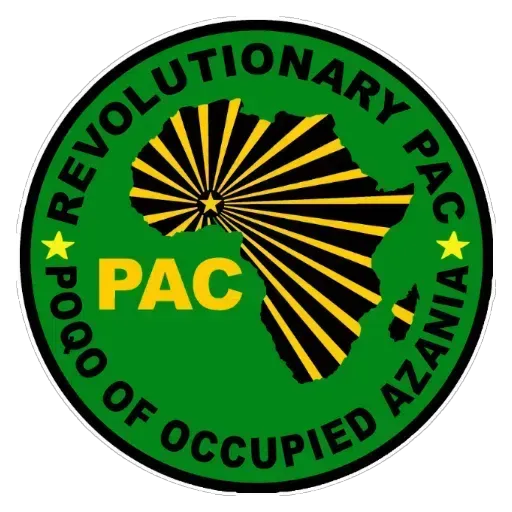
The new party, Revolutionary PAC-POQO of Occupied Azania (RPAC-POQO), has been formed with its logo resembling that of the PAC.
Image: Supplied
The disagreement on the participation in the Government of National Unity (GNU) within the Pan-Africanist Congress of Azania (PAC) has given birth to a brand-new breakaway party, which bears similarities to the original party.
The new party is named Revolutionary PAC-POQO of Occupied Azania (RPAC-POQO) and is led by PAC’s former national organiser, Ntsie Mohloa.
This might mean that the PAC supporters would have a challenge in selecting the right party to vote for in the local government elections late this year, as both parties bear striking resemblances.
The new party, which is yet to register with the Electoral Commission of South Africa (IEC), would contest the elections in Gauteng, Eastern Cape, Western Cape, KwaZulu-Natal, Limpopo, Mpumalanga, and Free State.
The original PAC held an elective conference in Gqeberha, Eastern Cape, from December 11 to 14 and re-elected Rural Development and Land Reform Minister Mzwanele Nyhontso as its president.
The RPAC-POQO, which has a similar logo to that of the original party, held its conference in Soweto between December 5 and 7, and elected nine members of the National Executive Committee, including Mohloa as its chairperson.
It also elected seven additional members.
POQO was another name for the Azanian People's Liberation Army (APLA), a PAC’s underground militant armed wing during the Struggle against apartheid.
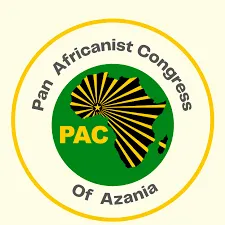
The Pan-African Congress of Azania, under Mzwanele Nyhontso, says it would lay a complaint if the Revolutionary PAC-POQO of Occupied Azania registers with the IEC.
Image: Facebook
Describing the new party, PAC Secretary-General Apa Pooe, who was also re-elected in Gqeberha, described it as similar to the uMkhonto weSizwe Party (MKP), which former president Jacob Zuma formed as a breakaway from the ANC.
He said that for now, the PAC cannot do anything to challenge the new party for resembling its logo.
“We will have an opportunity to object to the IEC when they register.
“But they (PAC POQO leaders) are no longer with the PAC, they are a new party, like all other people who form parties,” said Pooe.
The leadership of the new party lashed out at Nyhontso for joining the GNU, using the party formed by Struggle icon Robert Sobukwe in 1959, without the mandate of the party members.
The defectors argued that the PAC should not have joined a government that represents white interests regarding land issues.
Pooe said the Gqeberha conference discussed the GNU, and delegates agreed that the PAC should continue being a part of it.
“PAC members have accepted that we are part of the GNU. The PAC, from its formation, has never been a black or a white party, but we have always been an Africanist political party.
“So, irrespective of the colour of your skin, you can join the PAC. For us, the colour of your skin does not matter as long as you subscribe to the ideas of Pan-Africanism,” he said.
In a statement released on December 29, RPAC-POQO said, unlike Nyhontso’s PAC, it was advancing the Afrikan People's national liberation programme “as it was articulated by Robert Sobukwe, Nyathi Pokela, Kwame Nkrumah, Sekou Toure, Didan Kimathi, Kwame Toure, Malcolm X, A P Mda and Anton Lembede, Booker T Washington, Marcus Garvey, Du Bois, Henry Sylvester-Williams”.
“As Revolutionary RPAC-POQO of Occupied, we resolved to remain resolute to forge ahead, advancing the core aims and objectives to rally and unite the African people, with African workers as the only motive force for the overthrow of white supremacy and capitalism to establish an Africanist Socialist Democratic Order recognising the primacy of the material and spiritual interests of a person,” said the statement from the party’s Secretary General Nkrumah Raymond Kgagudi, the former PAC Gauteng provincial chairperson.
The statement said the RPAC-POQO was opposed to the GNU’s involvement with predominantly white parties.
“The GNU–PAC of South Africa, having signed the GNU statement of intent, has placed itself in conflict with the long-standing PAC policy of land repossession for national sovereignty, national self-determination and self-reliance, commonly known as the return of land to the indigenous Afrikan people,” the statement read.
Kgagudi said the RPAC-POQO was the original PAC, which Sobukwe formed.
He said the new party was formed after the disagreements on matters of principle.
“A group led by Nyhontso-Apa has chosen to collaborate with political formations that represent the interests of white supremacy of settler colonialism.
“They have crossed the line, and they have ceased being the PAC of Azania ideologically, whereas we maintain the principles of the PAC as they were in 1959 when they were adopted,” he said.
He said his party would follow the PAC’s 1993 resolutions of being non-hostile towards the country’s elections.
“The 1993 position of the PAC is that it will participate in elections still stands. Yes, we will participate in the local government elections unless the special conference or central committee decides otherwise,” said Kgagudi.
He said the central committee will meet in February or March.
He stated that the RPAC-POQO would contest against Nyhontso’s PAC, which he described as a neoliberal party.
Kgagudi said his party would crisscross the country, explaining and helping voters to be able to identify RPAC-POQO on the ballot papers.
“The name that we are going to use throughout our political campaigns is Revolutionary PAC-POQO for Occupied Azania.”
bongani.hans@inl.co.za