

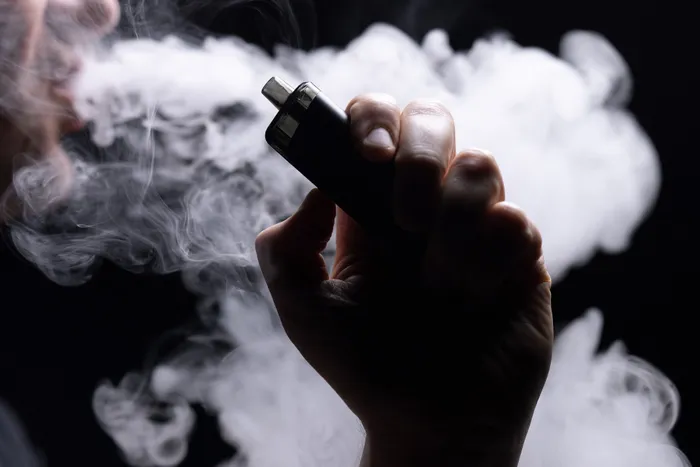
The Tobacco Products Bill's delays could prolong the vaping crisis, endangering the health of South Africa's youth. What are the implications of this legislative standstill?
Image: File
The delays and slow pace at which the Tobacco Products and Electronic Delivery Systems Control Bill is being processed suggest that it will take at least another year before the bill becomes law. And, there would still be the other matter of formulating regulations before the “silent storm” destroying young people’s health is put under control.
That is the stark view of Professor Lekan Ayo-Yusuf, an expert on the field based at the University of Pretoria.
In an interview with the Pretoria News on Tuesday, Ayo-Yusuf decried the inexplicable delays in finalising the bill that has been in the processing pipeline since 2022. He attributed the delays to “distraction”, “disinformation”, and a lack of political will on the part of legislators.
“The first bill was written in 2018, and re-introduced in 2022. 2022 to date is already five years we’re going. But you add 2018, it’s already seven-eight years. How do you have people who are responsible for the public’s health discussing something for eight years?”
He said there was “no sense of urgency” on the part of parliamentarians in formulating the legislation while 40,000 people were dying of tobacco-related illnesses every year.
The World Health Organisation recently warned that e-cigarettes are fuelling an "alarming" new wave of nicotine addiction, with millions of children now hooked on vaping around the world.
The United Nations health agency said in countries that have the data, children are on average nine times more likely than adults to vape.
Criticising local lawmakers for their lacklustre processing of the bill, Ayo-Yusuf said the vaping crisis was also growing in South Africa.
“The data we are beginning to get is that fewer people have been smoking (cigarettes) – young people – but they’re going to these hubbly bubbly and vaping and all these other things,” said Ayo-Yusuf.
However, he said he was impressed by a statement issued last week by uMkhonto weSizwe Party (MK Party) spokesperson Nhlamulo Ndhlela expressing support for the bill, which he described as “pro-poor and pro-development”.
“Tobacco use kills about 40,000 South Africans each year and costs the country roughly R50 billion annually. Use has risen sharply in recent years, with smoking and vaping increasingly targeting young people through flavoured products and digital marketing, particularly in black communities. This is not a future threat. It is a present crisis. Delay is complicity,” said Ndhlela in the statement.
Ayo-Yusuf said there seemed to be no urgency to conclude the processing of the bill.
“To the extent that the only winner in the scenario we are in is the tobacco and vaping industry because, essentially, that allows them a playing field or a field to do anything that they like in the vacuum of a fair legislative framework on how they should play the game,” he said.
The process includes obtaining submissions from the public and expert opinion, deliberating on the bill and voting on whether it was “desirable”. After the “desirability vote” it would need to go through the National Assembly for approval, and then the National Council of Provinces for concurrence.
Some of the reasons for the delays and postponements, Ayo-Yusuf complained, have been excuses like “the powerpoint wasn’t delivered before 12 o’clock”.
Arguing that there was “no evidence” for not supporting the bill, the professor said it was clear the tobacco industry had resorted to using delaying tactics.
“It is in the interest of the industry to stall the process because they know, there’s no evidence to support not passing the bill. There’s no evidence supporting allowing people to just continue to die,” he said.

The Tobacco Products and Electronic Delivery Systems Control Bill faces needless delays, potentially extending the legislative process for another year, while the vaping crisis continues to threaten the health of South Africa's youth, says Professor Lekan Ayo-Yusuf.
Image: SUPPLIED
Ayo-Yusuf accepted the view that the illicit cigarette problem, which involves criminality and robs the country of tax revenue, needed to be tackled, but “you need both (vaping legislation and tighter cigarette trade control)”.
He argued that the tobacco sector should not be viewed simply as “a pure economic, commercial venture” but also as a public health issue.
“They’re forcing the government to make a false choice between public health and the economy, which is completely far from the truth. The honest truth is that this is a public health issue. The regulation is a public health issue.”
Lending the MK Party’s support of the bill, Ndhlela said: “This Bill is South African, developed through local institutions to update outdated laws. What is foreign is the ownership of much of the tobacco industry and the flow of profits out of the country. Protecting public health is not foreign interference. Defending multinational profit at the expense of African lives is.
“Industry claims that regulation will destroy jobs are recycled myths. Strong tobacco control improves health, redirects household spending to essentials, and reduces pressure on public hospitals, supporting policies such as National Health Insurance. This Bill is pro-poor and pro-development.
“Illicit trade must be tackled through clean governance and strong enforcement, not by weakening health laws. At the same time, implementation must be just, ensuring that small traders are supported while large manufacturers are held accountable.
“The MK Party chooses liberation over corporate appeasement, people's health over private profit, and real sovereignty over empty slogans. Supporting this Bill is not submission to foreign influence. It is resistance to foreign exploitation. The MK Party does not merely speak liberation. We legislate it. We enforce it. We live it.”