

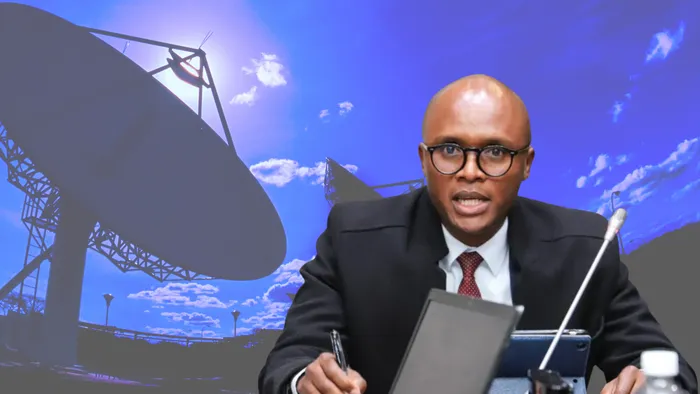
Solly Malatsi, Minister of Communications and Digital Technologies, issued a formal policy direction last year to the Independent Communications Authority of South Africa (Icasa), instructing it to urgently align its ownership regulations with the amended ICT Sector Code under the Broad-Based Black Economic Empowerment (B-BBEE) framework. However, foreign telecoms operator Starlink is "still on hold", waiting for an operating licence.
Image: X / IOLGraphics
Players in the South African telecommunications industry have put question marks over the “estimated 14 000” illegal local Starlink users who are said to be accessing the unlicensed service via foreign roaming packages from neighbouring countries such as Mozambique.
Wireless Access Providers Association (Wapa) executive member Paul Colmer cast doubt on the numbers and said they seemed “hyped up”.
“I’m very sceptical about the numbers, at 14 000. Like everything else, every time someone mentions the word Starlink, you better believe that it’s been hyped up and exaggerated.”
Emphasising the fact that Starlink receivers would be easy to spot as they are mostly placed on vantage points such as rooftops, Colmer asked: “If there was that many out there in South Africa, why wouldn’t we have seen them?”
Pretoria-born tech billionaire Elon Musk has been back in the news expressing his frustrations that his satellite internet service was “still on hold” in South Africa. He has been pushing for Starlink to be granted an operating licence via the Equity Equivalent Investment Programmes (EEIPs) instead of the black empowerment part ownership route as the law requires.
Musk has in the past complained that he was being frustrated because he is not black, a claim dismissed by the authorities.
Security risks and legal hurdles: Starlink faces fierce opposition in SA.
Image: Jonathan Raa/NurPhoto/AFP
The Independent Communications Authority of South Africa has recently warned that it is cracking down on illegal Starlink users. The regulator has reportedly begun inspecting and confiscating unauthorised equipment.
Colmer said Wapa members – about 200 smaller telecoms operators known as Wisps (Wireless Internet Service Providers) spread across the country – were also reporting to the authorities any illegal operations or equipment they come across.
Communications and Digital Technologies Minister Solly Malatsi has campaigned in favour of the relaxation of the requirements for operators like Starlink to encourage investment. His lobbying gained momentum in December last year with the introduction of a new policy allowing foreign telecoms operators to be allowed in through EEIPs, which require developmental investment in place of equity transfers to previously disadvantaged individuals.
However, despite the policy change, it appears unlikely that Starlink will be licensed any time soon, according to Colmer. He said the impasse is likely to continue for at least another two years, the estimated amount of time it takes to have legislation amended.
In the meantime, unscrupulous operators were reportedly buying and selling on Starlink equipment and connecting users illegally via roaming accounts. It has been reported that there were “resellers that are stationed in countries where Starlink is available, they manage the account for you”.
Colmer discouraged South Africans from considering taking up the Starlink service, arguing that there were several alternatives that are already available and legal.