

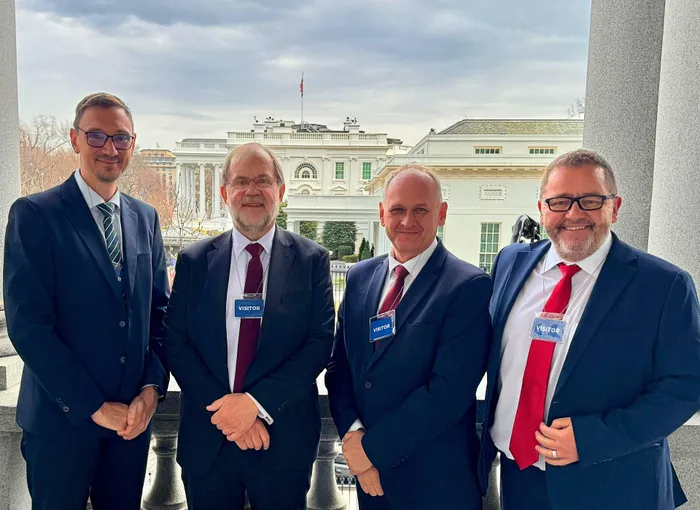
Kallie Kriel, right, and other AfriForum leaders during their visit to the White House in the US last year. Kriel is expected to testify in a commission of inquiry into human rights abuses of the apartheid era.
Image: X/AfriForum
The TRC Cases Inquiry enters a new chapter potentially fraught with danger in respect of South Africa’s relations with the US this week with AfriForum’s CEO, Kallie Kriel, expected to take the witness stand.
The organisation known for defending “Afrikaner interests” announced in a statement that Kriel would testify on Thursday “about political interference that prevented ANC leaders from being prosecuted for their part in acts of terror during the previous dispensation”.
AfriForum said it had since 2007 represented Dirk van Eck, whose wife and two children aged two and eight years old were “murdered in an ANC landmine attack” in 1985.
A couple of operatives of the ANC’s former military wing, uMkhonto weSizwe, were granted amnesty for crimes related to the bombing. The landmine campaign was aimed at apartheid security forces patrolling areas bordering frontline states such as Mozambique, eSwatini (formerly Swaziland) and Zimbabwe.
The commission's hearings started on February 11 with the focus on the families of anti-apartheid activists who were killed, maimed or suffered human rights abuses during the Struggle for freedom and democracy.
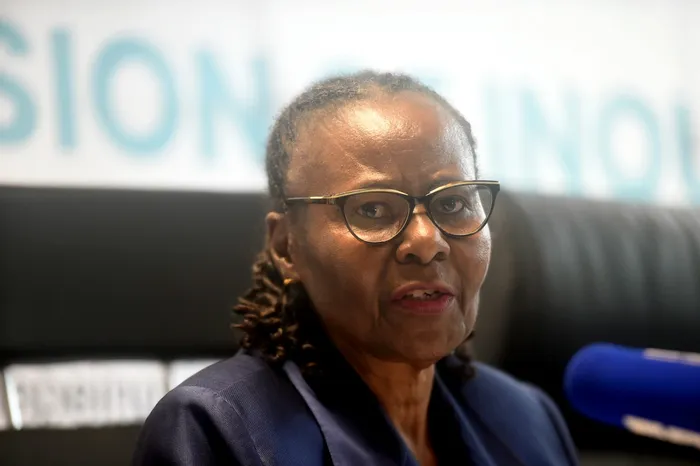
Retired Justice Sisi Khampepe, the chair of the Judicial Commission of Inquiry into the alleged suppression of Truth and Reconciliation Commission (TRC) cases recommended for further processing.
Image: Itumeleng English / Independent Newspapers
AfriForum appears determined to bring up the Afrikaner side of the TRC issue before retired Constitutional Court justice Sisi Khampepe. The group submitted a formal request to the inquiry otherwise known as the Khampepe Commission in October last year requesting it to include in its probe the alleged political interference that resulted in “senior ANC leaders who did not receive amnesty not being prosecuted for terror attacks during the apartheid era”.
The TRC (Truth and Reconciliation Commission) was set up in the mid-1990s as South Africa transitioned from apartheid to democracy. The restorative-justice inquiry opened a window of opportunity for victims of human rights abuses and their families to find justice and closure, and for perpetrators of the related crimes to come clean and be granted amnesty. However, many victims and their families were left in limbo as many perpetrators and witnesses failed to come forward with information and many cases were not investigated further or prosecuted despite recommendations by the TRC.
AfriForum also mentioned in yesterday’s statement another member of the Afrikaner community who is expected to also testify before the commission in Johannesburg on Thursday.
“Cilliers van der Merwe, whose father, Jaap, was murdered by ANC insurgents near the Botswana border on 1 November 1978, will also testify before the Commission tomorrow. Jaap’s body was never found. No prosecutions followed Jaap’s murder, even though the identity of the person who pulled the trigger is known and he never received amnesty for the crime,“ the civil rights group said in the statement.
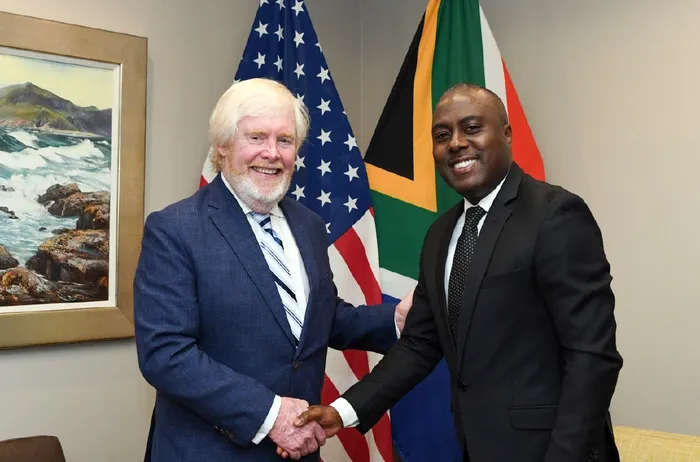
Deputy Director-General (DDG), Clayson Monyela, Acting Chief of State Protocol, receiving copies of Letters of Credence from His Excellency L Brent Bozell III, United States Ambassador to South Africa.
Image: DIRCO
In a statement in October last year, the organisation said it and Van Eck preferred for “the book of the past to be closed for the sake of reconciliation”, otherwise if prosecutions had to continue, they should also include, “for the sake of equality before the law”, the prosecution of ANC leaders who approved “terror attacks at a political level” who did not receive amnesty.
Kriel takes centre stage at the commission during a pivotal and treacherous time in South Africa-US relations after the recent arrival of the new US Ambassador to South Africa in Pretoria, former conservative activist Leo Brent Bozell III.
Kriel and other leaders of AfriForum and labour union Solidarity were part of delegations to Washington last year to raise issues of “Afrikaner persecution” and alleged human rights abuses with the Donald Trump Administration’s representatives. The lobbying was blamed for the further souring of relations between Washington and Pretoria, leading to the US boycotting the G20 Summit hosted by President Cyril Ramaphosa in Johannesburg last year among other reprisals from Washington.
Part of Bozell III’s mission is to support Afrikaners wishing to resettle in the US to escape alleged discrimination and ill treatment, allegations Ramaphosa denied during last year’s meeting with Trump in the White House.
The new ambassador was warmly welcomed by South African authorities this week after he arrived to present his credentials, marking the official start of his tenure. However, the warm reception may be a calm before a storm. Bozell has made it clear he will also be tackling some thorny geopolitical issues, including getting South Africa to abandon its International Court of Justice case against Israel and to curb Pretoria's "drift toward the China-Russia-Iran axis".