

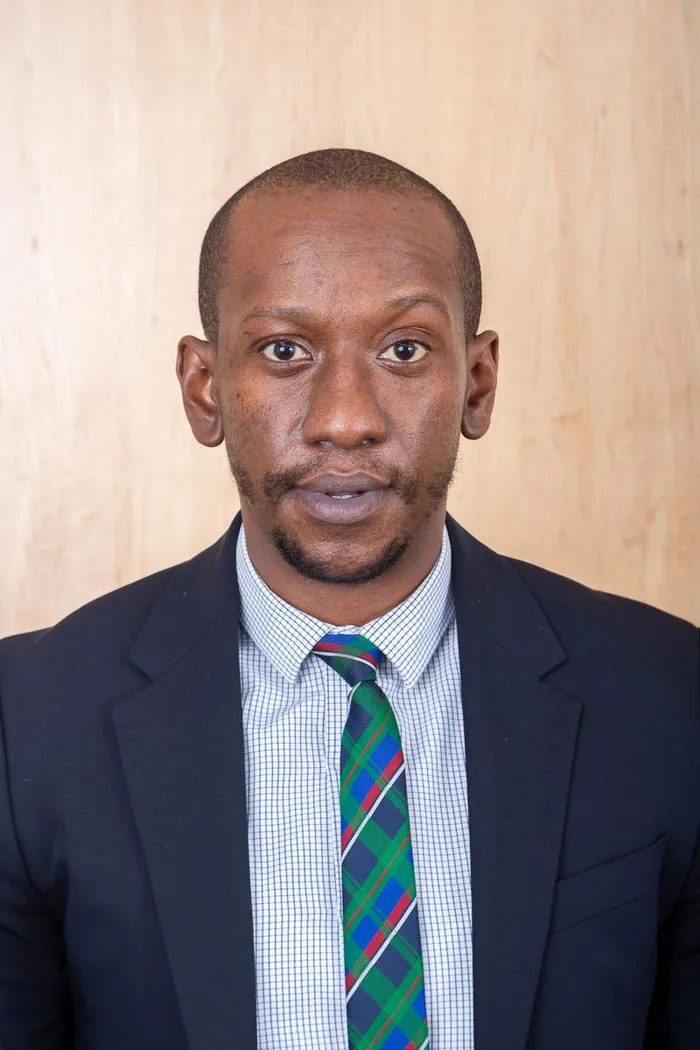
Ingonyama Trust Board CEO Siyamdumisa Vilakazi says the Ingonyama Trust is safer under the national Department of Land Reform and Rural Development as the national Parliament has the capacity to hold its board accountable.
Image: Ingonyama Trust Board website
The Ingonyama Trust (IT) is much protected from many forms of corruption under the national government and relocating it to KwaZulu-Natal will mean taking control of the provincial land away from the national government.
This was the view of IT’s Chief Executive Officer Siyamdumisa Vilakazi, as he weighed in on the debate started by King Misuzulu ka Zwelithini, who wants to have full control of the entity, which is currently under the national Department of Land Reform and Rural Development (DLRRD).
Despite that Misuzulu is the sole trustee of the IT, only DLRRD Minister Mzwanele Nyhontso has powers to appoint its board members.
The entity administers approximately 2.8 million hectares of provincial communal land, which the king says must be managed by amakhosa on his behalf.
During the opening of the provincial legislature on February 27, the king said this sidelines traditional leaders.
The king instructed his Traditional Prime Minister, Reverend Thulasizwe Buthelezi, who is the MEC for Cooperative Governance and Traditional Affairs, to lead a delegation of the royal family and amakhosi to lobby parties represented in Parliament.
He has also appointed retired Judge Isaac Madondo and Advocate Thembeka Ngcukaitobi to draft amendments to the Ingonyama Trust Act (ITA).
However, in an exclusive interview on the sidelines of the Congress of Traditional Leaders of South Africa (Contralesa) imbizo, which Nyhontso, amakhosi, and izinduna attended in Pietermaritzburg on Thursday, Vilakazi said those who want to engage in a conversation to remove the Trust from the national government must understand the Land Administration Act “so that we can have a holistic discussion”.
“The discussion cannot be siloed to KwaZulu-Natal because we too are saying Ingonyama Trust cannot be the provincial model,” said Vilakazi.
The ITA was passed on February 22, 1994, by the KwaZulu government, about a month before the first democratic elections on April 29.
Vilakazi said when the Ingonyama was established, the KwaZulu Ingonyama Trust Act ensured that the king had all the power to administer and delegate its line functions.
“His majesty at the time started to do his work in delegating these functions.
“He would delegate them in accordance with the KwaZulu Ingonyama Trust Act, which allowed him to delegate provincially,” he said.
However, when the democratic Constitution was passed in 1996, it made the land a national competency, which Vilakazi said created a dilemma.
“So the question becomes, why are we saying that the Ingonyama Trust must become provincial when it was made national for governance purposes?
“In 1997, the amendment introduced the board, which is not the customary structure, and that board is appointed by the national Minister of Land Affairs because it is the national Minister of Land Affairs who has a competency to deal with the land reform, land restitution, etc,” he said.
Vilakazi said that for the ITA to return to the province, it would create a problem for the whole country because land reform is a national competency.
He said while a national entity, IT is still close to traditional leaders in the province.
“The confusion comes from a place of misunderstanding because, despite what is perceived as a control seat does not matter, but the question is where the actual control is.
“Ingonyama Trust makes it even clearer that the board is the closest to amakhosi, and it says that without Section 25 (or) prior written consent of the traditional council, Ingonyama Trust cannot do anything to this land.
“That shows you where the power of controlling land allocations, use, and land management is, which is inkosi and his council. So it does not matter whether you place this thing in provincial or national,” he said.
He said being at the national level, IT was subjected to transparency and accountability as it is accountable to the national Parliament, which he said creates certain protection for it as it is being evaluated and criticised at the national level.
“Remember this is land, this is economic, we are dealing with Ingonyama Trust, which has resulted in very opportunistic behaviour. We have fraud that we are investigating now as consequences of actions that have been done in the past decades.
“We have R41 million missing here, R35 million missing there, and R100 million in a bond in unsavory factions. So, why would we want to take an organisation that requires reform in a sense of fixing it and want to provincialise it.”
He said the Trust management’s aim is not to make it a provincial entity.
“Our aim is to develop a system for our people so that when we say here is the development, you are actually able to benefit from the development, where there is no capitalist who is going to tell you that this is for a profit and, therefore, I want a chunk.
“Now if you don’t create protection by ensuring that there are various levels of accountability and by ensuring that the governance is prestigious, you risk running into the risk of being strong-armed in certain decisions,” said Vilakazi.
The king’s deputy prime minister, uMkhonto weSizwe Party (MKP) MPL, Inkosi Phathisizwe Chiliza, had, during the SOPA debate, backed the king’s call.
“Ingonyama cannot be governed by the national government while it is in charge of the land in KwaZulu. This affects the king and traditional leaders in the province,” said Chiliza.
DLRRD Acting Director-General Clinton Heimann said he was currently unaware of any correspondence from the king requesting to take over IT.
“As far as I know, the minister currently provides oversight over the Ingonyama Trust Board.
“The minister is constantly liaising with the king on matters relating to that. We will have to look at this request from a legal perspective as to what the Constitution says,” said Heimann.
bongani.hans@inl.co.za