

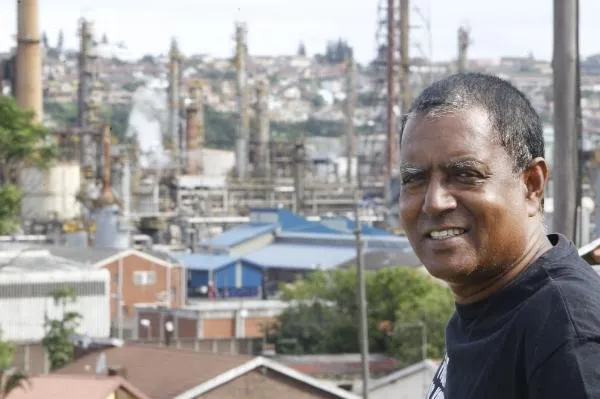
South Durban Community Environmental Alliance (SDCEA) leader Desmond D'sa is among the environmental activists who are opposed to the reopening of the flood-damaged Sapref crude oil refinery in Durban. Instead, he believes the plant and the nearby Engen refinery in Durban should be decommissioned and the area rehabilitated.
Image: Supplied
Environmental activists have slammed Mineral and Petroleum Resources Minister Gwede Mantashe’s call for the reopening of local refineries, including Sapref, South Africa’s biggest crude oil refinery that shut down after the floods that devastated KwaZulu-Natal in 2022.
Mantashe recently called for Durban-based Sapref and other similar facilities such as the South African Fuel Company and PetroSA, to return to operation to complement fuel output from Natref and Astron Refinery in Cape Town.
“The push by Gwede Mantashe to urgently reopen Sapref reflects a narrow framing of energy security that prioritises short-term fuel price stability over long-term environmental and social sustainability,” said Professor Llewellyn Leonard, an expert on environmental governance issues.
“While supply stability is important, reopening Sapref without first resolving its legacy of environmental harm risks reproducing the very injustices that communities in South Durban have endured for decades,” said Leonard.
He said Sapref operations over the decades left “significant environmental degradation”, which was met with “insufficient accountability” from the authorities and not enough was done to clean up the pollution. The plant suffered serious damage during the 2022 floods, leading to major pollution of a nearby beach and the surrounding area.
South Durban Community Environmental Alliance (SDCEA) leader Desmond D'Sa said he "totally" agreed with Leonard and he, other local leaders and the surrounding communities were against the idea of reopening Sapref and other refineries.
"I agree totally with Professor Leonard, and we’ve certainly put that across to the Parliament's Portfolio Committee on Mineral and Petroleum Resources when they came here (Durban) in 2025," said D'Sa. He said reopening Sapref would pose "an immediate danger" to nearby communities.
The controversial sale of the refinery for R1 by joint owners Shell and BP to state-owned Central Energy Fund a couple of years ago raised eyebrows among environmental activists who prefer decommissioning and rehabilitating the area.
Commenting about the sale, D'Sa said: "The government taking over and buying the refinery has placed the burden on the South African taxpayer, because, if you go anywhere in the world, a refinery of this nature, after being affected by so much of water, so much of flooding, would not be allowed to restart."
A report on a study conducted on the refinery was expected to be submitted by March 31, followed by deliberations about the future of the facility. Among the key hurdles standing in the way of reopening the refinery is the structural damage caused by the floods and the environmental issue.
Leonard criticised the minister’s framing of environmental regulations, community activism and litigation as obstacles.
“Framing environmental regulations and community legal action as ‘obstacles’ is deeply problematic since they are constitutional safeguards. Weakening them undermines environmental governance and entrenches what we already see in South Durban: a sacrifice zone where vulnerable communities bear disproportionate health and ecological risks,” he said.
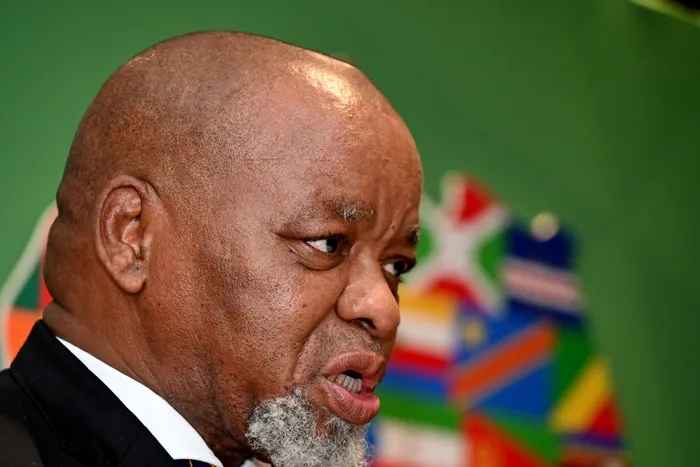
NO CRISIS: Minister of Mineral and Petroleum Resources Gwede Mantashe says South Africa has eight million barrels of strategic fuel reserves and that this will be used when there is a real crisis.
Image: Ayanda Ndamane / Independent Newspapers
Commissioned in 1964, Sapref contributed 35% of South Africa’s refinery capacity and refined 180,000 barrels of imported crude oil per day. It was the country’s biggest refinery, until its closure in 2022 after flood damage. It was closed without being completely decommissioned, despite calls from environmental activists.
Leonard, an environmental scientist who has researched the governance of industrial risk and pollution in South Durban, believes that Sapref should have decommissioned properly and the area once declared a pollution hot-spot rehabilitated. Instead, the US-Israeli war against Iran has led to renewed calls for the reopening and revival of the plant and other fuel oil facilities.
Leonard said not enough was done to clean up after the floods and said the “polluter pays” principle has to apply. He called for local communities and civil society to play their oversight role and raised concerns about Sapref participating in a study about its own future. He said this could lead to “regulatory capture” and conflicts of interests. He said Parliament has a constitutional duty to exercise oversight in the matter, which requires independence from industry influence and transparency in how studies are conducted and decisions taken.
“While some clean-up efforts have been undertaken in 2022 following the flooding, there is still concern about lingering contamination, particularly in soils and coastal ecosystems. The pace and transparency of rehabilitation have not matched the scale of the damage.
“From a governance perspective, several steps are critical for building trust and transparency with communities. There needs to be a strengthening of community oversight and civil society organisations and residents must continue to demand access to environmental monitoring data and rehabilitation reports.
“It is also essential to assert the Polluter Pays Principle so that it is enforced rigorously so that corporations, not taxpayers, carry the cost of environmental restoration. There is also a need for independent third-party environmental audits and long-term epidemiological monitoring in South Durban given the area’s history of industrial pollution.”
D'Sa vowed to continue campaigning for the decommissioning of the Sapref refinery as well as the nearby Engen plant that has also been through accidents and incidents resulting in pollution and other problems over the years.
"We are going to also push the Portfolio Committee to make sure that Sapref is held accountable and that this refinery should not start up. And they need to tell us, if something happens, who is going to take responsibility for the start up."