


Lukhanyo Calata, son of one of the Cradock Four activists killed by the apartheid government's agents in 1985, Fort Calata. He believes that the Khampepe Commission of Inquiry is the "last hope" for his and other families of the victims of the apartheid-era human rights violations made to wait for years in vain for justice or closure.
Image: Timothy Bernard / Independent Newspapers
The Foundation for Human Rights (FHR) has called on all parties involved in the TRC Cases Inquiry, otherwise known as the Khampepe Commission, to cooperate fully to ensure that the truth is uncovered.
“As the Commission proceeds with its hearings, we urge all parties, institutions, and individuals to cooperate fully to ensure that the truth is uncovered and that the systemic failures to investigate and prosecute apartheid-era political crimes are fully exposed,” the foundation said in a statement on Tuesday.
The FHR issued the statement in response to a ruling by the Gauteng High Court in Johannesburg dismissing an application by former presidents Jacob Zuma and Thabo Mbeki for Sisi Khampepe, the retired Constitutional Court judge chairing the commission, to recuse herself.
The former presidents are of the view that Khampepe should not be chairing the commission due to her past involvement in the Truth and Reconciliation Commission (TRC), set up in the 1990s to help deal with human rights abuses of the apartheid era, as well as the National Prosecuting Authority, which played a role in what the current commission is investigating.
The Khampepe Commission was established last year to investigate allegations of political interference and attempts to obstruct the investigation and prosecution of a set of apartheid-era cases identified by the TRC more than 20 years ago as requiring action.
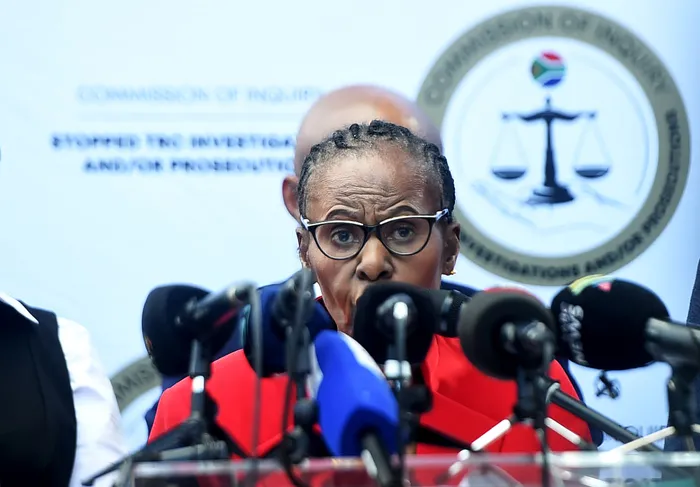
Justice Sisi Khampepe will remain the chairperson of the TRC Commission, after the court turned down an application for her removal.
Image: Itumeleng English / Independent Newspapers
The court did not deal with the issues raised by Zuma and Mbeki but dismissed the application on procedural grounds. It found that the former presidents needed to first obtain consent from the Chief Justice before launching their review applications against Khampepe, who is still considered a judge despite the fact that she has retired.
The court accepted the argument by the commission that a judge cannot be hauled to court without the Chief Justice’s permission, and that Khampepe was entitled to the protections afforded to judges still in active service.
The court said Khampepe, “though retired, continues to perform public service as Chairperson of a Commission of Inquiry. In doing so, she remains bound by her judicial oath and the ethical standards that attach to her office. She is entitled to the same protections as a judge in active service, precisely because the threats to judicial independence — vexatious litigation, personal attacks, and attempts to influence or intimidate — are no less real in the commission context.”
While welcoming the judgment allowing the commission to continue with its public hearings and other processes, the FHR noted that Zuma and Mbeki might still take further legal action.
“We welcome this judgment and the confirmation that the Commission can continue its critical work, pending any further legal steps that may be taken by former Presidents Zuma and Mbeki,” the FHR said.
In the meantime, the commission continued with its hearings at the Sci-Bono Discovery Centre in Newtown, Johannesburg, on Tuesday. Former National Director of Public Prosecutions Menzi Simelane was on the witness box being cross-examined about his role at the NPA, particularly with respect to the TRC cases.