

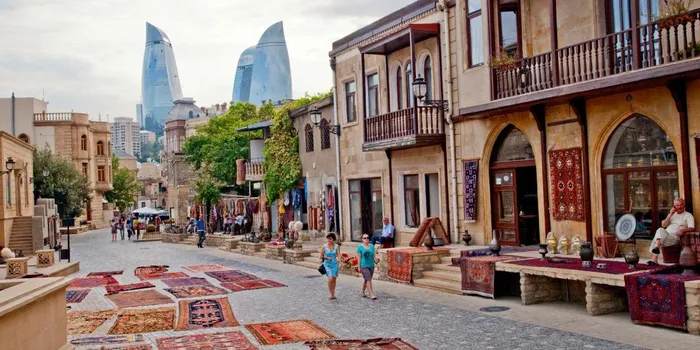
Azerbaijan's declaration of 2026 as the Year of Urban Planning and Architecture aims to revolutionise urban living and promote sustainable development ahead of the World Urban Forum hosted in the capital city of Baku, a major economic and cultural hub on the Caspian Sea.
Image: SUPPLIED
President of Azerbaijan Ilham Aliyev has signed a decree declaring 2026 the “Year of Urban Planning and Architecture” in the Republic of Azerbaijan. The move establishes a national framework focused on urban planning policy, architectural culture, and sustainable development, timed to coincide with the country’s hosting of the 13th World Urban Forum in Baku from 17–22 May 2026.
The decree frames the year as an opportunity to preserve Azerbaijan’s centuries-old traditions while integrating contemporary approaches to housing, climate adaptation, and inclusive governance.
It positions urban development as central to the country’s engagement with the UN New Urban Agenda and Sustainable Development Goal 11 on sustainable cities and communities.
Baku will host WUF13 under the UN-Habitat theme “Housing the World: Safe and Resilient Cities and Communities.” The forum is expected to bring together around 2,000 participants from more than 130 countries to address one of the defining challenges of the decade - housing.
Nearly three billion people globally face some form of housing inadequacy, including over 1.1 billion living in informal settlements and more than 300 million experiencing homelessness. Pressures are intensifying due to climate change, rapid urbanisation and widening inequality.
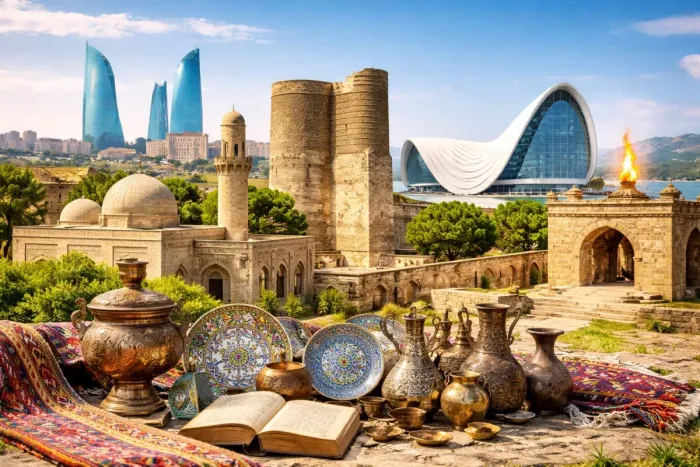
Azerbaijan's declaration of 2026 as the Year of Urban Planning and Architecture aims to revolutionise urban living and promote sustainable development ahead of the World Urban Forum hosted in the capital city of Baku, where ancient architectural heritage lives on alongside modern buildings built the sustainable way.
Image: SUPPLIED
Azerbaijan’s selection as host reflects growing international confidence in its capacity to manage complex multilateral processes. That confidence was reinforced by the country’s hosting of COP29 in December 2024.
COP29 delivered several outcomes that shaped the next phase of global climate policy. Delegates adopted the Baku Finance Goal, committing to mobilise $1.3 trillion annually for developing countries, with developed nations expected to contribute at least $300 billion per year by 2035.
The conference also fully operationalised Article 6 of the Paris Agreement, enabling transparent international carbon markets, and institutionalised the Loss and Damage Fund with contributions exceeding $730 million.
On adaptation, COP29 advanced the Baku Adaptation Roadmap and Global Adaptation Target, keeping resilience at the centre of climate negotiations. The experience demonstrated Azerbaijan’s ability to facilitate dialogue and guide negotiations toward concrete agreements- a capability now being applied to urban development.
WUF13 will mark another milestone: the first-ever Summit of Heads of State and Government held within the World Urban Forum. The inclusion signals that housing and urban transformation are being treated as issues of highest-level political priority.
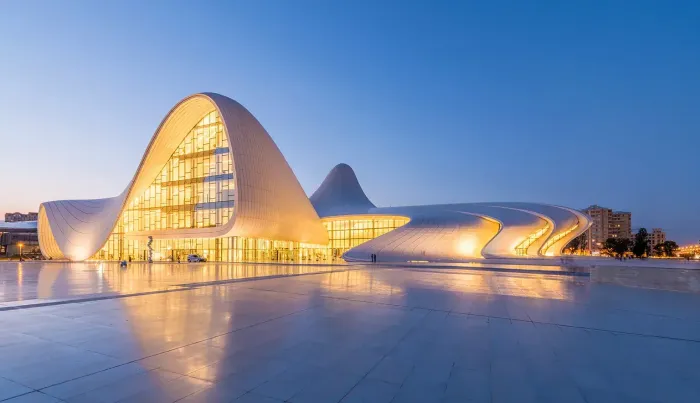
Azerbaijan's declaration of 2026 as the Year of Urban Planning and Architecture aims to revolutionise urban living and promote sustainable development ahead of the World Urban Forum hosted in the capital city of Baku, a major economic and cultural hub on the Caspian Sea.
Image: SUPPLIED
Hosting the forum gives Azerbaijan a platform to showcase its own urban achievements, most notably in the formerly conflict-affected territories of Garabagh and Eastern Zangezur.
Following the 2020 conflict and the subsequent restoration of territorial integrity, Azerbaijan launched one of the most ambitious post-conflict reconstruction programmes underway globally.
The strategy extends beyond physical rebuilding. It combines large-scale landmine clearance with the rapid development of transport networks, utilities, industrial zones, and social infrastructure.
Economic revitalisation and job creation are prioritised alongside construction, with the aim of enabling returning residents to rebuild lives with stability and dignity. New transport corridors, including the Zangezur Corridor, are integrating these regions into national and regional economic systems.
What sets this approach apart is its environmental dimension. Garabagh and Eastern Zangezur have been declared a “Green EnergyZone”.
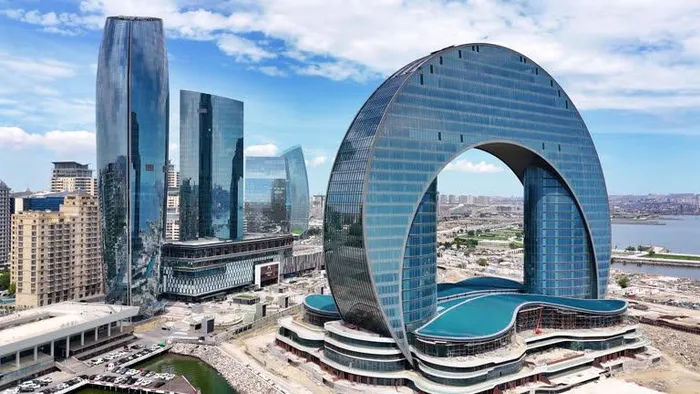
Azerbaijan is revolutionising urban living while promoting sustainable development. The country will share tips on the subject over the weekend as it hosts the World Urban Forum in the picturesque capital city of Baku, a major economic and cultural hub on the Caspian Sea.
Image: SUPPLIED