

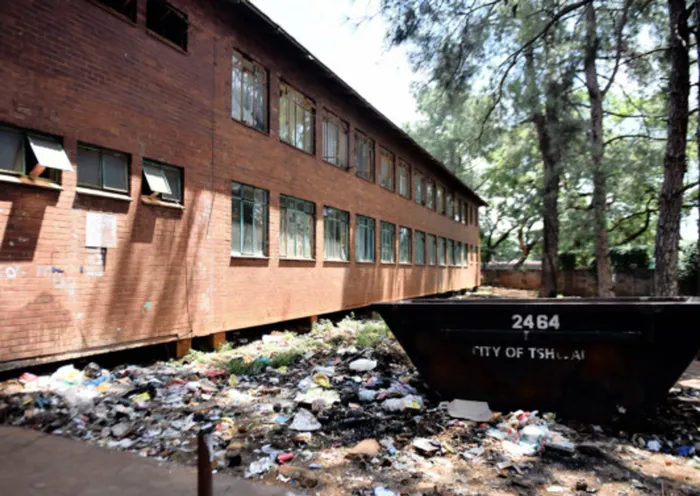
Residents of dilapidated Melgisedek buildings in Riviera have been evicted by the court and due to be relocated by the City of Tshwane.
Image: Oupa Mokoena/Independent Newspapers
More than a decade after the City of Tshwane deemed the Melgisedek buildings in Riviera unfit for habitation and had planned to relocate occupants, the Gauteng High Court, Pretoria this week ordered their eviction within seven days.
The city, which launched urgent eviction proceedings stating that the building is so dangerous that it can collapse at any time, said it planned to move the more than 400 residents to an open land about 2.4km away. Here they will be accommodated in tents until a further plan can be made.
Locals complained that the building is a haven for crime and drug infestation, making them uninhabitable. In 2015 the city announced plans to audit the residents and develop a relocation strategy. Judge Holland-Muter was this week told that the municipality struggled to gain access to the building as the residents oppose them entering the premises.
It is, however, estimated that there are about 450 people living there. It is not clear how many are women, children and the elderly. While the city has struggled for years to come up with a plan for these people, a fire which broke out on the premises last month caused it to make urgent plans.
The judge was told that apart from the unsafe structure, the building, which consists of various blocks, is surrounded by a foul odour, mosquitoes, rodents and flies. A nauseating mixture of water and human waste flows through the area. The city made it clear that the building is dangerous and said in light of the recent building collapse in Johannesburg, in which several people had died, they cannot allow these residents to stay there any longer.
Judge Holland-Muter noted that the building has no electricity or running water and it is close to the Steve Biko Hospital and schools. “We are sitting here with a health time bomb,” he said. The judge was, however, concerned about where the people would go and how those who are not able to move their belongings themselves would be able to do so.
But the city gave the assurance that they will set up tents - used during the Covid-19 pandemic - on land nearby. The court was also told that these residents will have access to water as well as 10 chemical toilets on the premises.
While this is only a temporary solution, it is not known at this stage how long the people will have to stay there. The city said those who are South African residents will ultimately qualify for government housing.
The residents meanwhile vehemently opposed the eviction. They voiced their concerns that the tents are not suitable and they questioned what they were supposed to do with the furniture and other belongings they have accumulated over the years.
Mokgadi Moshakgo, who has been living at Melgisedek since 2008, said many of the residents have been staying there since 1998. She said when the previous owner, the Pretoria Technikon, moved out, the people moved in as they had nowhere else to go. While the circumstances are not ideal, she said they have called Melgisedek their home for a very long time and they have established themselves there.
Judge Holland-Muter, however, said in light of the danger the building is posing, there is no alternative but to evict the people. Part of his order stated that the vulnerable residents must be assisted by the city in the relocation.
Whether the eviction will take place as ordered is uncertain at this stage, as the residents, within seconds of the order being delivered, said they wanted to appeal it. The leave to appeal application will be heard on Friday.
zelda.venter@inl.co.za