

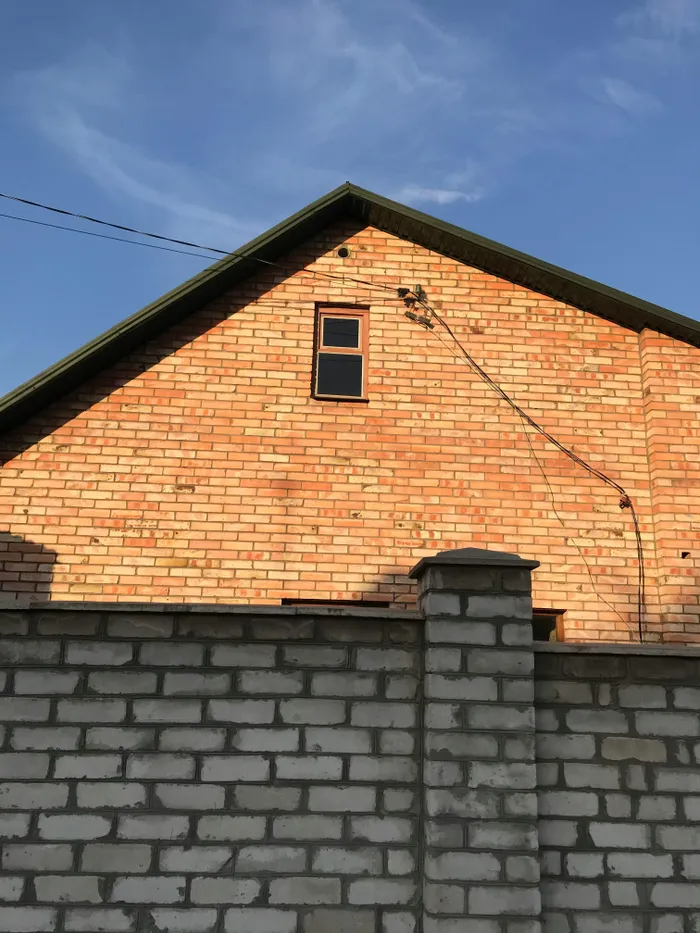
A neighbourly dispute over a boundary wall at a Midrand estate and the decision by the homeowners association to demolish it, resulted in an urgent court application.
Image: File
A boundary wall in an estate can be a thorny issue, especially if it was illegally erected, as the owner of Waterfall View Estate in Midrand discovered after the court had ordered the demolition of the wall.
Shortly after contractors tried to break down the wall and property owner Thabo Makhorole, in a bid to prevent it, sprayed them with chemicals and threw bricks at them, he turned to the Gauteng High Court, Johannesburg.
Makhorole wanted an extremely urgent order against the homeowners association preventing them from demolishing his wall. He, however, failed in his bid.
The order paved the way for the Jukskei View Extension 17 and Extension 18 Residents Association NPC to now proceed with the demolition.
Makhorole has previously turned to the Community Schemes Ombud Service (CSOS) regarding the dispute over his wall. The ombud twice rejected his bid to have the wall declared legal. He is now taking these two refusals on appeal, but wanted the court to, in the interim, prevent the wall from being demolished.
The resident's association, meanwhile, launched a counter application, allowing them to get rid of the wall.
Judge Leicester Adams pointed out that the matter has a lengthy and unfortunate history, marked by acrimony between neighbours and a persistent failure by the applicant to comply with the established rules of the estate.
The applicant commenced construction of a boundary wall in September 2023, and final construction was halted by the residents’ association.
Two separate applications to the CSOS followed, both dismissed. Appeals to this court were noted, but little to no progress was made in prosecuting them until the eve of the scheduled demolition of March 5.
On that day, contractors went to the property to commence demolition. According to an affidavit, which the judge accepted, the applicant physically obstructed the contractors, spraying them with chemicals and throwing bricks.
The demolition could not proceed, and later that day, the applicant launched this urgent application.
The applicant argued that his prima facie right to erect the wall arises from his ownership of the property and the fact that he had obtained prior approval for erecting the wall.
But Judge Adams pointed out that the approvals the applicant relies on were vitiated by procedural irregularities of his own making. The CSOS adjudicator found as a fact that the applicant had failed to obtain the written consent of one of his neighbours. This was an essential requirement of the architectural guidelines of the association. “The applicant knew this, yet he failed to secure it. He delegated the task to estate management, but the responsibility remained his. The adjudicator found, correctly in my view, that the approval was therefore invalid and unenforceable,” Judge Adams said.
The CSOS adjudicator further found that the applicant had deviated from the approved plans. On his own version, a variance of some 5cm occurred.
“Deviation from an approved plan, without seeking amendment or further approval, is a material breach of the architectural guidelines,” the judge said.
While the applicant has noted appeals against both orders, Judge Adams remarked that noting an appeal does not, in and of itself, create a right to preserve the status quo.
It was also pointed out that the applicant never previously asked that the demolition order be placed on hold while he is appealing the CSOS orders. He has had ample opportunity to do so, Judge Adams said.
He pointed out that the appeals, in any event, had very little prospects of success. “I am not persuaded that the applicant has established a prima facie right to the preservation of the wall. To the contrary, the wall appears to be unlawful. The applicant's ownership of the property does not entitle him to maintain an unlawful structure upon it,” the judge said in turning down the urgent application.
zelda.venter@inl.co.za