

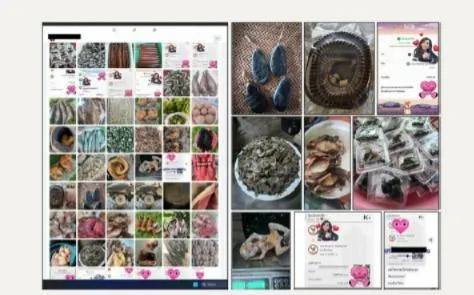
An example of a wildlife trader profile selling bear bile, cobras, pangolin scales, bats, scorpions, slow loris and more. Researchers found that between the images of wildlife products, the trader posts screenshots of bank transfers and sales transactions to show it is legitimately selling the posted products.
Image: Screenshot
Pangolin scales, cobras, bats, scorpions and even slow lorises are being openly traded on Facebook, in plain sight.
A new report has found that Facebook has become the primary online marketplace for illegal wildlife trade, with South Africa among the countries affected by the growing digital trafficking of endangered species.
The study by the Global Initiative Against Transnational Organized Crime, using the ECO-SOLVE Global Monitoring System (GMS), found that nearly three-quarters of all detected wildlife-trafficking advertisements worldwide were posted on Facebook between April 2024 and March 2026.
Researchers Russell Gray and Simone Haysom recorded more than 21,900 adverts linked to over 266,000 wildlife products across 61 online platforms. Of these, more than 16,000 were found on Facebook alone, accounting for about 74% of the total.
“Facebook is not simply one platform among many. It is the central public infrastructure through which online wildlife trafficking is being concentrated, discovered and scaled,” the researchers said.
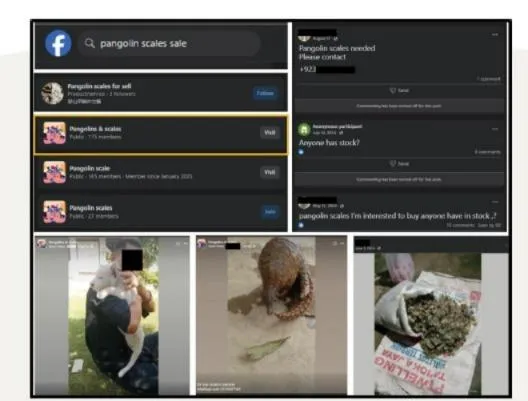
An example search for ‘pangolin scales sale’ yielded several groups and pages. On one, users inquire about buying pangolins/scales and provide their contact details. Researchers found videos and images on the pages that showed users with pangolins, bags of pangolin scales, and even lion cubs advertised for sale.
Image: Screenshot
South Africa, already flagged for high levels of environmental crime, forms part of the global monitoring network tracking the trade. The report noted that countries selected for analysis included those scoring highly on organised crime indices and those with active online wildlife markets.
The findings point to a shift from physical markets to social media platforms, where traffickers openly advertise endangered animals and wildlife products. Many of these involve species protected under international law, with more than 80% of Facebook-linked adverts tied to the most strictly regulated categories.
Investigators found that Facebook groups are the main hubs for this activity, accounting for the majority of listings. In many cases, users were exposed to illegal content without actively searching for it, suggesting that the platform’s recommendation systems are pushing such material to wider audiences.
Gray and Haysom described the scale of the trade as significant. Around 60% of adverts included prices, with the total advertised value exceeding $66 million — almost all of it linked to Facebook.
They warned that the trade is not confined to one country but operates across borders, with wildlife sourced in one region, sold through platforms in another and shipped globally.
The report argues that voluntary efforts by technology companies to curb wildlife trafficking have failed, with illegal sales continuing despite platform policies banning such activity. It calls for stricter regulation, improved monitoring across multiple languages and greater accountability for social media companies.
“Without structural changes and meaningful oversight, online wildlife trafficking will continue to be concentrated, encountered and scaled through mainstream digital platforms,” the researchers said.
IOL News