

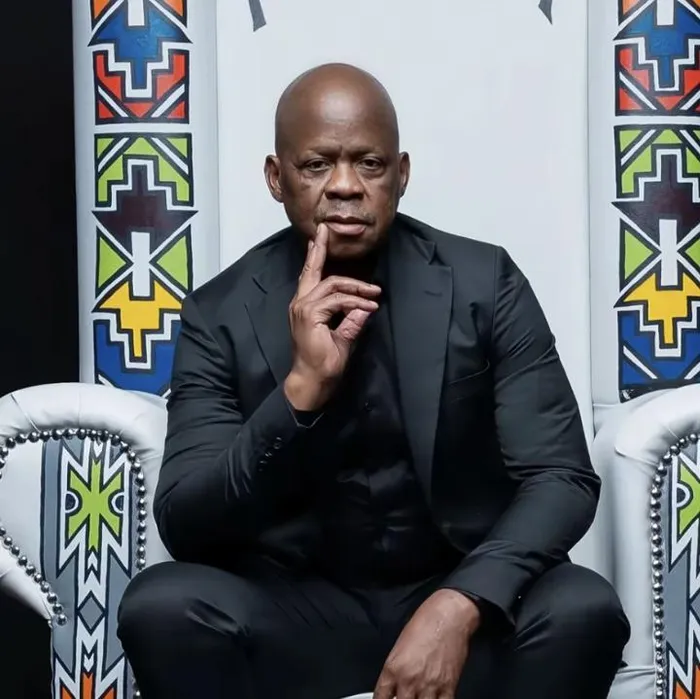
Mpumalanga taxi boss Joe “Ferrari” Sibanyoni is among three suspects arrested in a major extortion crackdown linked to a Kwaggafontein businessman.
Image: Screenshot/TikTok
The criminal case against taxi kingpin Joe "Ferrari" Sibanyoni has been struck off the court roll, bringing an abrupt end to proceedings that had captured widespread public attention.
The decision was made after the prosecutor failed to appear in court on Monday.
Sibanyoni, Bafana Sindane, Mvimbi Daniel Masilela, and Philemon Msiza appeared in the Kwaggafontein Magistrate’s Court where they faced charges of money laundering and extortion.
It is alleged that the group extorted more than R2 million in ‘protection fees’ from a mining businessman between 2022 and 2025.
The State prosecutor failed to pitch for proceedings which were supposed to begin at 9 am.
After 1pm, the Magistrate expressed her disappointment in the State and struck the case off the court roll.
“No time, or approximate time for his arrival was given. No matter which corner he came from within the province, he would have been here by now if he had an interest in being here or complied with the order to be made. Therefore, it is only reasonable for this court to find him guilty, in his absence, of contempt of court. I will authorise the warrant for his arrest.
"The court will report his conduct to his seniors and DPP,” said the Magistrate.
Lwando Mufune, a Namibian legal practitioner who holds an LLM from the University of the Western Cape, said that under South African law, a case may be struck off the court roll or dismissed for several reasons.
She explained that because cases are brought by the National Prosecuting Authority (NPA) on behalf of the State, the court cannot proceed if the prosecutor is absent.
“A matter may be removed if the party who initiated the case, or their legal representative, fails to appear when the case is called. The court is allowed to remove a case from the roll due to a lack of readiness by the State. However, being struck off the roll is different from an acquittal. An acquittal happens after a trial or when the court formally finds the accused not guilty. When a case is struck off the roll, there is no decision on guilt or innocence,” she said.
“The prosecution is free to reinstate the case later, provided the charges have not expired and the State is ready to proceed. The accused may be given a new court date once the prosecution is prepared,” she added.
She further explained that what happened in Sibanyoni’s case is fairly common in lower courts, especially in busy magistrates’ courts where heavy caseloads, administrative delays, missing dockets, absent witnesses, or scheduling problems occur. In high-profile cases, however, it is usually controversial and attracts public scrutiny.
“Magistrates usually try postponement first, especially in serious matters. They may stand the matter down, wait, or request an explanation from the prosecution office. Striking a case off the roll is generally a last resort when the court concludes that the State might not be ready to proceed and that continued postponements would unfairly prejudice the accused,” she said.
Mufune added that if the Magistrate strikes a matter off the roll without exploring other avenues, it does not mean they are being lenient.
“What it essentially means is that the magistrate is protecting constitutional rights and the integrity of the court.
“The accused cannot be forced to sit in court indefinitely while the State fails to appear. If the court repeatedly postpones cases when the State is unprepared, it violates the accused’s right to a fair and speedy trial. Striking the case off the roll can therefore be a way of holding the prosecution accountable,” she said.
In conclusion, Mufune said the NPA is expected to ensure a prosecutor is present for every enrolled case.
“Courts run on strict schedules, and the Constitution guarantees the accused the right to a trial within a reasonable time.”
Following the incident, the NPA confirmed that disciplinary action has been instituted and the prosecutor has been suspended pending internal processes.
The authority further explained that the matter cannot simply resume without formal intervention.
“The implications of this turn of events mean that it can only be reinstated upon a written authorisation by the Director of Public Prosecutions, Mpumalanga Division,” NPA said.
sinenhlanhla.masilela@iol.co.za
IOL News