

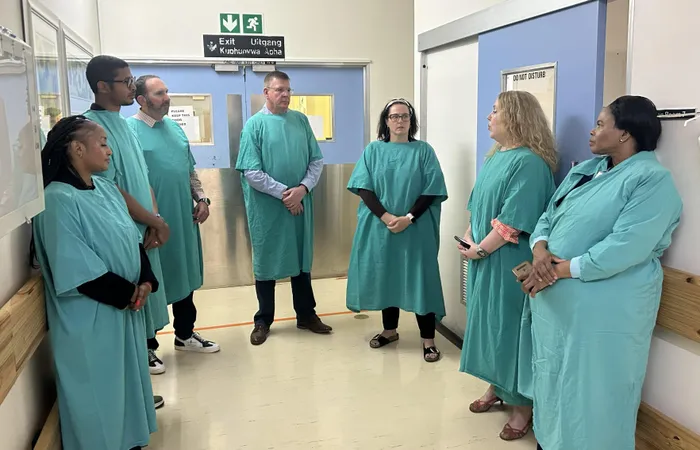
Patients in the haematology ward will now get free WiFi.
Image: TooMuchWifi
The Groote Schuur Hospital Trust in Cape Town has welcomed a free Wi-Fi connectivity project to its haematology ward.
The ward, which is usually quiet with a limited number of visitors for patients at times, becomes very isolated for those undergoing long-term treatment.
So, with a message from home or a video call, this could assist patients and build morale.
The introduction of this project is aimed at bringing back moments within reach and redefining what patient care can look like.
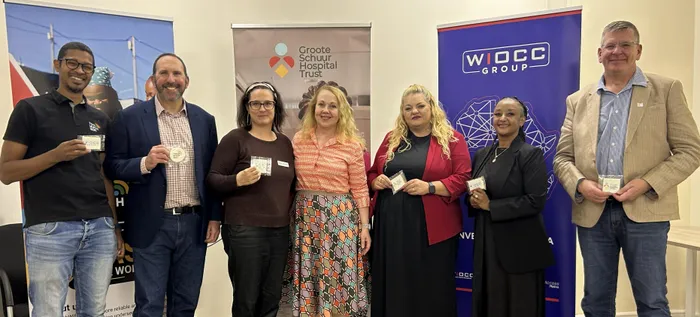
The stakeholders who made the project possible.
Image: TooMuchWifi
Developed through a targeted fundraising effort, the project reflects a growing understanding that care extends beyond clinical treatment. In today’s world, the ability to remain connected to people, to information, and to life beyond the ward is no longer a luxury, but an essential part of wellbeing.
To make this possible, Groote Schuur Hospital Trust partnered with WIOCC Group, which enabled its chosen delivery partner, TooMuchWifi, to provide the service, designing, deploying, and managing the network that brings the ward online.
The haematology isolation ward can accommodate a maximum of six patients at a time, and they are always at capacity. The average length of stay for a patient is four weeks.
Over the three years, this project is expected to benefit over 200 patients, supporting them throughout their treatment journey not only medically, but also emotionally and socially.
Executive Director of the Groote Schuur Hospital Trust, Kristy Evans, said for patients spending long periods in isolation, connection to loved ones is a vital part of dignity, comfort, and healing.
“This generous donation of free Wi-Fi helps bridge the distance between patients and their families during some of their most difficult moments. We are deeply grateful to our donors and to the hospital for being open to innovative public-private partnerships that make this kind of patient-centred care possible. We welcome more collaborations like this in the future,” Evans said.
To make this possible, Groote Schuur Hospital Trust partnered with WIOCC Group, which enabled its chosen delivery partner, TooMuchWifi, to provide the service, designing, deploying, and managing the network that brings the ward online.
Group Chief Operating Officer of the WIOCC Group, Ryan Sher, said the hospital’s trust has shown remarkable leadership in recognising that patient wellbeing extends beyond clinical care.
“Their commitment to restoring connection for patients undergoing long periods of isolation is both compassionate and forward-thinking, and we are honoured to support this initiative. As the technology enabler, our role at WIOCC Group is to ensure that world-class digital infrastructure can be directed where it matters most. By partnering with TooMuchWifi, we’ve been able to help translate that infrastructure into meaningful day-to-day impact for patients enabling a simple but profound outcome: staying connected to loved ones when it is needed most,” Sher said.
He further stated he hopes this collaboration demonstrates what is possible when healthcare, community, and technology come together with a shared purpose.
“We encourage others in our industry to join efforts that strengthen dignity and care across our communities,” Sher said.
From their roots in Imizamo Yethu, Hout Bay, in 2016, TooMuchWifi was established to address the affordability gap in internet access across underserved communities, where high data costs continue to limit meaningful connectivity.
Director of Stakeholder Relations at TooMuchWifi, Loyiso Ngqwemla, it’s their belief that connectivity is more than just access to the internet, it is a lifeline to people, to support systems, and to hope.
“Our DNA has always been rooted in collaborating for impact while competing for business, using our technology to change lives for the better. This partnership is a powerful example of what is possible when that purpose is put into action. By bringing connectivity into spaces like the haematology ward, we are not only enabling communication, but restoring moments of comfort, dignity, and human connection when they are needed most,” Ngqwemla said.
A patient who has spent four weeks in isolation rebuilding her immune system after a stem cell transplant expressed how staying connected to loved ones has kept her sane.
“No visitors. No hugs. No emotional support. I took out a 2-year Wi-Fi contract just to stay sane. That connection saved me. Many people cannot afford data and Wi-Fi, and having that connection is extremely important. It makes a world of difference. Please, bless the next person,” the patient said.
While the rollout of the free Wi-Fi has been rolled out to the haematology ward, it has been confirmed that this project may potentially expand into additional patient areas following evaluation.
robin.francke@iol.co.za
IOL