

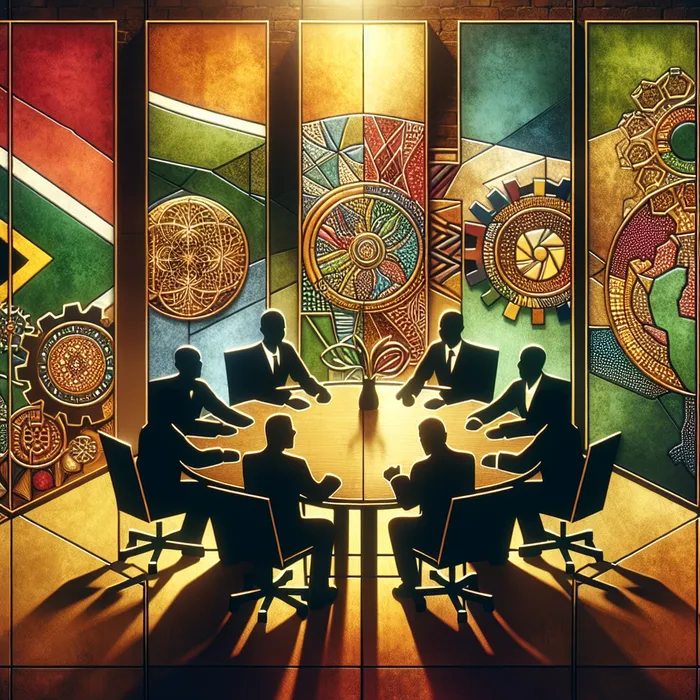
Gillian Schutte unpacks how Peter Fabricius's analysis of the ANC's historical ties with Iran reveals the intricate costs of diplomatic alignment in the face of Western scrutiny.
Image: IOL / Ron AI
Peter Fabricius’s article in Daily Maverick titled “ANC’s long friendship with Iran has come at a cost” is presented as measured foreign policy commentary. It functions as geopolitical instruction. The organising principle of the piece is Western reaction. Cost is calculated through Washington’s irritation, through threats to Agoa, through tariff retaliation, and through the deterioration of relations with the United States and Europe. International law appears through President Ramaphosa’s invocation of Article 51 of the United Nations Charter, then yields to a larger concern about Western reprisal.
Fabricius recounts that Iran supported sanctions against apartheid after 1979 and notes that this history shaped the relationship between the ANC and Iran. He refers to Iran’s admission to BRICS at the 2023 summit in South Africa and situates the relationship within that expanded bloc. That history is acknowledged, yet it is framed as a legacy that now complicates South Africa’s ties with Western governments. The suggestion is that past solidarity now burdens present diplomacy.
Iran is described through emphasis on repression, nuclear controversy and regional alliances. South Africa’s voting pattern at the United Nations is characterised as consistent abstention or opposition to resolutions critical of Tehran. When Pretoria opposed the calling of a special emergency session of the Human Rights Council and later abstained from a resolution condemning Iran’s crackdown, Fabricius presents this as evidence of political loyalty. South Africa’s explanation that the resolution improperly extended the mandate of the special rapporteur is included, yet it is framed as a technical justification that does not alter the broader perception of alignment.
The article then moves to material links. Ramaphosa’s former role as chairperson of MTN during its investment in Iran is recalled, along with the complications created by United States sanctions that prevented repatriation of profits. Military cooperation is discussed through reference to the visit of the SANDF chief to Tehran and to the naval exercise “Will for Peace”, during which Iranian vessels docked in Simon’s Town alongside Russian, Chinese and other ships. Fabricius recounts that Ramaphosa ordered the Iranian ships withdrawn and that this order was reportedly not executed, prompting the appointment of an investigative panel. These details are assembled to illustrate proximity and ambiguity.
Domestic politics is drawn into the analysis through explicit citation of the Democratic Alliance. Fabricius quotes the DA’s criticism of South Africa’s stance at the Human Rights Council and its description of Iran as a rogue state. He highlights the DA’s warning that foreign policy should reflect the GNU’s commitment to strategic non-alignment. The DA’s position is presented as a counterweight to the ANC’s approach, reinforcing the sense that Iran policy generates strain within the Government of National Unity.
The central narrative thread remains intact throughout. Divergence from Atlantic consensus produces consequence. Threats to trade access under Agoa, tariff measures and diplomatic friction are described as tangible outcomes of South Africa’s alignment. Western response is elevated to the status of principal fact.
While Fabricius treats Iran’s conduct and posture as deserving examination, what also demands scrutiny is the broader informational environment in which such judgements are formed. Propaganda has become an instrument of geopolitical contestation. Narratives constructed in Washington and Tel Aviv circulate through aligned media networks and frame military action as defensive necessity. During the recent escalation involving the United States and Israel, dominant Western narratives cast the strike against Iran as pre-emptive security rather than as destabilising force. Such framing shapes public perception well before formal diplomatic debate occurs.
Fabricius’s article sits within that environment. Through emphasis on Western reaction and economic repercussions, it centres external approval as the metric of responsible diplomacy. South Africa’s abstentions at the United Nations are interpreted primarily as expressions of loyalty to Tehran rather than as assertions of non-alignment or sovereign judgement. The logic of the piece guides the reader toward one conclusion. Alignment with Iran invites punishment, and punishment confirms miscalculation.
This framing narrows the horizon of political possibility. It positions Western capitals at the apex of South Africa’s diplomatic evaluation and measures sovereignty against their response. Foreign policy becomes an exercise in managing external perception.
A rigorous analysis would interrogate the strategic use of sanctions, the asymmetry of global power and the narratives that accompany military action. It would question why Western displeasure should function as the definitive indicator of responsible statecraft. It would situate South Africa’s position within a shifting multipolar landscape rather than within a binary of approval and reprimand.
Instead, the article organises its reasoning around cost, defined through Atlantic reaction. That organising premise deserves challenge. When Western irritation becomes the central reference point of diplomatic analysis, sovereignty is reduced to calibration before power rather than articulation of independent principle.
And yet Daily Maverick continues to market itself as independent, audience funded and people centred, as though those claims dissolve questions of positionality in relation to their imperialistic, donor funded premise. Fabricius’s framing reveals an editorial location that sits comfortably inside Atlantic common sense where Western reaction becomes the measuring stick of diplomatic legitimacy and where punitive trade instruments are treated as natural consequence rather than coercive leverage. This is the posture of a regional bully in narrative form, closer to Israel’s exceptionalism than to principled journalism, because it claims universal norms while reserving moral and interpretive latitude for the bloc it serves. One comes to expect this from a platform that sells independence as brand identity while reproducing the very hierarchies that independence is meant to resist.
Gillian Schutte unpacks how Peter Fabricius's analysis of the ANC's historical ties with Iran reveals the intricate costs of diplomatic alignment in the face of Western scrutiny.
Image: IOL
* Gillian Schutte is a South African writer, filmmaker, poet, and uncompromising social justice activist. Founder of Media for Justice and co-owner of handHeld Films, she is recognised for hard-hitting documentaries and incisive opinion pieces that dismantle whiteness, neoliberal capitalism, and imperial power.
** The views expressed do not necessarily reflect the views of IOL or Independent Media.