

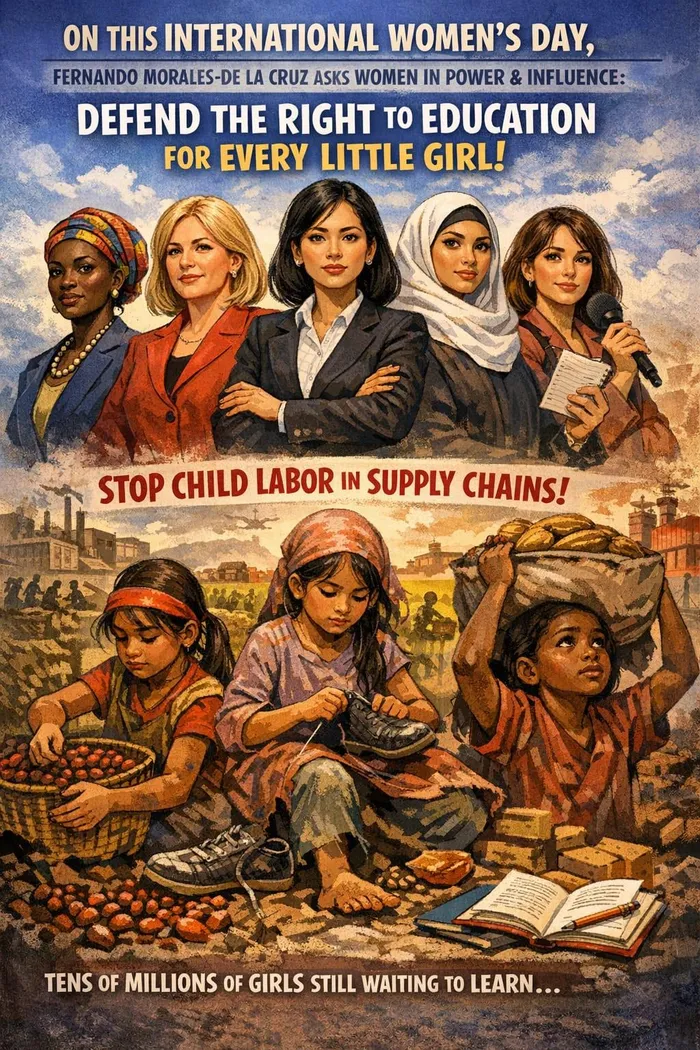
Over a century after the Triangle Shirtwaist Factory Fire, the exploitation of girls in global supply chains persists. This International Women’s Day, we must confront the uncomfortable truth: who pays the price for cheap labour?
Image: Supplied
More than a century ago, tragedy forced the world to confront the brutal reality of exploitation in industrial supply chains. The Triangle Shirtwaist Factory Fire in New York City killed 146 garment workers—most of them young immigrant women and girls. Their deaths shocked society and helped reshape labour protections in the United States and beyond.
Yet more than a hundred years later, the central economic question remains unresolved: who ultimately pays the price for the world’s cheapest labour?
On this International Women’s Day, I dare to ask women in positions of power and influence, women in governments, corporations, investment funds, media organisations, and international institutions, to do everything in their power to defend one fundamental right: the right to education for the tens of millions of little girls who today are still being exploited in the supply chains of corporations.
Around the world, tens of millions of girls are not in classrooms. They are harvesting cocoa, coffee, tea, cotton, fruits and vegetables, or working in garment factories, mines, garbage dumps and workshops.
Instead of learning to read and write, they harvest raw materials, sew clothing, sort minerals, or work long hours in agriculture. Their labour is hidden in the supply chains of products sold by major brands.
These girls are paying a price that the global economy refuses to acknowledge. Their childhoods subsidise cheap commodities, low production costs and higher corporate profits.
The exploitation of girls is not simply a labour issue. It is also a profound gender issue because it has become part of the business model of hundreds of corporations. When girls are forced to work instead of attending school, the consequences can destroy their lives and perpetuate misery in their countries.
Education is one of the most powerful tools to break cycles of poverty, early marriage, and economic exclusion. Denying girls that opportunity entrenches inequality for generations.
Today, many of the institutions that shape the global economy publicly celebrate women’s empowerment. Corporations publish glossy sustainability reports. Investment funds promote environmental, social and governance commitments. Governments endorse declarations on gender equality.
But empowerment cannot coexist with a global economic model that still relies on the labour of children, especially girls, at the bottom of supply chains.
If we truly believe in gender equality, we must ask a simple question: how can the world celebrate women’s empowerment while ignoring the exploitation of millions of girls?
Women leaders have enormous influence in shaping the policies, investments and narratives that govern our global economy.
They can demand supply chain transparency.
They can require corporations and investment funds to ensure that their profits are not built on child labour.
They can insist that international trade and development policies protect children’s rights.
They can ensure that the media shines a light on the invisible girls who pay the hidden cost of cheap production.
History shows that change is possible when moral clarity meets political courage.
The women who died in the Triangle factory fire did not choose to become symbols of reform. But their tragedy forced society to recognise that economic progress cannot be built on human exploitation.
Today, the world faces a similar moral challenge. If the global economy continues to depend on the labour of children, especially girls, then our claims of progress and equality ring hollow.
On this International Women’s Day, women in positions of power have an opportunity, and a responsibility, to lead.
The most powerful act of solidarity with the world’s girls is not a slogan or a campaign. It is ensuring that every girl has the chance to sit in a classroom instead of being exploited in a supply chain.
Because the true measure of progress is not how many women rise to positions of power, but whether that power is used to protect those who remain the most vulnerable. And today, tens of millions of girls are still waiting for that protection.
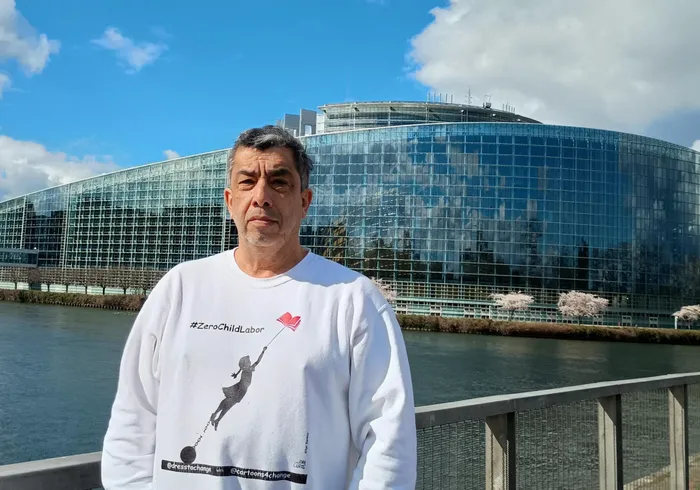
Over a century after the Triangle Shirtwaist Factory Fire, the exploitation of girls in global supply chains persists. This International Women’s Day, we must confront the uncomfortable truth: who pays the price for cheap labour?
Image: Supplied
* Fernando Morales-de la Cruz is a women’s rights activist and founder of the Lewis Hine Initiatives, and has campaigned for more than a decade against child labour in global supply chains.
** The views expressed do not necessarily reflect the views of IOL or Independent Media.