

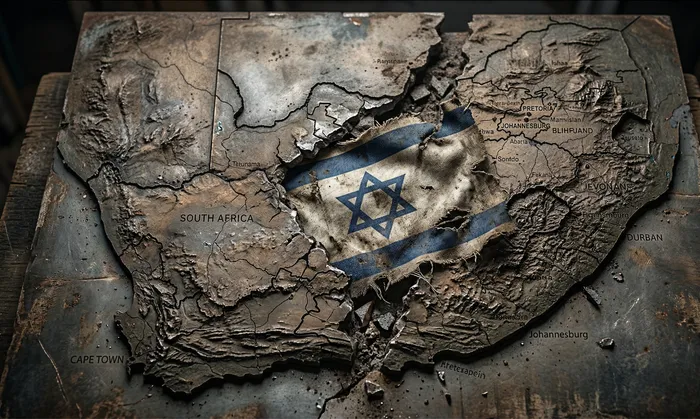
We did not defeat apartheid only to become vulnerable to new forms of pressure dressed up as lobbying, philanthropy, diplomacy, religion or “shared values,” argues the writer.
Image: Gemini AI
I did not go to prison, and many generations of South Africans did not sacrifice blood, freedom, dignity, livelihoods and loved ones, so that our democracy could be softened, co-opted or intimidated by foreign-aligned power.
We did not defeat apartheid only to become vulnerable to new forms of pressure dressed up as lobbying, philanthropy, diplomacy, religion or “shared values”.
A sovereign people must know how domination works. It seldom arrives announcing itself as domination.
It arrives through access, influence, narrative management, elite capture and the policing of what may be said. That is why South Africans must stop treating SAIPAC and the wider Zionist lobbying ecosystem as harmless democratic actors.
In this moment, they must be understood as a clear and present political danger to our constitutional sovereignty, democratic integrity and historical memory.South Africans especially our current generation must stop being polite and generous about our power.
In every democracy, organised interests try to influence lawmaking, media narratives and public opinion. But there is a decisive difference between domestic advocacy rooted in the national interest and lobbying that operates in close political and ideological alignment with a foreign state whose conduct is itself under grave international legal and moral scrutiny. That difference is where the danger lies.
Public reporting on SAIPAC’s launch in Cape Town in 2011 made clear that it was explicitly modelled on AIPAC in the United States, and one of its founders said it would remain “in sync and close association with the Israeli Embassy.”
Those are not the words of an ordinary local pressure group.
Those are the words of a project seeking proximity to power on behalf of an external agenda.
That agenda must be read in the context of the present.
South Africa is not commenting from the sidelines.
It is the state that took Israel to the International Court of Justice under the Genocide Convention. The case remains active.
On 15 March 2026, the Presidency confirmed that Israel had finally filed its response after two extensions granted by the Court, and the ICJ’s own case page shows the matter remains live, with new interventions filed in March 2026. South Africa’s legal and diplomatic position is therefore not symbolic; it is one of the central theatres of global accountability on Palestine.
This is why the matter cannot be treated as ordinary lobbying. When a sovereign country takes a principled stand under international law and networks inside that country move to weaken, discipline or morally isolate that stand, we are no longer dealing with routine democratic persuasion. We are confronting a politics of pressure.
We are confronting an attempt to shift the centre of gravity inside our institutions away from constitutional conscience and toward foreign comfort. South Africans must call that by its proper name: a threat to sovereignty , our way of being.
Our history should have taught us to see this clearly.
We come from conquest, slavery, colonial rule and apartheid. We know that domination does not always rule by direct command. Often it rules through intermediaries, through local elites, through economic leverage, through selective patronage, through manufactured legitimacy, through church language, through media framing, and through the disciplining of dissent.
Colonial power always preferred local translators of empire. Apartheid too depended on networks of collaborators, apologists and beneficiaries. Why then should we imagine that in the twenty-first century foreign influence would arrive in a less sophisticated form?
Why would it not seek to shape our Parliament, our public discourse, our universities, our faith communities and our press?
The warning signs are already here. In January 2026, South Africa expelled Israel’s top diplomat and ordered him to leave within 72 hours, accusing him of repeated violations of diplomatic norms and behaviour that challenged South African sovereignty.
Israel retaliated by expelling South Africa’s senior diplomatic representative. That was not a normal quarrel between friendly states.
It was a serious rupture that showed how sharply contested South Africa’s position has become. A country that is already being tested diplomatically should be doubly vigilant about lobbying formations inside its borders that seek to normalise foreign influence over domestic political life.
The battle is not only diplomatic its a war of protecting our own values.
It is moral, symbolic and institutional.
The Nelson Mandela Foundation’s 23rd Annual Lecture in October 2025 was delivered by Francesca Albanese, with a conversation afterward involving Dr Naledi Pandor.
That was entirely consistent with Mandela’s own internationalism and with South Africa’s liberation tradition.
Yet the event drew an immediate backlash from pro-Israel and Christian Zionist circles, including demands that Pandor be removed. This matters because it shows how institutions associated with Mandela’s legacy are now themselves becoming contested terrain.
The aim is not simply to disagree; it is to stigmatise, delegitimise and intimidate. Mandela’s position and we however, does not bend so easily. In 1997 he said, “our freedom is incomplete without the freedom of the Palestinians.”
That sentence remains one of the clearest moral coordinates in South African foreign policy. Anyone trying to detach South Africa from Palestinian solidarity is not merely arguing about the Middle East. They are trying to revise the ethical language of our own democracy. They want Mandela’s legacy emptied of content, flattened into ceremony, and severed from anti-colonial struggle. That will never happened.
We will fight and never submit. South Africans should refuse that theft.
There is also a gendered dimension to this struggle that deserves far more scrutiny. These lobbying ecosystems are still overwhelmingly shaped by male (white) power: male money, male gatekeeping, male access, male certainties, male impunity.
Their style is patriarchal. They presume the right to define reasonableness, to patrol the boundaries of respectable speech, and to punish women who refuse silence. It is not incidental that outspoken women like Naledi Pandor and Francesca Albanese become lightning rods for fury. Patriarchal political cultures are always threatened by women who speak clearly against militarism, colonial violence and racial domination.
The attack is ideological, but it is also gendered.The media battlefield is equally important. In 2025 and again in March 2026, controversy grew over South African journalists who took sponsored trips to Israel funded by the South African Jewish Board of Deputies without proper disclosure. This is not a minor ethics debate.
When access is paid for by interested lobby formations and audiences are not told, journalism becomes vulnerable to influence laundering. The issue is larger than one trip. It is about whether South Africans are consuming independent reporting or carefully curated perception management. A democracy that cannot defend the integrity of its information space becomes easy prey for organised power.
Nor is it paranoia to note the wider international pattern. In 2025, the Dutch state threat assessment said Israel had sought to influence political and public opinion in the Netherlands, including by sending materials directly to selected politicians and journalists outside official channels.
Dutch ministers reportedly described that method as “unusual and undesirable.” South Africans should not imagine ourselves uniquely immune. If a European democracy can identify such methods as a national concern, then South Africa, with its far more fragile media ecology and much deeper history of externally driven destabilisation, should be even more alert.
Capetonians in particular must wake up. Cape Town is not neutral ground. It is a city where old privilege, class insulation, Atlantic-facing respectability, donor networks and foreign affinities often intersect. Too many in the city and province are more comfortable with outside power than with the anti-colonial instincts of our freedom loving people.
They speak of order, moderation and civilisation, but too often what they really mean is obedience to established power. That is fake patriotism. That is not national democratic thinking. That is not us. A real South African asks first: does this strengthen South African sovereignty, deepen constitutional freedom and honour the sacrifices that made this democracy possible?
That is the question before us now.I did not go to prison to be co-opted. Our martyrs did not die so that South Africa could become a playground for foreign influence masked as respectable lobbying.
Our people did not endure detention, banning orders, bullets, police cells, exile and economic punishment so that a new elite could tell us to keep quiet while external interests reorganise our moral centre.So let us be clear. South Africa is no one’s proxy. South Africa is no one’s point person. South Africa is sovereign.And any network that seeks to bend this country away from its constitutional values, its liberation history and its solidarity with the oppressed must be named, exposed and resisted politically.
Not tomorrow. Now. Because freedoms that are not defended are freedoms already under siege.
* Faiez Jacobs is a former Member of Parliament, founder of The Transcendence Group, Capetonian, Activist, and Servant of the People.
** The views expressed do not necessarily reflect the views of IOL or Independent Media.
IOL Opinion
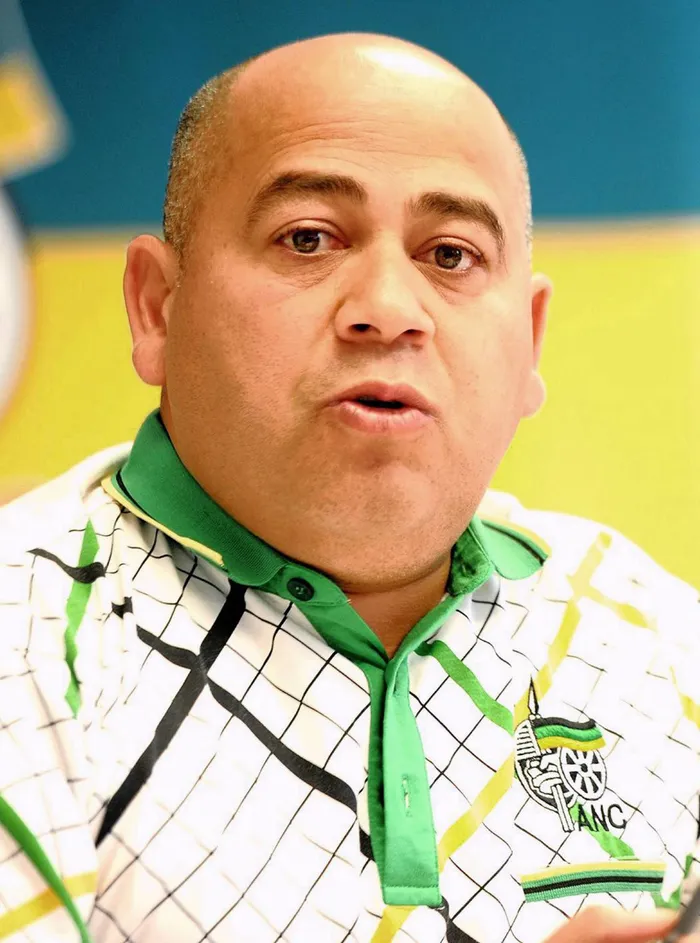
ANC Western Cape Faiez Jacobs.
Image: Ayanda Ndamane / Independent Newspapers