

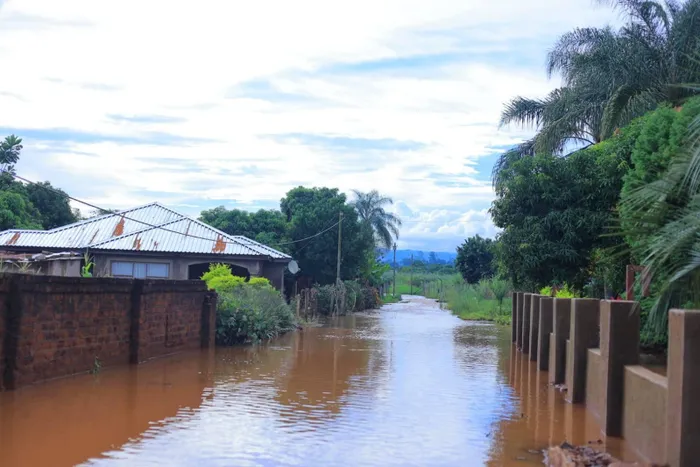
Devastating scenes in Limpopo after heavy rains led to widespread flooding, impacting communities and infrastructure.
Image: Office of the Premier: Limpopo Provincial Government / Facebook
For families in parts of Limpopo still trying to rebuild after weeks of heavy rain and flooding, the damage extends far beyond the cost of broken roads and collapsed houses. It has meant sleepless nights, disrupted schooling, and the loss of lives, all in areas long known to be at risk.
This week, Parliament warned that poor land-use planning continues to put communities directly at risk, as a joint parliamentary delegation visited flood-affected areas to assess the scale of the destruction and the state of government response.
Members of Parliament from the Portfolio Committee and the Select Committee on Cooperative Governance and Traditional Affairs (CoGTA) toured some of the hardest-hit areas, including Mbaula Village in the Greater Giyani Local Municipality and Petanenge in the Greater Tzaneen Municipality.
During briefings by district and local officials, the delegation was told that repairing flood-damaged infrastructure in the Mopani District alone is expected to cost more than R3.3 billion. At least five people have died as a result of the floods.
In Mbaula Village, MPs walked through communities where homes had collapsed under the weight of the rains. Roads were washed away, electricity infrastructure was damaged, and access to basic services was disrupted, leaving residents struggling to return to some sense of normality.
Community representatives and traditional leaders told the delegation that many families had little choice but to settle near rivers or on low-lying land, areas that are known to flood during heavy rains. Lawmakers were told that decisions around land allocation are often made without proper consultation or technical assessments, increasing the risks faced by already vulnerable households.
Committee members said this lack of coordination, particularly between municipalities and traditional leadership structures, continues to undermine efforts to keep people safe. They warned that government responses remain largely reactive, with action taken only after disaster strikes.
Chairperson of the Portfolio Committee on CoGTA, Dr Zweli Mkhize, said the focus should shift away from blame and towards fixing the underlying problems.
“Without reliable technical assessments and proper mapping, it becomes impossible to regulate land use effectively,” Mkhize said. “And when that happens, communities remain exposed to the same risks over and over again.”
He called for detailed floodplain mapping and clearly marked no-build zones to prevent people from settling in dangerous areas. Visible markers, he said, would also help municipalities enforce bylaws and hold those responsible for illegal or unsafe development accountable.
The delegation stressed that communities and traditional leaders must be involved from the start in spatial planning decisions, rather than being informed once choices have already been made. MPs said meaningful engagement is essential if land-use plans are to reflect local realities and protect lives.
Officials told the delegation that steps are being taken to improve cooperation, including capacity-building workshops at the district level and the deployment of professional surveyors to assess flood-prone land.
Chairperson of the Select Committee on CoGTA and Public Administration, Mxolisi Kaunda, said the visit was about more than just observing damage.
“We are here to make sure that ministers, mayors, and departments move with speed to assist affected communities,” Kaunda said. “This is about accountability and making sure people get the help they need.”
In Petanenge village, the human cost of the storms was especially visible at Marito Primary School. Strong winds and heavy rain tore off the roof, damaging classrooms, the administration block, and ablution facilities. MPs called on the provincial Education Department to submit a detailed assessment and a clear recovery plan within seven days, to ensure learners can return to school safely.
The delegation is continuing its oversight work in Mpumalanga’s Ehlanzeni District, where more flood-affected communities will be visited in Bushbuckridge.
karabo.ngoepe@inlo.co.za