

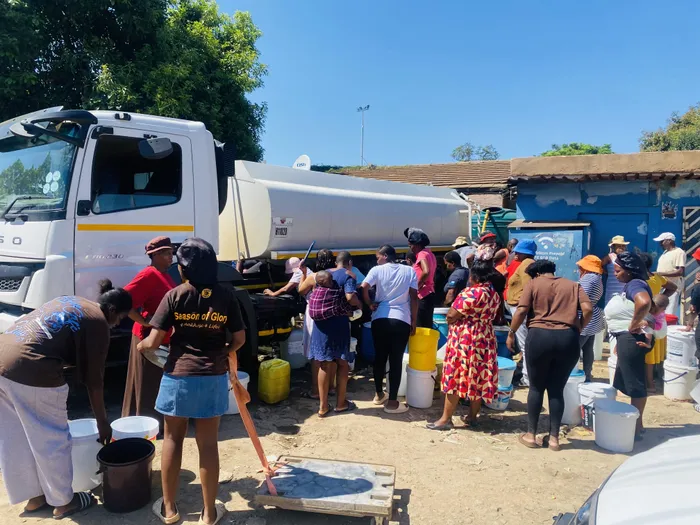
Residents queue for water from tankers in Johannesburg as prolonged outages and infrastructure failures deepen frustration across the metro.
Image: Simon Majadibodu/ IOL
“We know that Joburg Water has a very good turnaround strategy. The problem is that strategy does not have the support of having good budget, a budget to implement it, enough teams to actually make sure that it is implemented.”
That is the blunt assessment from Dr Ferrial Adam, executive director of WaterCAN, as Johannesburg grapples with recurring water outages that have left residents frustrated and protesting.
Adam says the issue is not the absence of planning — but the absence of funding and implementation capacity.
“From our side, what we think must be done is that there needs to be a ring-fenced budget in Joburg Water to deal with all the kind of infrastructural issues that we need to deal with.
Some of the reservoirs have been identified for fixing, replacing of water pipes, dealing with non-revenue water. I think that is what we need to keep pushing as civil society in keeping Joburg Water and the City of Joburg on track to achieve the turnaround strategy," she said.
Across Johannesburg, residents have endured prolonged outages, erratic tanker deliveries, and inconsistent communication. The City of Johannesburg Metropolitan Municipality and its entity Johannesburg Water have cited ageing infrastructure, high demand and maintenance backlogs as contributing factors.
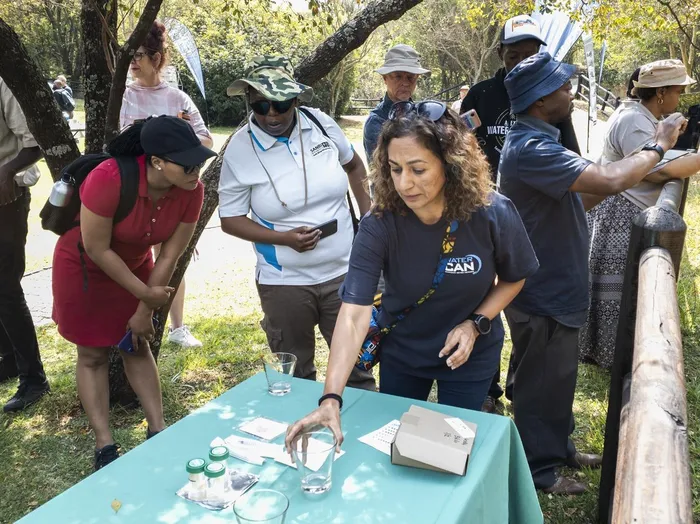
Dr Ferrial Adam, executive manager of WaterCAN doing a demontration.
Image: Supplied
But Adam says financial instability is at the core of the crisis.
“Joburg Water can’t pay their contracts because they have no money in the bank. This situation cannot continue.”
Her remarks come amid intensifying civic pressure.
On Sunday, IOL reported that Johannesburg’s Water Crisis Committee called on government to be transparent about the full extent of the metro’s water challenges and the concrete steps being taken to address them. The committee warned that residents were being left in the dark about the true scale of the crisis, despite mounting evidence of systemic strain.
According to the committee, Johannesburg is facing an estimated shortfall of about 200 million litres of water per day from bulk supplier Rand Water — a deficit that has compounded pressure on already ageing infrastructure. The committee further pointed to an average of more than 4,500 pipe bursts each month across the city, describing this as evidence of deep-rooted decay in the system.
Ravi Singh, speaking on behalf of the committee, urged national government to urgently intervene and ensure comprehensive, honest communication with residents. He stressed that partial improvements in some areas should not be mistaken for full stabilisation and that communities deserve clarity on reservoir levels, pumping capacity and long-term repair timelines.
The committee emphasised that transparency is essential to restoring public trust — a concern that closely mirrors Adam’s criticism of what she described as “cut and paste” communication that “told us nothing” during the early stages of the crisis.
Adam’s comments also follow President Cyril Ramaphosa’s State of the Nation Address, where he acknowledged the pain expressed through demonstrations in Gauteng and conceded that poor planning and inadequate maintenance by municipalities were central to the crisis.
“The real challenge lies not in the availability of water, but in getting water to people’s taps,” Ramaphosa said, describing the problem as rooted in systemic failures and years of neglected infrastructure.
In response, he announced the formation of a National Water Crisis Committee, which he will chair, aimed at coordinating technical support and intervention in struggling municipalities. He also signalled stronger accountability measures, including legal action against municipalities and potentially municipal managers in their personal capacity for failing to meet obligations under the law.
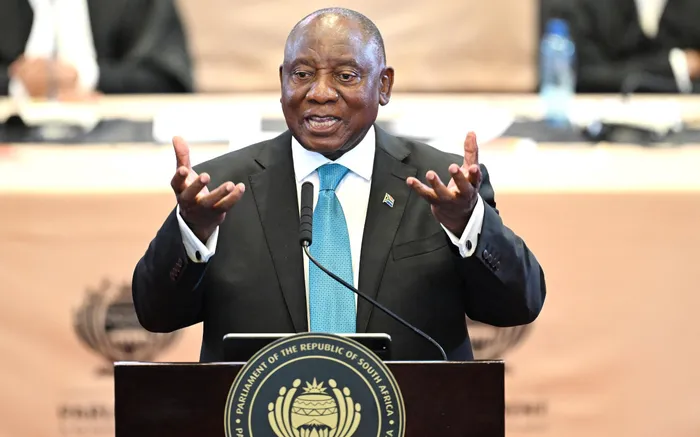
President Ramaphosa during the State of the Nation Address (SONA)
Image: GCIS / Phando Jikelo
Adam welcomed the elevation of the issue to the national agenda — but warned that urgency must follow rhetoric.
“We need the president to know now that he has said it in the SONA, that there is a plan, make sure the funding is ring-fenced, not next year, but now so that the work can continue.”
She rejects the notion that the crisis is permanent, but cautions against expecting instant solutions.
“Is this situation permanent or there are quick fixes? Look, this situation is not permanent and as the president said, there are no quick fixes. There are some ways to alleviate the problems and one of the ways is for Rand Water to own up to being part of the problem. What they have done now is for Rand Water to increase pumping to parts of Joburg and that is why water is now returning, not because there was a miracle from the ministers at all.”
“What we are saying to the president is, there are no quick fixes does not mean we must take long to find solutions to deal with the issues. We need to have to deal with issues with urgency, and quickly.”
She was also critical of how authorities handled the early weeks of the crisis.
“I think they were very slow initially to actually respond to people. It took protests, it took about three weeks of some people not having water before we saw any action. Even with that, we never got any honest responses. The communication was very cut and paste. It told us nothing. It seemed as if they had no idea, and for me, I know they have an idea what is going on — they just don’t want to tell us. It is not being open and honest.”
“I think it is good the president has now put it on a national agenda because we saw releases where the minister saying she washes her hands off, and that local government and they must solve it. Well, the president has contradicted her and said to her she must be part of fixing the issue. I think they were slow, they have not been honest in their communication and I am hoping that we can change that moving forward as civil society and as WaterCAN.”
Her central message is unequivocal: Johannesburg’s crisis is not about the absence of a strategy. It is about whether that strategy is properly funded, transparently implemented and politically prioritised.
With national government now publicly acknowledging systemic municipal failures and promising intervention, pressure is mounting on the City to ensure that water revenues are ring-fenced, infrastructure is upgraded and communication improves.
For residents navigating dry taps and uncertainty, the demand is simple — reliable water, delivered with urgency, honesty and accountability.
jonisayi.maromo@iol.co.za
IOL News