

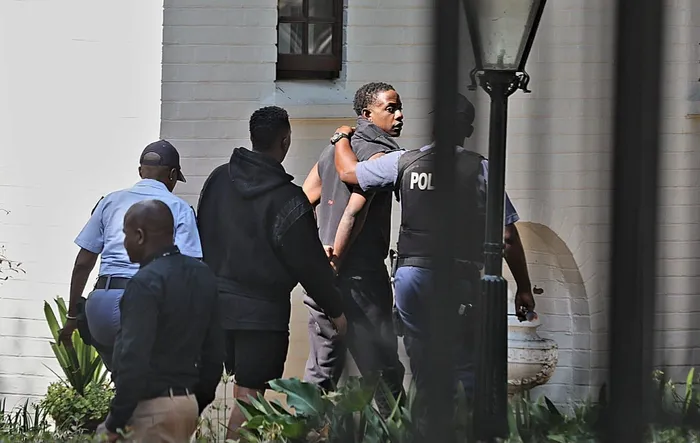
Bellarmine Chatunga Mugabe, 28, has been arrested and charged with attempted murder following a shooting at a Hyde Park residence.
Image: Timothy Bernard/ Independent Newspapers
As the legal process unfolds following the Hyde Park shooting, questions have emerged over whether Bellarmine Chatunga Mugabe, 28, could rely on diplomatic immunity to avoid prosecution in South Africa.
The South African Police Service (SAPS) in Gauteng confirmed that two men who were initially taken in for questioning have now been formally arrested and are expected to appear before the Alexandra Magistrate’s Court on charges of attempted murder.
Police said a 23-year-old man, believed to be employed as a gardener at the residence, was shot and critically injured. Officers recovered spent cartridges at the scene, but the firearm allegedly used in the shooting has not been located.
Chatunga is the youngest son of former Zimbabwean president Robert Mugabe and his second wife, Grace Mugabe. Robert Mugabe, who died in 2019, ruled Zimbabwe for 37 years before he was unceremoniously removed from office in 2017.
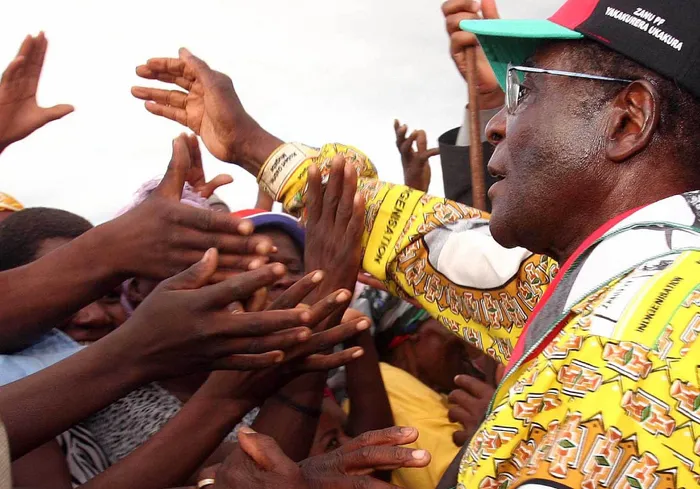
President Robert Mugabe greeting his supporters during a road campaign rally in Tsholotsho 100km outside Bulawayo.
Image: File/ Neo Ntsoma
Speaking to IOL, seasoned political analyst and international relations expert Dr Gideon Chitanga said there are no clear legal grounds for diplomatic immunity in Chatunga’s case.
“Primarily, there are no grounds for diplomatic immunity. Robert Mugabe was a former president and he is no longer alive. There are no treaties that address a situation like this,” Chitanga said.
He emphasised that diplomatic immunity is not inherited and does not extend to family members of former heads of state simply by virtue of their relationship.
“This is a purely criminal matter. You cannot invoke the Vienna Convention or diplomatic immunity under these circumstances. The Vienna Convention relates to individuals acting as state representatives, not private citizens,” he said.
Chitanga noted that members of the Mugabe family residing in South Africa do so as private individuals and not as accredited officials of the Zimbabwean government.
“They might live in South Africa, but not as representatives of the government of Zimbabwe. They live as individuals and will be treated as individuals in terms of the law,” he said.

Former president Robert Mugabe's sons Chatunga Bellarmine and Robert Junior Mugabe
Image: X
The Vienna Convention on Diplomatic Relations, adopted in 1961, governs diplomatic relations between states and sets out the privileges and immunities accorded to accredited diplomats.
South Africa is a signatory to the Convention and incorporates its principles into domestic law.
Under Article 29, a diplomatic agent is inviolable and may not be arrested or detained by the host country. Article 31 provides immunity from the criminal jurisdiction of the receiving state.
However, these protections apply strictly to diplomats who are formally accredited and recognised by the host state. Article 37 extends certain immunities to family members — but only if they form part of the household of an accredited diplomat serving in the host country.
Legal experts stress that immunity is linked to official diplomatic functions, not nationality, political legacy, or possession of a diplomatic passport.

International Relations expert, Dr Gideon Chitanga.
Image: Screengrab/SABC
Chitanga acknowledged that Chatunga may hold a Zimbabwean diplomatic passport issued during his father’s presidency, but stressed that such a document does not automatically confer immunity.
“Diplomatic passports have different terms, but holding one does not mean you are immune from prosecution. Immunity is tied to official status and recognised diplomatic functions. Under the circumstances, he is not a representative of any government,” he said.
“Secondly, he faces serious criminal allegations in South Africa. I do not see any legal route that could allow him to escape this situation.”
Chitanga added that while diplomatic passports may carry certain privileges, they do not provide blanket protection in cases involving serious criminal charges.
“The only thing that could happen, subject to the rule of law in South Africa, would be some form of political engagement between Zimbabwe and South Africa. But in strict legal terms, he is facing a serious situation,” he said.
The debate over diplomatic immunity echoes the legal controversy surrounding Grace Mugabe, Chatunga's mother.
In 2017, Grace Mugabe was accused of assaulting a model in Johannesburg. At the time, she sought to rely on diplomatic immunity. However, her claim was legally challenged in South African courts.
Subsequent court rulings found that the immunity granted to her was unlawful, reinforcing that diplomatic protection is not automatic and must comply with legal requirements under both domestic and international law.
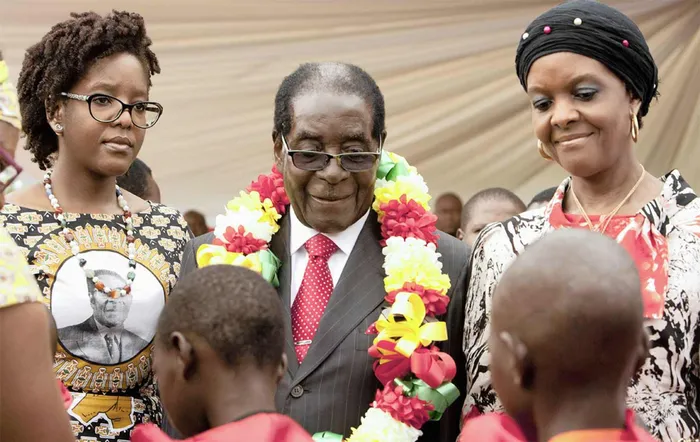
President Robert Mugabe with first lady Grace Mugabe and his daughter, Bona, left, at his 91st birthday celebrations in Victoria Falls.
Image: AFP
Grace Mugabe has not returned to South Africa since the incident, and the matter remains a reference point in debates around diplomatic privilege and accountability.
Against that backdrop, Chitanga said the law is clear.
“Remember the Grace Mugabe case. Her diplomatic status was contested in South Africa. Immunity is not unlimited and it is not automatic. The law will have to apply as it stands,” he said.
The investigation into the Hyde Park shooting remains ongoing.
jonisayi.maromo@iol.co.za
IOL News