

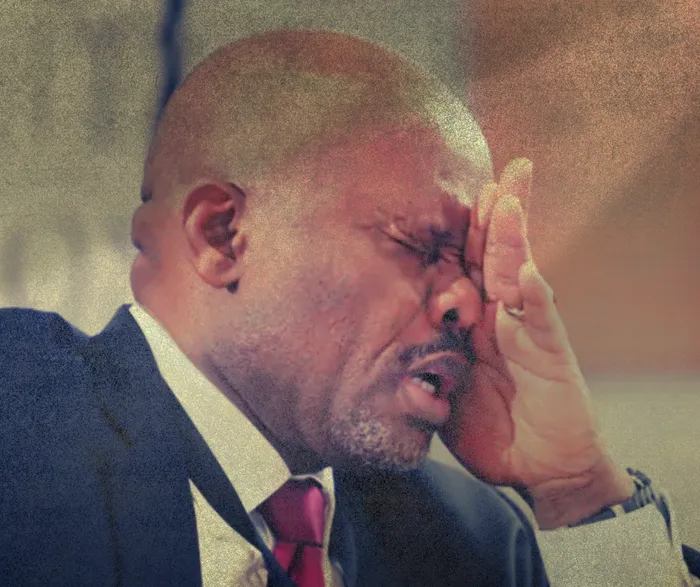
Suspended SAPS deputy commissioner, Lt-Gen. Shadrack Sibiya testified at the Madlanga Commission of Inquiry, admitting to many wrongdoings.
Image: Oupa Mokoena / IOL Graphics
Suspended SAPS deputy commissioner, Lt-Gen Shadrack Sibiya, stepped out of the hot seat on Tuesday after five days of testimony, having admitted to a series of serious missteps and questionable decisions, including being close to alleged criminals.
Sibiya was forced to admit to his involvement during his testimony at the Madlanga Commission.
The commission, chaired by retired Constitutional Court Justice Mbuyiseli Madlanga, is probing allegations of political interference and criminal infiltration within the SAPS and justice system.
Claims are that Sibiya enabled corruption, dismantled a key political killings task team (PKTT) and acted as a conduit between police leadership and powerful private interests.
Sibiya rejected outright that he received bribes, luxury vehicles or R300,000 in cash from controversial businessman Vusimuzi "Cat" Matlala, alleged to be linked to a so-called “Big Five” cartel.
He called the accusations baseless and politically motivated.
Yet under questioning, he conceded knowing Matlala. He admitted to inviting him to his son’s engagement party.
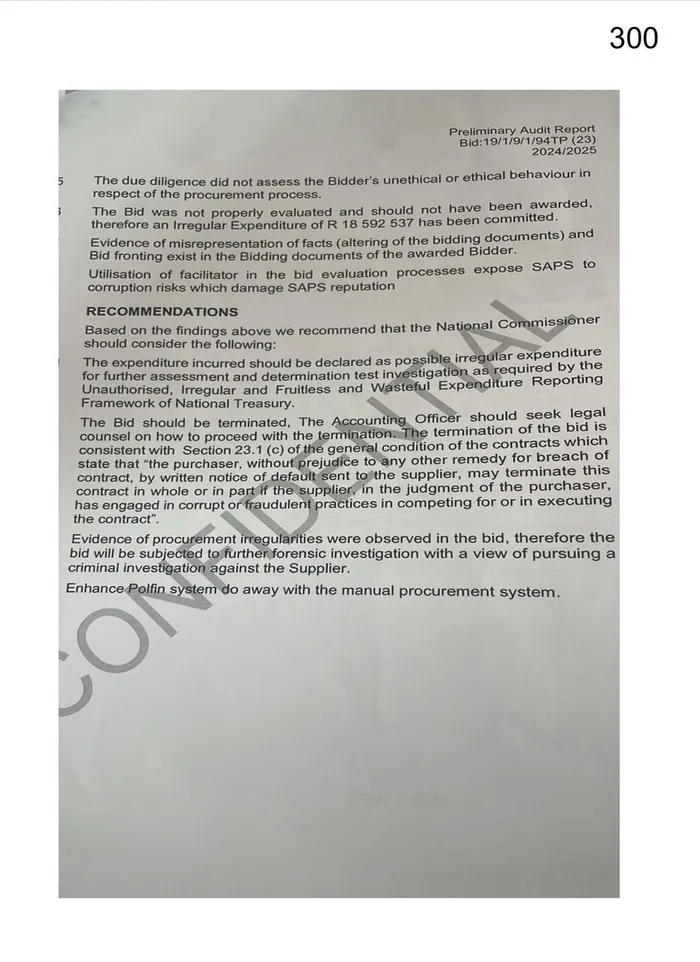
This is the document that suspended SAPS deputy commissioner, Lt-Gen. Shadrack Sibiya, shared to his junior, Fannie Nkosi. The document reached Vusimuzi “Cat” Matlala.
Image: Madlanga Commission of Inquiry
He further acknowledged sharing a confidential SAPS audit report, detailing irregularities in a Medicare24 contract tied to Matlala, with a friend and subordinate, Sergeant Fannie Nkosi, witness F.
He accepted that the document could have reached Matlala.
For many South Africans watching, that admission cut through the legal manoeuvring. At issue was not only whether money changed hands, but whether judgment did.
The testimony was centred on the December 2024 disbandment of the PKTT, a unit established to tackle politically motivated murders.
Sibiya defended its dissolution as a “consultative process” supported by senior officials. He described the unit as inefficient and said restructuring was necessary.
But he conceded the disbandment process was “marked by ambiguity” and that he deviated from initial Crime Intelligence instructions due to delays in implementing the action plan.
More than 100 case files were removed during the transition.
Sibiya has also conceded that the wife of an Matlala, became intoxicated at his son’s engagement party but he continued to deny any close ties to the tender tycoon.
For communities in KZN, where political assassinations have torn through local councils and families alike, the move deepened fears that justice was being quietly buried.
Throughout his testimony, Sibiya insisted he was the target of a “factional war” inside SAPS.
He accused KZN Police Commissioner, Lt-Gen Nhlanhla Mkhwanazi, of making inflammatory allegations without proof and described an organisation riven by infighting rather than united against crime.
Sibiya said he had been fighting with “hands tied behind his back,” arguing that the seizure of his electronic devices hampered his defence.
Moreover, Sibiya is expected to return to the commission to complete his testimony at a date to be announced.
kamogelo.moichela@iol.co.za
IOL Politics