
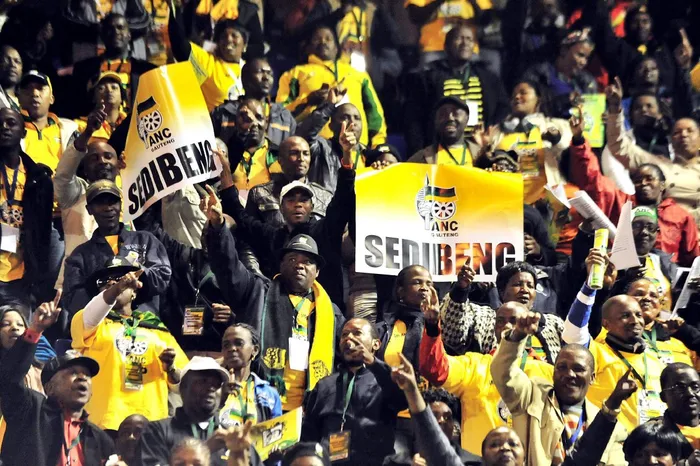
ANC Sedibeng Region members during one of the party's events.
Image: Bongiwe Mchunu / Independent Newspapers
The ANC in the Sedibeng region says stabilising municipalities and improving service delivery will be a key priority as the party prepares for this year’s local government elections.
Regional Secretary Jason Mkhwane said the party has identified several challenges affecting municipalities across the region that need urgent intervention.
“These include ageing and poorly maintained infrastructure, financial pressure in municipalities, weak institutional capacity in some areas, governance instability, and the negative impact of political disruptions and coalition arrangements in certain municipalities,” Mkhwane said in an interview on Tuesday.
He pointed to ongoing service delivery problems in Emfuleni Local Municipality as an example of the difficulties facing residents.
“In places such as Emfuleni, persistent sewer spillages, potholes, water and sanitation failures, and delays in infrastructure maintenance have severely affected communities.”
Mkhwane said the party’s approach focuses on stabilising governance, improving accountability, and strengthening the operational capacity of municipalities.
This, he explained, includes reinforcing consequence management, improving financial discipline, prioritising the maintenance and rehabilitation of infrastructure, and ensuring that municipalities receive adequate institutional support to function effectively.
“We are also focused on strengthening coordination between local government, provincial, and national departments so that interventions are not fragmented and communities begin to see visible improvements,” he said.
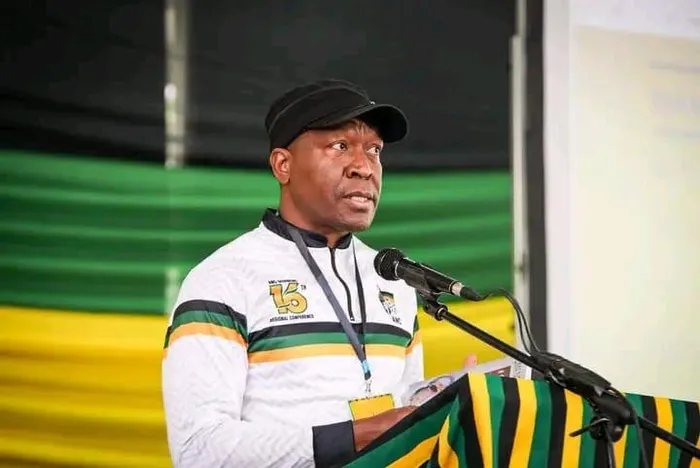
ANC Sedibeng Regional Secretary Jason Mkhwane.
Image: Facebook
As part of this effort, the ANC in the region has prioritised strengthening the service delivery war room as a monitoring and coordination mechanism.
“In addition, the region has prioritised the strengthening of the service delivery war room as a practical coordination and monitoring mechanism to ensure that service delivery challenges are identified early, attended to with urgency and tracked more effectively,” he said.
“The purpose of the war room is to improve responsiveness, unblock bottlenecks and ensure closer political and administrative focus on the everyday concerns affecting communities.”
Mkhwane’s comments come amid significant leadership changes within the ANC in Sedibeng.
The ANC in Gauteng recently initiated a leadership shake-up in the region, instructing several senior officials to step down amid mounting concerns about financial strain, service delivery failures, and internal political realignments.
The Executive Mayor of Emfuleni Local Municipality, Sipho Radebe, was instructed to resign by the ANC Sedibeng Regional Office Bearers on February 10.
Radebe, however, resisted the instruction and appealed to ANC Secretary-General Fikile Mbalula, arguing that the recall was politically motivated and failed to consider the severe challenges he inherited when he took office in 2021.
In the Sedibeng District Municipality, the regional ANC also expelled council speaker Moipone Modikeng and the member of the mayoral committee for Local Economic Development and Tourism, Lulama Gamede, after they allegedly refused to step down voluntarily.
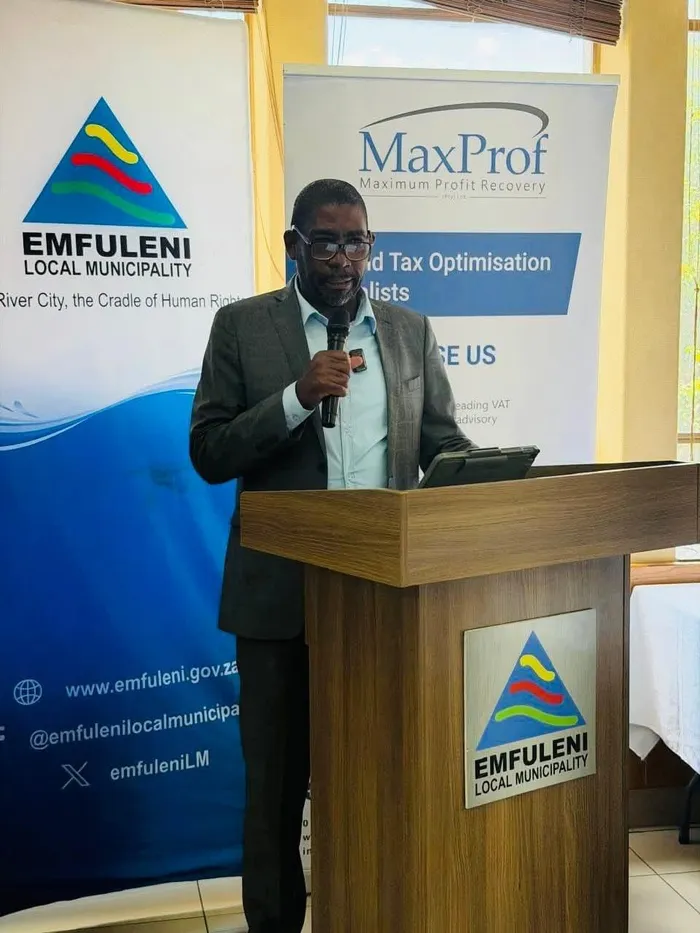
Emfuleni Mayor Sipho Radebe.
Image: Facebook / Emfuleni
Regional leaders cited what they described as an “unprecedented” decline in municipal performance, including ongoing financial crises, poor service delivery, and the need for new leadership to stabilise governance.
The developments follow a turbulent period in 2025 in the Sedibeng district.
Former district mayor Lerato Maloka was removed through a motion of no confidence after allegations of financial mismanagement, including controversy surrounding a missing mayoral chain and an overseas trip to Germany.
Mkhwane said such interventions form part of the party’s broader renewal and accountability programme.
“Where interventions are necessary, they are undertaken to improve governance, strengthen public confidence, and ensure that leadership remains aligned to the task of serving communities effectively. The process has been guided by organisational considerations aimed at improving stability and performance,” Mkhwane said.
He acknowledged that leadership transitions can create temporary disruption but argued that failing to address problems would be far more damaging.
“Any leadership transition brings a period of adjustment, but where changes are necessary, they must be made. The greater risk is to leave problems unattended for the sake of appearances. Our view is that decisive interventions, when properly managed, are part of restoring stability rather than undermining it. The intention is to ensure that municipalities are better positioned to serve residents and respond to service delivery challenges with urgency,” he said.
Mkhwane also conceded that many residents in the region are frustrated by persistent service delivery failures. He said those frustrations are understandable.
“We accept that there have been serious shortcomings and that communities want practical results rather than promises.”
Despite the challenges, he argued that the ANC remains best positioned to rebuild municipalities in the region.
“The ANC remains best placed to lead the renewal and rebuilding of municipalities in the region because we have the experience, organisational footprint and the responsibility to correct what has gone wrong. Our commitment is to restore a capable, responsive and accountable local government that puts the needs of communities first.”
Looking ahead to the upcoming elections, Mkhwane said the party’s focus would be on restoring stable governance and ensuring that municipalities are led by capable political leadership supported by competent administration.
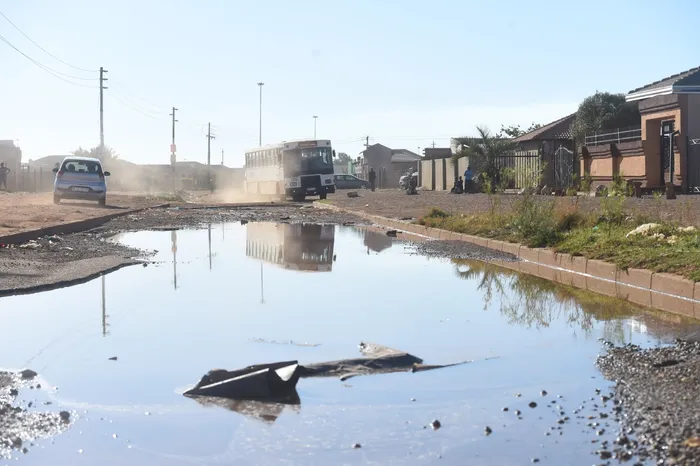
Residents of Emfuleni have been complaining for years over a lack of service delivery.
Image: Itumeleng English / Independent Newspapers
Key priorities, he said, will include strengthening revenue collection, improving financial management, accelerating infrastructure repairs, and tightening oversight of service delivery performance. The party also aims to improve response times to community complaints.
“The objective is to build municipalities that are stable, functional, and able to deliver reliable basic services. Our message to the people of Sedibeng is that we have heard your frustrations. We understand the seriousness of the challenges facing our municipalities, and we are committed to rebuilding local government so that it works for communities.”
He added that residents should judge the ANC not only on past shortcomings, but also on its willingness to address them.
“We ask residents to judge us not only on where we have fallen short, but also on our willingness to confront those shortcomings and correct them.”
Mkhwane declined to comment on who the party may put forward as mayoral candidates in the upcoming elections. He said the ANC follows a formal organisational process to identify and finalise candidates for leadership positions.
“Those processes are guided by policy, consultation, and internal democratic mechanisms. It would, therefore, be premature to provide names at this stage before the process has been concluded by the relevant structures,” he said.
karabo.ngoepe@inl.co.za