

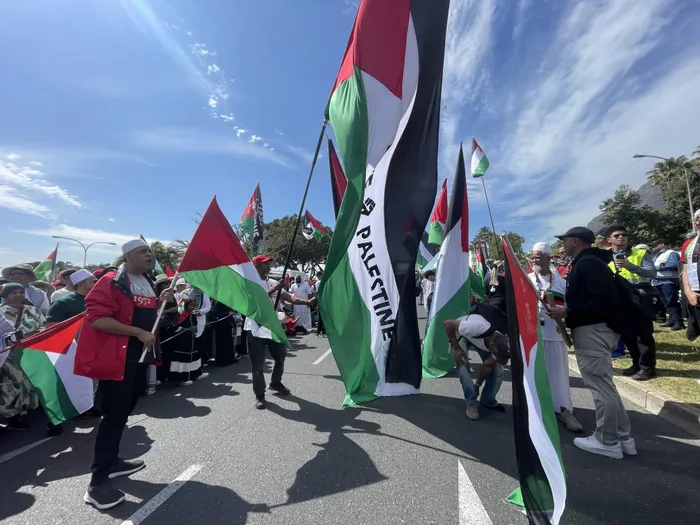
"In the intervening period, Palestinians in Gaza continue to face ongoing bombardment from Israeli strikes, with unabated loss of life, damage to critical infrastructure and precarious living conditions for people in Gaza," the presidency said.
Image: Ian Landsberg/Independent Newspapers
South African organisations have reacted to President Cyril Ramaphosa's announcement on Sunday night that Israel has filed its response in South Africa’s genocide case before the International Court of Justice (ICJ).
Israel filed their response more than a year after Pretoria submitted its detailed written arguments to the court. The case was brought by SA before the ICJ in 2023 after the conflict in Gaza escalated to such an extent that it led to widespread destruction across the territory.
The Presidency said that the court had initially ordered Israel to respond by 28 July 2025 to South Africa’s Memorial – which was filed on 28 October 2024 – but on two occasions Israel requested an extension to the time limits set by the court, which the court granted.
"South Africa will now consider Israel’s response and decide whether to request the Court’s permission to make further written submissions in reply, or to proceed directly to the oral phase of proceedings.
"In the intervening period, Palestinians in Gaza continue to face ongoing bombardment from Israeli strikes, with unabated loss of life, damage to critical infrastructure and precarious living conditions for people in Gaza," the presidency said.
Ramaphosa said, “At a time of growing global division and the systematic undermining of the multilateral system, the United Nations in particular, the crisis in Gaza represents an opportunity to unite humanity and remind us all of our shared values.”
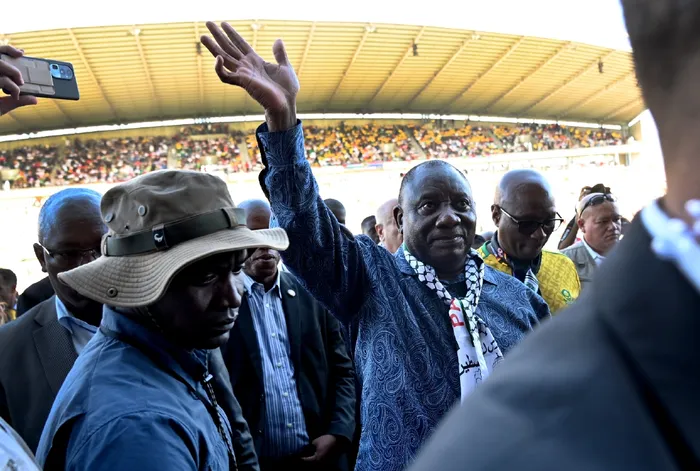
President Cyril Ramaphosa attended the Palestine National soccer team game against Western Cape eleven at the Athlone Stadium in 2024
Image: Ayanda Ndamane/ Independent Newspapers
South African Jews for a Free Palestine (SAJFP) said that they welcomed Ramaphosa’s statement and “continued support for the ICJ case against Israel's genocide in Gaza”.
“We support a process that is both expeditious and effective in bringing an end to the genocide. It is imperative that Israel cease all acts of aggression and be held accountable for its actions in upholding its settler colonial regime.
“While we support the ICJ genocide case South Africa brought against Israel, we note that South Africa is currently the number one supplier of coal to Israel through private companies, coal that in part fuels Israel’s military operations,” SAJFP said.
“We therefore call for the South African government to institute an immediate energy embargo against Israel, and also call for the cessation of all trade, and the total severing of diplomatic relations between the two countries.”
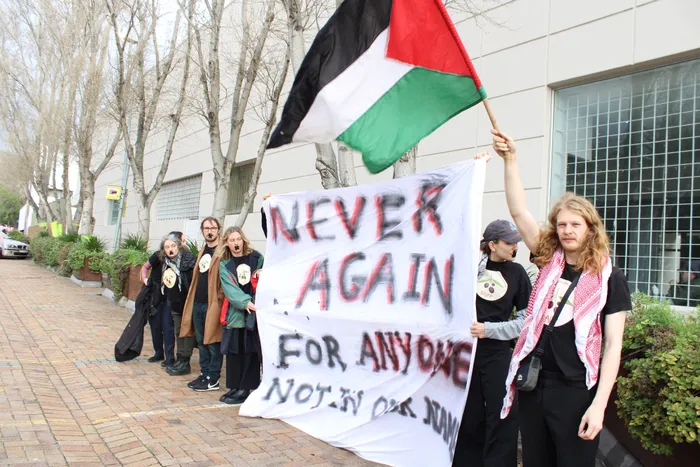
Jews for a Free Palestine (SAJFP) previously held a silent protest outside the Cape Town Holocaust & Genocide Centre.
Image: Shakirah Thebus/Independent Newspapers/Archives
The Palestinian Solidarity Alliance (PSA) also welcomed the statement, saying South Africa’s action before the ICJ represents a historic and principled effort to uphold international law and to protect civilians through legal and diplomatic means rather than force.
“By bringing this case, South Africa has reaffirmed the importance of the rule of law in the international system and has honoured its own constitutional commitment to human rights and justice,” the PSA said.
The PSA also welcomed the growing international support for South Africa’s initiative, stating that the decision by the Netherlands and Iceland to join proceedings in support of South Africa “signals a widening recognition that states have both a legal and moral obligation under the Genocide Convention to act when credible allegations of genocide arise”.
“South African authorities must investigate and prosecute South African citizens who are serving in the Israeli military (IDF) where their participation may implicate them in violations of international humanitarian law,” the PSA said.
“South African law does not permit citizens to participate in foreign armed forces without proper authorisation, and where credible allegations of war crimes exist, accountability must follow.
“Secondly, we call for investigations into individuals, organisations and businesses in South Africa that are materially supporting Israel’s military campaign or settlement enterprise, including financial support directed to entities involved in displacement, land seizure or ethnic cleansing,” the PSA said.
The PSA also reiterated that South Africa must align its economic policy with the principled position it has taken at the ICJ, and is calling on the government to immediately ban the export of coal to Israel.
South African Zionist Federation spokesperson, Rolene Marks, said that they welcomed last week’s news of the United States formally intervening in support of Israel, and rejected South Africa’s accusation that Israel is committing genocide.
“In its submission to the Court, the United States warned that the allegation of genocide against Israel is legally unfounded and risks distorting the very meaning of genocide under international law. This intervention represents a profound diplomatic rebuke to the South African government and its Department of International Relations and Cooperation (DIRCO),” Marks said.
Marks said that instead of pursuing a balanced foreign policy that advances South Africa’s national interests, the government has chosen to place itself at the forefront of a highly politicised legal campaign.
“The ICJ proceedings have therefore become less about law and more about politics - an attempt to delegitimise Israel’s right to defend herself against Hamas, a terrorist organisation openly committed to Israel’s destruction.
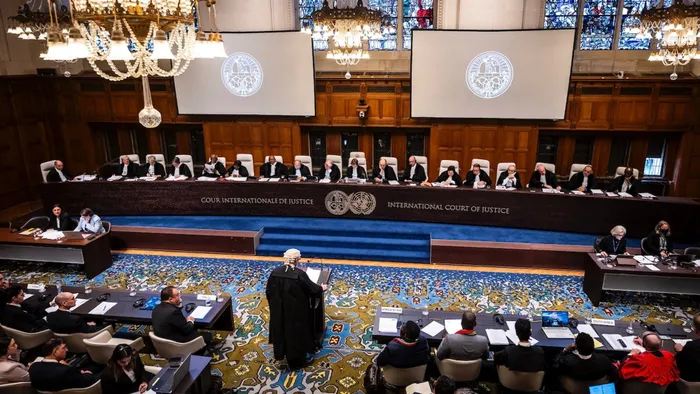
The South African government has strongly slammed the United States for imposing sanctions on judges of the International Criminal Court (ICC).
Image: UN Photo/ICJ-CIJ/Frank van Beek
“South Africa once prided itself on a foreign policy rooted in constitutional values, human rights and international credibility. Today, under the stewardship of DIRCO, that credibility is being steadily eroded,” Marks said.
“Even more troubling is that the South African government continues to present its position as representing all South Africans. It does not. Millions of South Africans reject the government’s attempt to speak on their behalf in accusing Israel of genocide.”
theolin.tembo@inl.co.za