

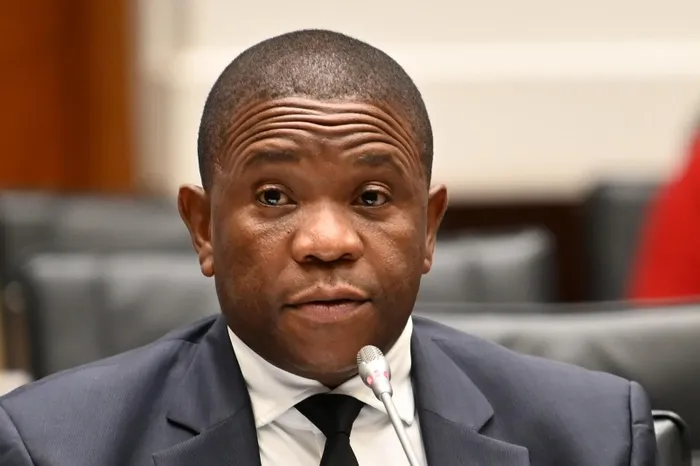
KwaZulu-Natal Police Commissioner Nhlanhla Mkhwanazi appeared before the Ad Hoc Committee on Wednesday.
Image: Ayanda Ndamane / Independent Newspapers
KwaZulu-Natal Police Commissioner Nhlanhla Mkhwanazi on Wednesday said his unsuccessful attempts to engage the executive over the directives issued by suspended Police Minister Senzo Mchunu triggered the press conference he held in July 2025.
Mchunu issued directives to disband the Political Killings Task Team (PKTT) and placed a moratorium on the filling of vacancies within Crime Intelligence without consulting National Commissioner Fannie Masemola.
Testifying before the Ad Hoc Committee to respond to evidence by other witnesses and clarify certain issues, Mkhwanazi said he tried to reach out to Mchunu within a day after the directives were issued in December 2024.
“I tried to engage the National Commissioner to raise my concerns and get the minister to sit around the table,” he said.
Mkhwanazi also said he reached out to Police Portfolio Committee Chairperson Ian Cameron to allow them to appear before the committee.
“The meeting could not sit in February. We raised the issues, but the minister dismissed them.”
He added that he learnt that Mchunu held a meeting with SAPS senior management to discuss the PKTT and he was not invited.
“A lot of things had happened. I tried to enquire in a letter to (Crime Intelligence head Dumisani) Khumalo why the dockets were taken away,” he said adding that his request to Masemola to arrange a meeting with President Cyril Ramaphosa did not help.
“It was my last option to say there are other arms of government and all three of them are appointed by the people of this country.”
Mkhwanazi said although they had prepared a report for a meeting with Ramaphosa, he could not delay going public with his concerns.
“When I addressed the nation, it was important to present the content. We could not wait anymore.”
Earlier, Mkhwanazi testified that he stood by his evidence of the allegations of infiltration of the criminal justice system by drug cartel and criminal syndicates.
“Senior members of the security cluster, associated with syndicates, issued instructions without the authority of the National Commissioner,” he said in reference to suspended Deputy National Commissioner Shadrack Sibiya, who ordered the PKTT dockets be moved from KwaZulu-Natal to the head offices.
He also said a potentially corrupt relationship existed between North West businessman Brown Mogotsi and Mchunu.
He added that a potentially corrupt relationship existed between Mchunu, Mogotsi and businessman Vusimuzi “Cat” Matlala, who was awarded a R360 million health care contract by the police.
Mkhwanazi added that National Coloured Congress leader and MP Fadiel Adams used potentially classified information from Crime Intelligence to register cases against the unit’s officers.
Unnamed prosecutors were part of the crime syndicate that included other law enforcement agencies, metro police, SAPS and the judiciary that was controlled by drug cartels and businesspeople.
“It is known who some of them are, but we could not share because there are investigations. We named some politicians that are part of this.”
Apart from mentioning Mchunu and Adams, he named DA MP Dianne Kohler-Barnard.
“I must indicate that our leaders of society, who are the politicians, might not necessarily be involved with bad things at the beginning but because of corrupt members within, they capture these leaders and use them to the extent that a leader is used and becomes aware, but continues doing the wrong.”
Mkhwanazi said Mchunu was captured to the extent of writing the letter with the directives to disband the PKTT.
“I still believe and I am convinced that Minister Mchunu was used, to do what he did. There are many others who are made to do what they do. Some of them find joy and go with it.”
He also said MPs like Kohler-Barnard were fed the wrong information and ran with it while Adams 'supported the rot within the criminal justice system and compromised other leaders'.
“I will ask that they have to take a pause next time they receive information, interrogate the information before them so that they can make informed decisions,” said the KwaZulu-Natal provincial boss.
Mkhwanazi confirmed that he has had no security clearance since it expired in 2018.
He told the MPs that his 2022 application was yet to be completed because there are pending criminal cases against him.
One case involved an investigation by the Investigative Directorate Against Corruption as well as alleged interference in a criminal case and an alleged hijacking being probed by IPID.
mayibongwe.maqhina@inl.co.za
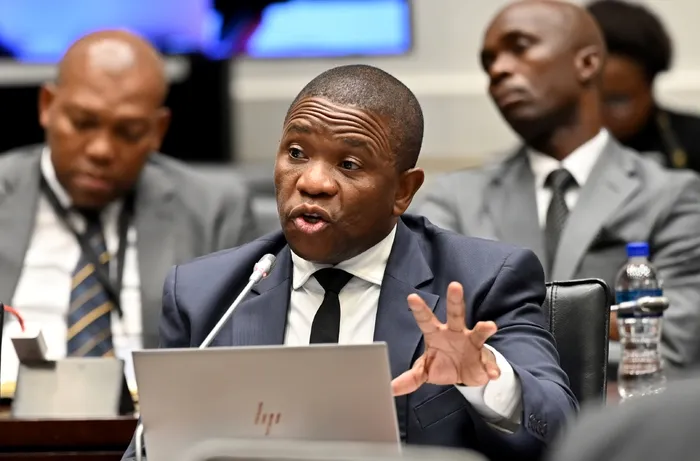
Nhlanhla Mkhwanazi Cape Town 18-March-2026-Ad Hoc Committee KwaZulu-Natal police Commissioner Nhlanhla Mkhwanazi returns to face parliamentary. Photographer Ayanda Ndamane/ Independent Media
Image: Ayanda Ndamane/ Independent Newspapers