

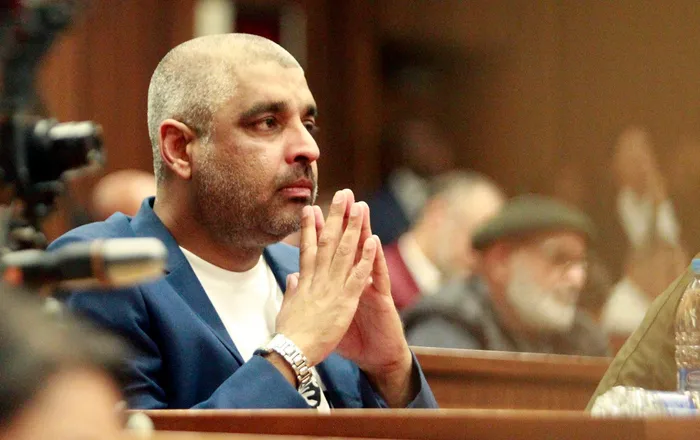
Ahmed Timol's nephew, Imtiaz Cajee, is set to testify at the TRC Commission on Thursday.
Image: Jacques Naude / Independent Newspapers
In a move that could expose decades of institutional failure, Imtiaz Ahmed Cajee, nephew of slain anti-apartheid activist Ahmed Timol, has formally applied to testify before a Judicial Commission of Inquiry.
In his affidavit, Cajee delivers a sharp critique of South Africa’s post-apartheid justice system, alleging a sustained pattern of deliberate suppression in the investigation and prosecution of apartheid-era crimes.
He is seeking to place on record what he describes as ongoing “efforts or attempts” to halt cases arising from the Truth and Reconciliation Commission (TRC).
The commission has been mandated to investigate matters of public and national interest relating to alleged interference in TRC cases. Its terms of reference include examining, from 2003 onwards:
Cajee argues that his decades-long pursuit of justice reflects more than personal loss. He says it points to systemic breakdowns, marked by ineptitude and neglect within the NPA and the Directorate for Priority Crimes Investigation (DPCI).
At the centre of his case is the 1971 death of Timol at Johannesburg’s John Vorster Square police station. For 46 years, the official version, supported by a 1972 inquest, held that Timol died by suicide after falling from the 10th floor while in police custody.
That finding was overturned in 2017, when a reopened inquest concluded that Timol had been murdered, a breakthrough largely driven by Cajee’s own investigation.
“My personal journey demonstrates how victims’ families have been forced to act as investigators, filling the void left by state institutions that failed to uphold their constitutional duties,” Cajee states.
He traces his resolve back to 1996, when he watched his grandmother, Hawa Timol, testify before the TRC.
“I ask the Almighty that I will not forget what happened, and that I need to know who lodged the complaint and what happened. I will not forget what happened. I need to know,” she said at the time.
“From that day onwards, I was no longer just going to speak about my uncle Ahmed, but do something constructive … and ascertain what really happened,” Cajee writes.
Cajee’s affidavit focuses on the period between 2003 and 2021, which he describes as marked by a “recurring pattern” of delay and resistance within the NPA and DPCI.
His claims include:
Among the most concerning details is a note from TRC records suggesting that (former Security Branch clerk Joao) Rodrigues allegedly told his daughter, when she was 11 years old, that the official police version of Timol’s death was untrue. Despite this and other leads, Cajee alleges persistent institutional reluctance to act.
Cajee says his legal battle is a continuation of his grandmother’s call for justice. She died just 13 months after testifying before the TRC in 1997, without seeing accountability.
He argues that his experience is not isolated but reflects a broader pattern of suppressed TRC-related cases, with serious implications for truth, reconciliation, and accountability.
His application comes amid wider legal action by victims’ families. In early 2025, 25 families and survivors, represented by the Foundation for Human Rights, filed a R167 million lawsuit against the state, alleging political interference in TRC prosecutions.
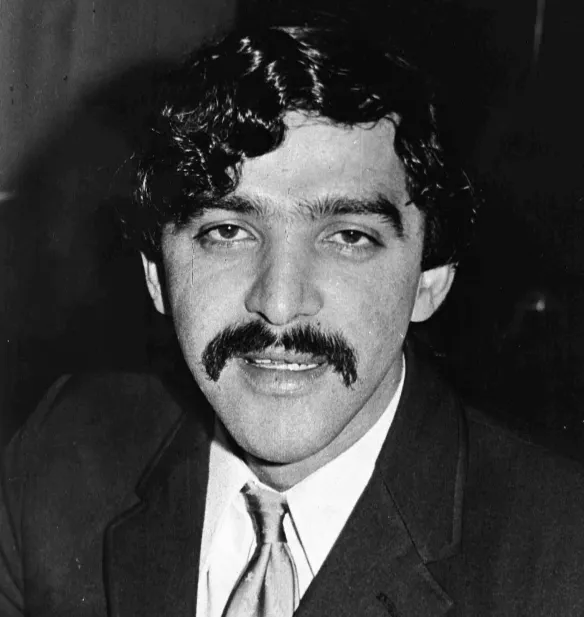
Ahmed Timol was an anti-apartheid activist who was tortured and murdered while in police custody in October 1971.
Image: File
That case cleared a key hurdle in October 2025 when the Gauteng High Court, Pretoria, dismissed a government attempt to delay proceedings.
In parallel, a judicial commission established in May 2025 and chaired by Justice Sisi Khampepe is investigating why many apartheid-era cases were delayed or abandoned.
The inquiry has faced legal challenges. Former presidents Thabo Mbeki and Jacob Zuma sought to have Khampepe recused, arguing she failed to disclose prior involvement in TRC-related recommendations. The High Court dismissed their application, allowing her to remain.
They have since approached the Constitutional Court of South Africa to challenge that decision.
For Cajee and other affected families, the outcome of these proceedings could determine whether South Africa confronts the unresolved legacy of apartheid-era crimes or continues to defer justice.
karabo.ngoepe@inl.co.za