

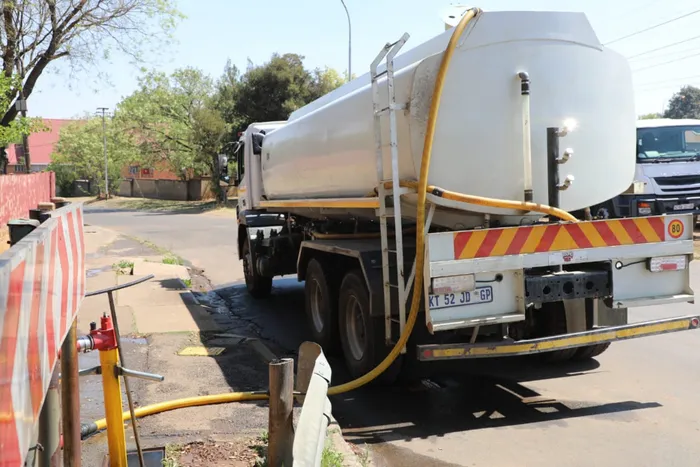
Water tankers gather at a low laying water hydrant in Riverlea to fill up. A recurring water crisis hit the area leading to water trucks distributing in the western areas of Joburg. Picture: Timothy Bernard / African News Agency (ANA)
Image: Timothy Bernard / African News Agency (ANA)
SA Human Rights Commission (SAHRC) is expected to hold a two-day investigative inquiry into Gauteng’s collapsing water systems, governance failures and claims surrounding “water tanker mafia”.
The inquiry comes as frustration boils over across Gauteng, where communities have endured relentless water outages, dry taps and failing infrastructure while allegations grow that private tanker networks may be benefiting from the crisis.
The SAHRC said the investigation forms part of its constitutional mandate to protect and monitor human rights, warning that the ongoing collapse of water services may be violating some of the most basic rights guaranteed to South Africans.
“The recurring disruptions in water supply raise serious concerns regarding dignity, equality, healthcare, life and access to sufficient water,” the commission said.
The watchdog revealed it had received mounting complaints over widespread shortages, ageing infrastructure, poor planning, service delivery failures and deteriorating water systems across Gauteng.
Particular concern has been raised over the devastating impact on poor and vulnerable communities, including informal settlements, schools, clinics and social care institutions, many of which have been left struggling for days without reliable water access.
The inquiry is also expected to place emergency water supply systems under intense scrutiny, especially amid growing public concern over the increasing dependence on private water tankers during prolonged outages.
Investigators will examine the causes behind repeated system failures, the effectiveness of municipalities and water entities, infrastructure management, budgeting, emergency responses and coordination between government departments.
Government departments, municipalities, water entities, civil society groups, experts and affected residents are expected to participate in proceedings.
kamogelo.moichela@io.co.za
IOL Politics