

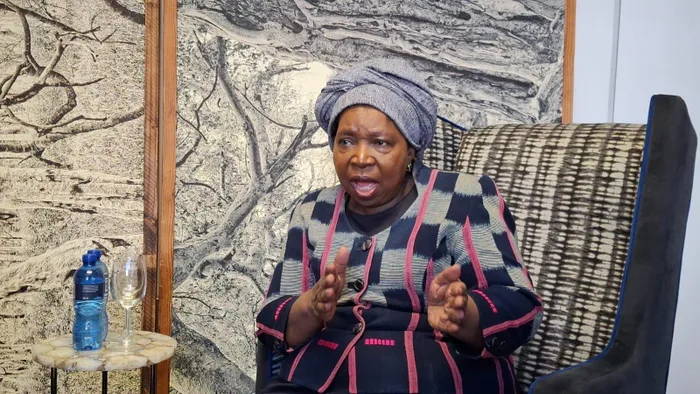
Former African Union Commission chairperson Dr Nkosazana Dlamini-Zuma has rejected claims that removing undocumented foreign nationals would ease unemployment.
Image: Timothy Bernard / Independent Newspapers
Deporting undocumented foreign nationals from South Africa would not automatically create jobs, says former African Union (AU) chairperson Dr Nkosazana Dlamini-Zuma.
She added that, amid South Africa’s high unemployment rate, many citizens were blaming African migrants living in the country.
Her comments come amid growing concerns over the safety and well-being of foreign nationals as tensions linked to anti-illegal immigration demonstrations escalate.
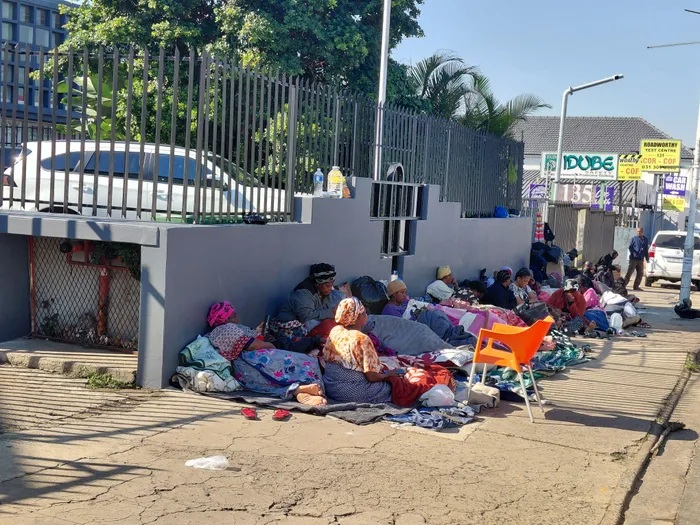
Many migrants travelled to South Africa in search of better opportunities. Instead, some say they are living in fear and sleeping with one eye open amid rising hostility.
Protests targeting undocumented migrants have intensified across the country, particularly in KwaZulu-Natal and Gauteng.
Protesters claim undocumented migrants are taking jobs meant for South Africans, placing pressure on healthcare services and schools, and failing to contribute to the economy through taxes.
Despite repeated calls for calm from the government, demonstrations have continued to escalate.
Dlamini-Zuma, a former Home Affairs minister, said illegal migration was undesirable but stressed the need for legal migration pathways.
“I think if we were to look at the free movement of people, there is a protocol that all Africans signed at the AU (African Union), most of them, but it’s not being implemented because they have not ratified it,” she said.
“Because that free movement does not say people must come illegally. It says they must come legally into a country and obviously respect the laws of that country. But we have not ratified that. Only four countries have ratified it.”
She said she did not believe deporting undocumented foreign nationals would resolve South Africa’s unemployment crisis.
“Because there is unemployment, people are now trying to attribute that unemployment to Africans who are here,” Dlamini-Zuma said.
“I don’t think if they left, there would be employment in South Africa. There would still be unemployment. Legal migration is what we should be looking at.
“Yes, illegal migration is not desirable. But legal migration is fine. People who are here illegally should be dealt with, but that should not create hostility.”
South Africa’s unemployment rate rose to 32.7% in the first quarter of 2026, up from 31.4% in the previous quarter.
Quarterly labour force survey data released by Statistics South Africa earlier this month, showed the number of employed people fell by 345,000 to 16.8 million, while the number of unemployed people increased by 301,000 to 8.1 million.
Dlamini-Zuma said unemployment would persist even if undocumented migrants left the country, arguing that South Africa faced a shortage of relevant skills.
“If you look at Agenda 2063, it says there must be a skills revolution because it recognises that if young people are not skilled, they are unlikely to get jobs or create jobs themselves,” she said.
“We need a skills revolution here in South Africa because many unemployed people do not have the skills the economy requires.”
She said some unemployed South Africans were educated but lacked the practical skills needed in the labour market.
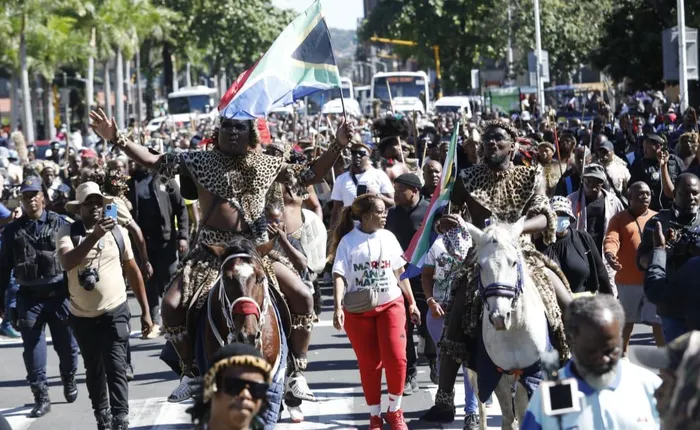
Men adorned in traditional Zulu attire, affiliated to the March and March movement, continue to march through the streets of Durban, calling for the removal of illegal foreign nationals in the country.
Image: Doctor Ngcobo / Independent Newspapers
Dlamini-Zuma said she was impressed by skills training centres she recently visited in India.
“They were teaching young people how to repair cellphones, drones and electric motorbikes, as well as how to install and maintain solar systems,” she said.
“Those are the kinds of skills that create jobs. Companies employ them, and those who do not want formal employment can start their own businesses.”
She added that economic growth was also essential to absorbing new entrants into the labour market.
“If the economy does not grow, it will not be able to absorb people entering the labour market,” she said in an interview with SABC News.
Meanwhile, protests against undocumented migration continue to spread across South Africa.
Anti-illegal-immigration group March and March, which has led demonstrations across the country, has threatened a national shutdown on 30 June if the government fails to meet its demands.
The group is calling for stricter visa regulations, a review of asylum policies, action against businesses employing undocumented migrants, accountability for corrupt police officers and restrictions on public services for undocumented migrants.
On Tuesday, the government called for calm following high-level talks on rising protests over undocumented migration.
However, the group said it would proceed with its planned nationwide shutdown.
The talks followed an urgent meeting at the Union Buildings in Pretoria on Monday between ministers in the Justice, Crime Prevention and Security Cluster.
The meeting focused on growing demonstrations against undocumented migration and included discussions with political parties, organisations and protest groups involved in community marches.
Speaking at a media briefing, Defence Minister Angie Motshekga said citizens had a constitutional right to protest.
“The 30th of June is within their rights. There is nothing to panic about,” she said.
However, she warned against unlawful behaviour during demonstrations.
“We have seen incidents during some marches that cannot be overlooked,” Motshekga said.
“While South Africans have the right to protest and their anger and frustration are understood, the government is also hard at work.”
She said the Department of Home Affairs continued to conduct inspections and operations targeting undocumented migration.
“It is not as though there is already a crisis because of the threat of 30 June,” she said.
“On 1 July, the sun will still rise in the east and set in the west.”
Motshekga also urged protesters to respect the dignity of migrants.
“I was terrified when I saw a South African pepper-spraying a foreign migrant,” she said.
“At the end of the day, they are human beings. We have a duty to protect everybody’s dignity.”
She added that migration was a global phenomenon that South Africa needed to manage responsibly.
“It has created serious challenges for us as a country and for the state, but it is also a global trend that we must manage both as a continent and as a country,” she said.
Former Home Affairs Minister Dr Nkosazana Dlamini-Zuma has argued that removing undocumented foreign nationals from South Africa would not automatically create jobs.
Image: XOLILE MTEMBU
Justice and Constitutional Development Minister Mmamoloko Kubayi rejected claims that the government had failed to act on immigration.
“We have not been lukewarm,” Kubayi said.
“Joint operations have been taking place week in and week out, and we have statistics to show for it.”
Kubayi reiterated that groups had the right to protest but urged organisers to ensure demonstrations remained peaceful and coordinated with authorities.
“We have appealed to them to notify us about marches - how many people they expect and where they are going - so law enforcement can prepare adequately,” she said.
“When they do not notify us, it becomes difficult to plan.”
simon.majadibodu@iol.co.za
IOL Politics