

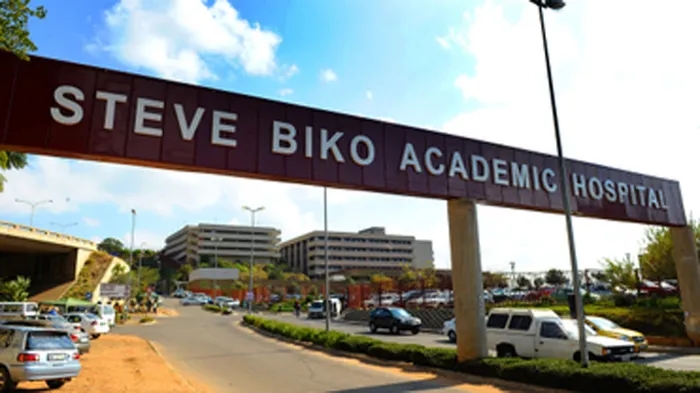
The Steve Biko Academic Hospital in Pretoria is the first to perform Cryoablation - a procedure to freeze and destroy abnormal tissue like cancerous tumours.
Image: File
The Steve Biko Academic Hospital in Pretoria has entered a new chapter in the South African public healthcare system after successfully performing its first cryoablation procedure.
This is said to be a milestone that positions the institution as the first public hospital in the country to introduce this advanced, minimally invasive treatment.
The hospital said the procedure represents a significant step forward in the provision of specialised and super-specialised care within the Gauteng Department of Health.
Cryoablation is a medical technique that destroys abnormal tissue, including cancer, by freezing it at extremely low temperatures, and is widely regarded internationally as a precise, patient-friendly alternative to conventional surgery for selected tumours.
The pioneering procedure was performed by a team of specialised radiologists, which includes Doctor Rodney Masko, under the leadership of Professor Zarina Lockhat and urologists Dr Guy Gauchi and Dr Raymond Campbell, under the leadership of Prof Kgomotso Mathabe.
Cryoablation involves the percutaneous insertion of thin probes into the target tissue under image guidance, typically using CT or ultrasound. Once correctly positioned, the probes release bursts of argon gas that rapidly lower temperatures, forming a clearly visible “ice ball” that envelops and destroys abnormal cells while sparing surrounding healthy structures.
The ability to visualise the treatment zone in real-time allows clinicians to achieve exceptional accuracy, particularly when lesions are located near critical organs or blood vessels, the hospital said.
Compared with open surgery, cryoablation offers substantial benefits for patients, including reduced pain, minimal blood loss, shorter hospital stays, and faster recovery times.
According to the hospital, these advantages are especially important in public healthcare settings, where reducing complications and length of admission can significantly ease pressure on already stretched resources.
Adding a further layer of innovation to the procedure was the use of remote international expertise. Dr Matthias Feurstner, an experienced interventional radiologist based in Austria, served as the proctor for the case. Through real-time virtual supervision, he guided the local team throughout the procedure.
Dr Riaan Potgieter, who was also part of the team, wore Google Smart Glasses, enabling live visual communication with the off-site proctor, an advanced application of digital health technology that underscores the growing role of global collaboration in modern medicine.
Hospital leadership has described the achievement as a testament to the skill, dedication, and forward-thinking mindset of the clinical teams involved.
It also reflects sustained strategic investment by the Gauteng Department of Health in high-impact technologies that expand access to world-class care within the public sector.
The hospital noted that beyond the walls of Steve Biko Academic Hospital, the successful introduction of cryoablation carries broader significance. It signals a shift towards more equitable access to cutting-edge treatments traditionally limited to private healthcare and reinforces the role of academic public hospitals as drivers of innovation, training, and research.
It said that as South Africa’s public health system continues to confront complex disease burdens and resource constraints, milestones such as this demonstrate how targeted investment, multidisciplinary expertise, and intelligent use of technology can translate into tangible improvements in patient care.
zelda.venter@inl.co.za