

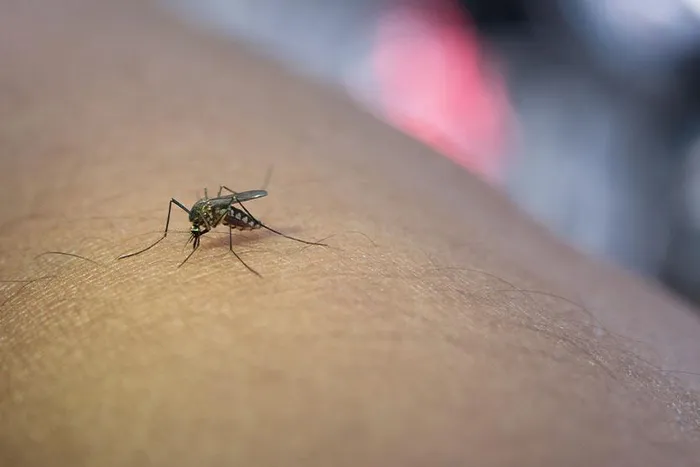
Standing floodwater in the country has created favourable conditions for mosquito breeding, raising the risk of malaria transmission. But the University of Pretoria said it is ready to assist the government in this regard.
Image: File
Severe rainfall and widespread flooding across southern Africa, including Mozambique and parts of South Africa (Limpopo and Mpumalanga), are creating highly favourable conditions for malaria transmission, and the University of Pretoria is on standby to assist.
The university’s Institute for Sustainable Malaria Control (UP ISMC) said it is ready to support government programmes to curb the problem.
Stagnant floodwaters and pools left behind as waters recede are expected to significantly expand breeding sites for malaria-transmitting mosquitoes, placing millions of people at increased risk and raising concern about a potential surge in malaria cases in the coming months.
“Extreme weather events are becoming more frequent, and flooding significantly increases mosquito breeding habitats by creating the ideal environment for Anopheles mosquitoes to thrive,” Professor Tiaan de Jager, director of UP ISMC, said.
He added that without rapid, coordinated responses, we risk reversing the gains made towards malaria elimination in the southern African region.
UP ISMC conducts transdisciplinary research across vector control, parasite control, and human health to support malaria control and elimination in South Africa and the wider SADC region.
The institute works closely with government Health departments, international agencies, and funding partners to translate academic research into practical, scalable solutions that save lives.
“While emergency response operations fall under national and provincial health and disaster management authorities, our role as an academic institute is to provide the research, knowledge, and specialist guidance needed to inform effective malaria control decisions during and after such crises. Quality data and high-quality evidence are essential for targeting limited resources effectively and responding strategically to emerging malaria risks,” De Jager said.
According to Dr Taneshka Kruger, project manager at UP ISMC, the institute works in close collaboration with South Africa’s National Department of Health and provincial malaria control programmes by generating evidence to guide vector control strategies in changing environmental conditions.
The institute also provides technical advice on malaria surveillance and risk mapping; education and training in malaria-endemic areas, including schools, and supports the development of health promotion and awareness initiatives.
“Malaria awareness is particularly important during and after emergencies. People need to understand the risks and how to protect themselves, even if they do not live in an endemic area,” Kruger said.
According to Kruger, awareness is the first step in preventing illness. Early diagnosis and rapid treatment are critical to preventing malaria from progressing to life-threatening stages. If someone suspects they may have malaria, they must be diagnosed as soon as possible. Symptoms typically include bouts of fever accompanied by flu-like signs such as headache, fatigue, nausea, muscle pain, chills, and diarrhoea.
Individuals living in, or who have recently travelled to, malaria-endemic areas should seek medical attention promptly if symptoms occur.
Severe malaria may present with delirium, convulsions, impaired consciousness, or respiratory distress. Prevention is the most effective form of protection against the disease, Kruger explained.
Measures to reduce mosquito bites include avoiding outdoor exposure between dusk and dawn; wearing long-sleeved clothing at night; avoiding dark-coloured clothing; applying insect repellent to exposed skin; and using window and door screens.
The university assured that its vector control specialists are available to support national and provincial programmes through vector surveillance planning, mosquito population monitoring, and guidance on control measures following flooding events.
“Technical guidance is crucial after floods. Understanding where mosquito populations are expanding and which interventions will be most effective allows control programmes to act with precision rather than guesswork,” Dr Ashley Burke, a medical entomologist at UP ISMC, said.
According to De Jager, malaria is a regional challenge that demands regional solutions.
zelda.venter@inl.co.za