

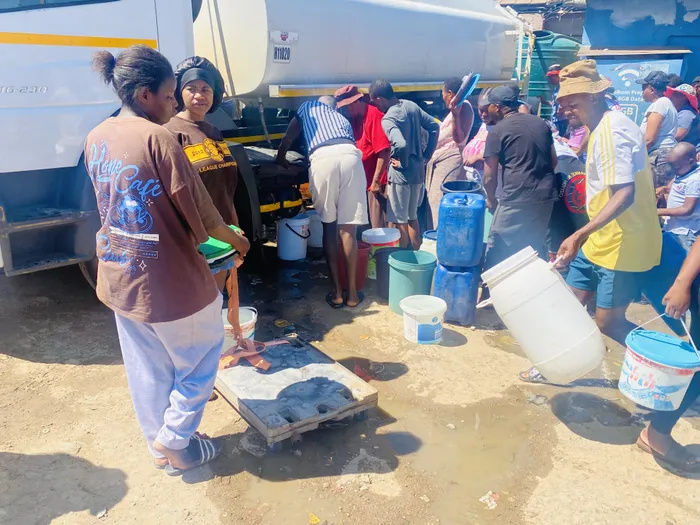
Gauteng residents, including those from Zandspruit informal settlement in the North of Johannesburg have complained about the ongoing water shortage across the province.
Image: Simon Majadibodu/IOL
Gauteng residents say Johannesburg’s water crisis has wreaked havoc on daily life, with some areas of over 30,000 people relying on just two water tankers, while small businesses struggle to cover soaring costs.
Johannesburg has long faced severe water shortages, with little progress made to address the problem.
Taps have been dry for many residents, while businesses have been financially crippled, and thirst has become a daily struggle.
Recently, fed-up residents in Midrand - one of the hardest-hit areas - took to the streets last week on Tuesday to raise their grievances after being without water for more than 10 days.
One resident affected by the shortage is Faith Modise.
Modise, who moved to Midrand in October last year, said she never thought she would face water supply problems in the area.
“As somebody who lives alone, this is a bad image for me. It is affecting me greatly as I am still trying to adjust to the area, trying to adjust to town, go to work and come back, all the things I have to do by myself,” she said.
“And I just realise that I need water for literally every and every single thing, because I don’t have people around, that I know that are closer, I don’t even have contacts to say ‘hey can you please bring me water, I don’t have water.’
“I don’t even have a car to drive to go but water. Or rather, weekly money to buy water like that.”
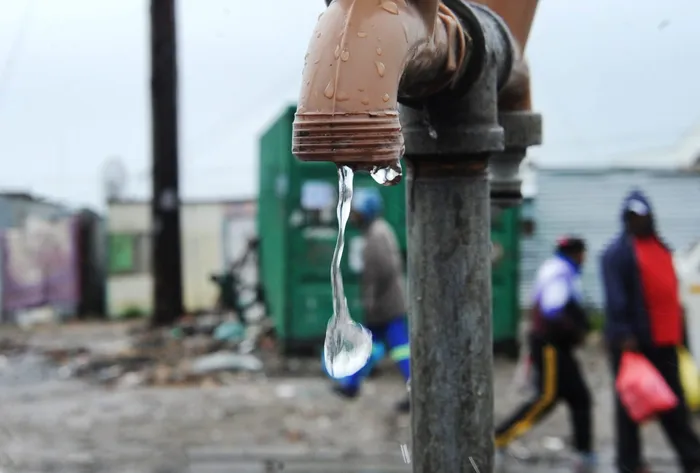
Residents in Midrand, Johannesburg are experiencing water supply shortages, with many forced to dig deep into their pockets to buy water.
Image: Cindy Waxa
The 23-year-old said the water shortage has affected her finances, as she has spent more than R100 on water.
“It has strained me so much financially and mentally, because now it's like I have to fend for myself, because I didn’t come to Midrand to do that. So now I have to actually think all the time of how much water I have to use.”
“It has really brought cockroaches to my place because now I don't wash dishes every single day, because if I let it wait for two days, maybe the water will come back.”
She, however, said she hopes the City of Johannesburg water utility, Joburg Water, and bulk water supplier Rand Water will address the problem.
“I hope Joburg Water and Rand Water will reach a consensus somehow, you know, the government will release the funds to fix the leaking tankers to replace the old tankers. I know that the place is growing at a very rapid rate, and they could have planned for such things.”
Joburg Water said its Midrand systems are constrained, some reservoirs are supplying fairly while others are critically low.
“Most suburbs are receiving water, but restoration is slow due to overall high demand in Johannesburg Water systems,” the utility said.
It added that Joburg Water and Rand Water’s systems are recovering, while the supplier is pumping at full load/capacity.
“Both entities are in close contact, monitoring and putting necessary interventions. The restoration period will differ, but considerable improvement is expected over the next coming days.”
Speaking with IOL News, Ronny Mabophe, depot manager for Operations Networks in Randburg, said he could not confirm when the supply will be fully restored.
“Midrand is a work in progress, systems are stabilising, and interventions are currently underway; therefore, we cannot confirm when full supply will be restored,” he said.
Areas such as Randburg and Zandspruit informal settlement, have also been affected by the water shortage crisis.
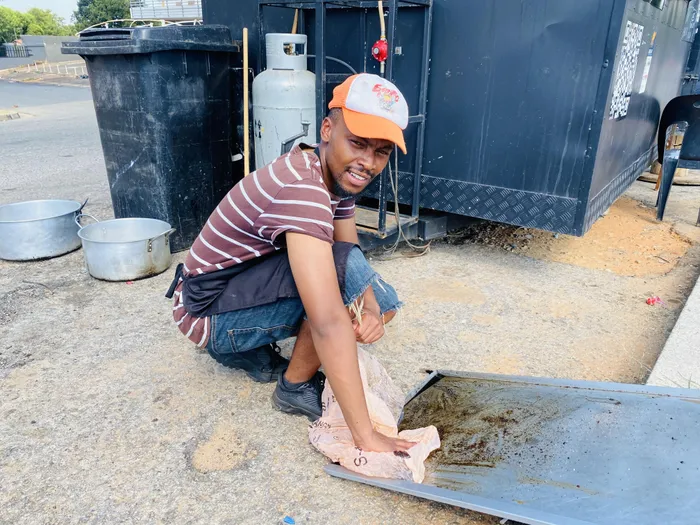
Bafana Dube, a 24-year-old cooking business owner in Randburg from Cosmo City, said he is spending extra money sourcing water so he can continue cooking for his customers.
Image: Simon Majadibodu/IOL
IOL News recently visited Bordeaux in Randburg, where small business owners bemoaned how the ongoing water crisis has affected their businesses.
One cooking business owner operating near the Randburg Taxi Rank, who sells cooked food, said the shortage had disrupted operations.
“The water shortage has really affected us because we end up spending a lot of money to pay someone to get water for us to cook and continue with the business. Because the water can go out for a week, and it affects us very badly because we still have to cover other costs such as refilling the gas cylinder that we use to cook,” said Bafana Dube, from Cosmo City, north of Johannesburg.
The 24-year-old said they roughly spend R80 for someone to get water.
“And if there’s no water the whole week, it really affects our business so badly, because we use water to cook, and we can’t stop because there’s no water nearby, because we survive with this business.”
He said they start cooking at 6am every day, but when there’s no water that becomes a challenge.
“If there’s no water there’s a lot of stress, because we end up losing clients because we sometimes end up cooking at around 8am in the morning and by that time we would have lost customers.”
“By that time we would have lost customers because most of our customers are taxi drivers and they like buying food early in the morning.”
“Surely when we open around 8am due to water shortages we surely lose around R400 to R500 because we have a lot of taxi driver clients who buy frequently from us,” he said.
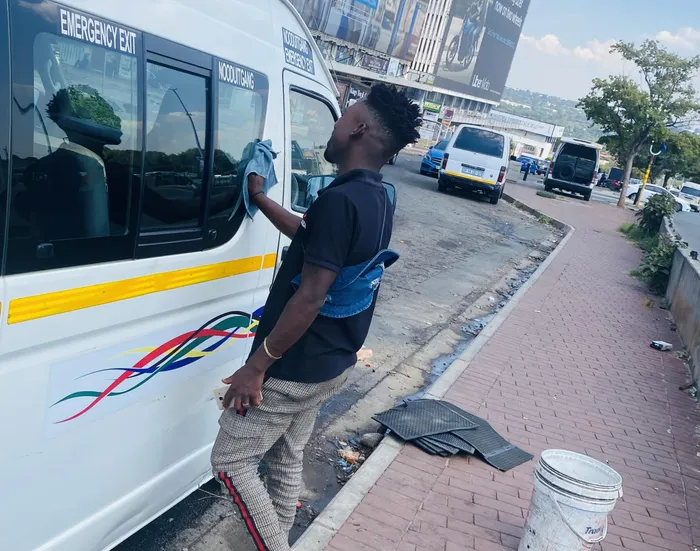
Marumo Marumo, a car wash owner near the Randburg taxi rank, relies on bought water to keep his business running amid ongoing shortages.
Image: Simon Majadibodu/IOL
Dube lamented the City of Johannesburg and the water utility’s lack of urgency in addressing the issue.
“The officials are not doing enough, because even the residents who stay around here are always complaining about the ongoing water shortage. I don't think it bothers them that there's a big problem with this thing.”
Car wash business owners operating near the taxi rank said they were also affected by the water shortage.
Marumo Marumo, 25, from Bryanston in an informal settlement and originally from Lesotho, said they started the business back in March 2025.
“We have resorted to buying water in a garbage bin for R20, which is enough to wash only three cars,” he said.
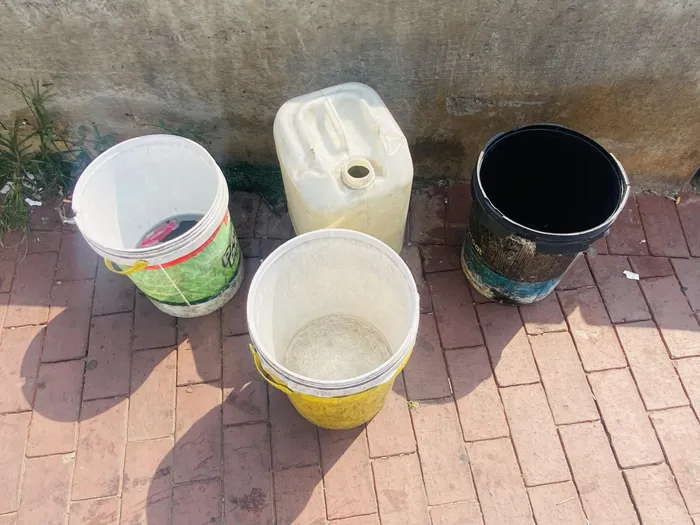
Buckets of bought water used by Marumo Marumo sit beside his car wash near the Randburg taxi rank as ongoing water shortages disrupt his business.
Image: Simon Majadibodu/IOL
He said they wash cars with prices ranging from R60 for private cars, R70 for Siyaya taxis, and R80 for Quantums.
Marumo said when there’s no water, there’s no business.
“At some point the water can go for three days, and it becomes a problem because we survive with this, because normally on a good day I can make about R400, which I will then be able to get some essential needs for myself.”
Another car washer, Tshwarelo Mofoatsana, 51, from Thembisa, added, “When there’s no water there’s no business, there’s nothing that we can do. The water shortage in Randburg is a big problem and it happens every time.”
Life in Randburg is very difficult as water shortage has become a serious problem.
Another man, who was fetching water from a pipe near Randburg Square, said the struggle was real.
“We have been suffering with water for sixteen months, there’s no water, we don't know who’s even going to help us with this problem. We suffer with water, it's not me alone, people around Randburg are suffering with water shortage,” said David Mavimbela, who makes a living by assisting people with holding luggage.
The 51-year-old said at times they are forced to drink dirty water.
“People are suffering, sometimes we drink rubbish water. Can you please help us because we will end up getting sick because of this dirty water.”
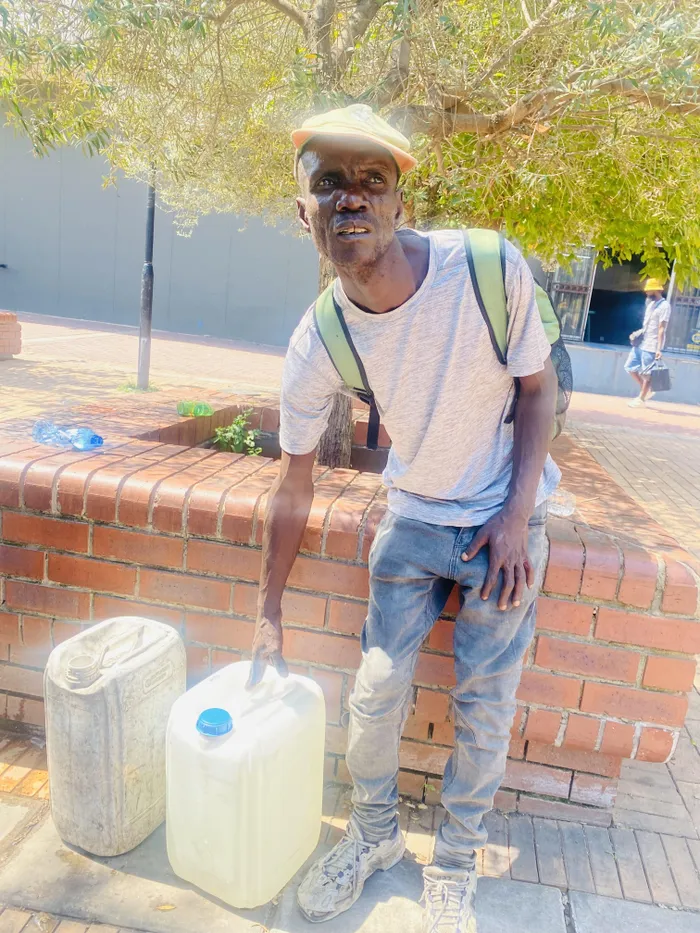
David Mavimbela, 51, fetches water from a pipe near Randburg Square after months of unreliable supply in the area.
Image: Simon Majadibodu/IOL
He said they had reported the matter to Joburg Water but nothing has been done to resolve the issue.
“Yes, we tried to report it to Joburg Water, because every time they walk here on the streets, they just say ‘tomorrow, tomorrow, tomorrow.’ They are promising but they don't come.”
“I don't think they will come and resolve this because they just make promises but they don't come to fix the water problem.”
Ward 102 councillor Bea Campbell-Cloete confirmed to IOL News there was a water shortage in her ward, in Blairgowrie, Randburg.
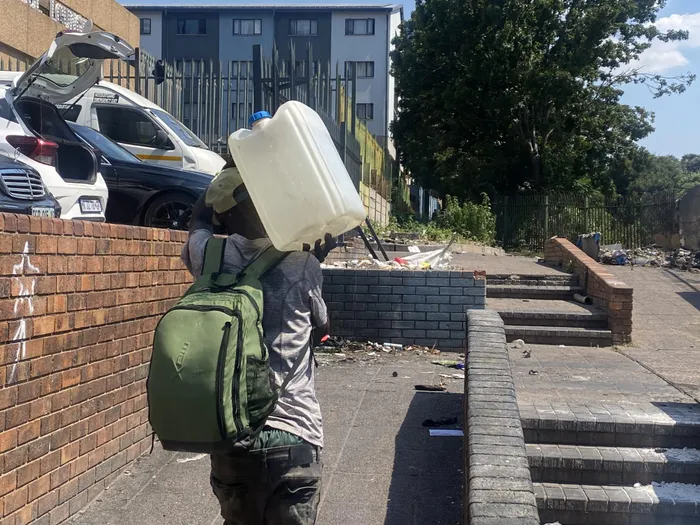
Ramdburg resident, David Mavimbela carries a container of water on his shoulder after collecting it from a pipe near Randburg Square amid ongoing water shortages.
Image: Simon Majadibodu/IOL
According to her, water shortages occur due to network pressure constraints and supply interruptions within the systems themselves.
“Residents have experienced low pressure with no water due to throttling, maintenance and upstream issues. This seems to have worsened over the last couple of months. Apart from these upstream issues, such as pressure management, infrastructure failure and faults, and upstream supply issues, certain areas have experienced no supply due to burst and broken infrastructure.”
She said in some areas within the ward, there are still old asbestos pipes prone to bursts.
“Over the last month we have had multiple bursts on Grosvenor Road and Crawford, which left residents without water for days on end.”
She said the water interruption causes a lot of inconvenience for residents.
“There are disruptions to daily routines, not to mention the health and sanitation concerns. It also has a huge impact on small businesses, coupled with additional expenses for businesses as well as private residents who must buy or source alternative water supplies.”
She said while some residents and businesses have alternative supplies such as boreholes and wanker tanks, these measures are not sustainable and incur extra costs.
“In upstream or large maintenance issues, water tankers are supplied, but only after 24 hours and it is not consistent.”
She said these concerns have been escalated to Joburg Water, and called on residents to continue reporting outages and leaks, and conserve water where possible.
On Monday, February 9, Joburg Water said its Randburg systems have improved and supplied fairly.
“However, increased high demand exceeding available capacity is affecting system stability and intermittent supply may occur.”
It said the Waterval Tower has improved and supplied fairly, with restoration in progress and residents receiving water.
The water utility also said the Quellerina Tower has improved and is supplying adequately, with residents receiving normal supply.
“Due to high demand and declining supply, the entity will implement necessary interventions to stabilise the systems and manage demand,” it said.
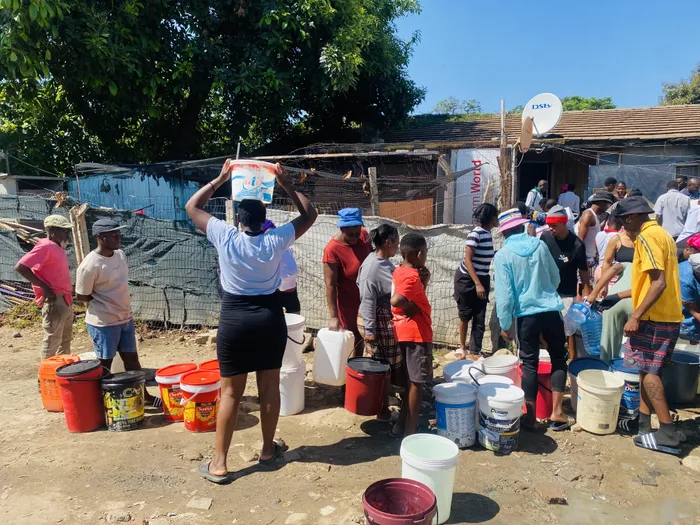
Residents of Zandspruit informal settlement, in the north of Johannesburg, queue to get water from a water tanker following ongoing water supply crisis in the area.
Image: Simon Majadibodu/IOL
Meanwhile, residents in informal settlements have also been affected by the water shortage.
Zandspruit informal settlement, in the north of Johannesburg, one of the largest and oldest settlements in the city, has been facing the same problem for years. The settlement has over 30,000 residents.
One resident, who has been living there for close to 22 years, lamented when the water shortage started.
“The problem of water escalated around 2024, but started way back in 2017, when there were a lot of squatter camps here in Zandspruit. There's Phomolong, there's Maseru, there's Kanana,” said community leader Willie Mabunda.
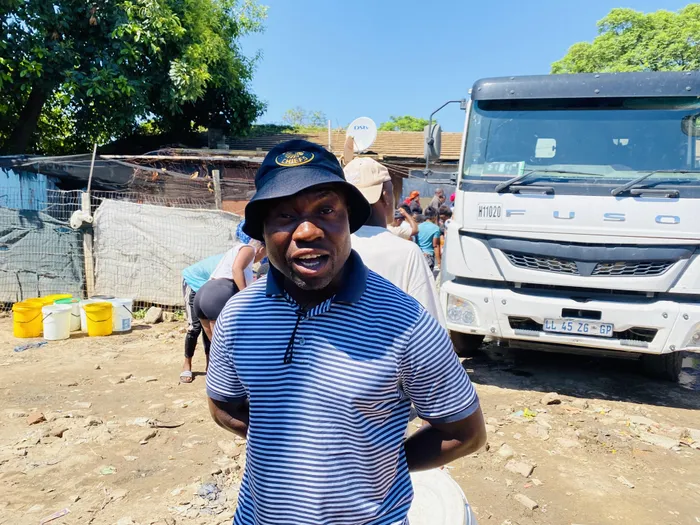
Zandspruit community leader Willy Mabunda said illegal pipe connections have worsened water shortages in the settlement.
Image: Simon Majadibodu/IOL
He claimed that some residents in low-lying areas in those sections had illegally cut the water supply pipes to their yards.
“So all those people, they've cut the pipe and then they... That's why there's a shortage of water. It's a special thing in Zandspruit. Because of those people, they are cutting the pipes there.”
He said as a result, there is no longer water coming from the side of Vukuzenzele in the upper area.
Asked how they know the pipes were cut, he said: “We are busy investigating. And then we find out there's a guy down there. He is not one man. I'm sure there are two or three. They are selling water. They put the pipe in your yard. And then you rent the water each and every month. So that's the main problem.”
Mabunda said the matter was reported to the local councillor of Ward 114, David Mangena.
“Yeah, we try by all means to engage the leadership. Last year, after a couple of months, we went to that side just to check what's going on. Even the councillor knows the story.”
He went on to claim that people continue cutting pipes.
“He's (Mangena) trying to engage Johannesburg Water. But every time they try to put the pipes there, those people come out. They come in during the evening to put their pipes there. So that's the main problem.”
Mabunda did not hesitate to say that Joburg Water and the city are not doing enough to address ongoing water shortages.
“They are not doing enough, because we have been engaging them to come to this site and then to do... So they are not doing enough. Even now, since January, we are busy as community leaders to engage with other leaders. Because we want to hold Johannesburg Water accountable. They need to come here and come with the police to see that problem. Because it's a big problem.”
He said the provision of water tankers was insufficient.
“This site, the only tankers that I know of, there are two or three. They are not enough. If I'm not mistaken, we have got plus minus 40,000 people around here. So it's not enough at all.”
The father of two said waking up and not having water inside the buckets was very challenging.
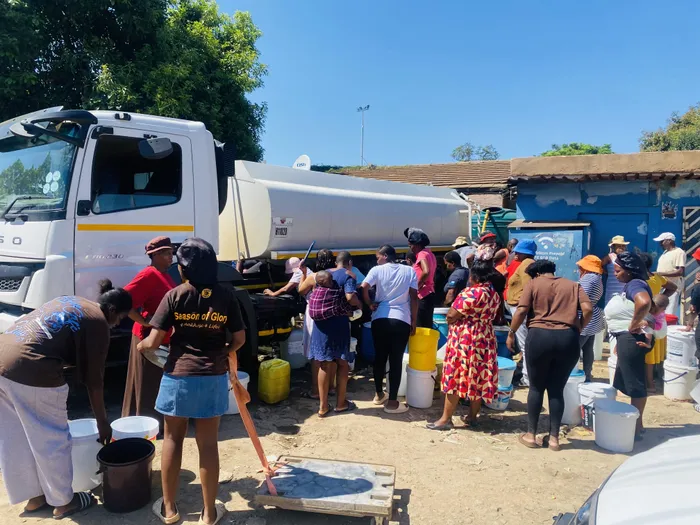
Residents of Zandspruit informal settlements queue with buckets and containers to collect water amid ongoing shortages in the area.
Image: Simon Majadibodu/IOL
“Because some other days, this drive takes close to three days. They never pitch up, and then we are struggling with where we can get water. By those days, when they come here, there's another crèche where they deliver water. So I try to engage with them.”
“Why are you taking the community water to the crèche? So that means there are some of the leaders failing us. Because those people can't take water to the crèche without engaging the leaders.”
He said the only solution would be having water coming from the taps, which have been dry since early 2024.
“We need water from the taps. Because they have already put the taps here. So what's the reason to put the taps? We want to support the community, but there's no water. So we need water, and we need good sanitation. So now the toilets are full, and everything that we are doing is about water.”
Meanwhile, Mangena said he was not sure of the water challenges that started in 2017.
According to him, the challenge started in 2025.
“The reason for water shortages, according to Joburg Water, is because of the invading of the land where people connected to water pipes illegally. So, that’s an issue.”
“I spoke to Joburg Water and even the Randburg Depot Manager came last year in November and ended up sending technicians to come and check, after that now there’s a tender to extend water to those invaded lands, so that everyone can have water, because when they disconnect, they connect again.”
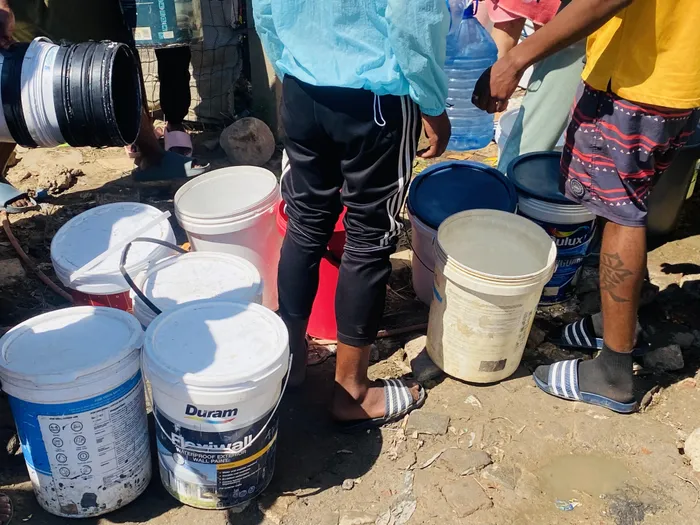
Buckets line the ground as Zandspruit residents wait their turn to collect water from a water tank amid water supply problems in the area.
Image: Simon Majadibodu/IOL
Mangena confirmed there are two trucks supplying water in the Vukuzenzele section.
“We have two trucks because of the budget, but we used to have seven trucks every day coming to deliver water, now we only have two, the budget is an issue,” he said.
Mabophe said Joburg Water is aware of the water shortage in Zandspruit.
“But the problem started now when the new informal settlements were built around the area and started withdrawing water illegally from the pipeline.”
He said the water utility was aware of allegations that people had illegally tampered with water pipes in the area.
“Johannesburg Water is aware that there are illegal connections around the area and we did engage the councillor to intervene.”
“The team is busy investigating the low-pressure issue in Zandspruit. We started from Honeydew Reservoir and followed the water flow to check if there were any pipe bursts or illegal connections because the pipeline from the reservoir is sufficient to supply water.”
When asked to confirm the alleged tender in place to extend water supply to the area mentioned by Mangena, he said that was not true.
“I am not aware of the tender, but yes we did some investigation last year in November 2025. We advised the councillor that we will do a feasibility study and check if we can do another connection that can supply the scrap yard area where they have water problems. It’s still ongoing as we are still investigating the low-pressure problem in Zandspruit.”
He confirmed that there were only two tankers supplying water in the area.
“It is correct that we have two water tankers in Zandspruit and it is sufficient because the lower-lying areas have water.”
Pressed again if there are plans to increase the number of tankers servicing the area, he said, “We will need to investigate if the two water tankers can not be able to supply the entire area.”
simon.majadibodu@iol.co.za
IOL News